VN
VN
 EN
EN
11/07/2026, 12:00
Business economics
Hai Long Industrial Park: A new growth pole in Southern Hung Yen province
As industrial land in Northern Viet Nam becomes increasingly scarce and logistics costs continue to rise, localities are being pushed to open up new industrial spaces — and Hai Long is emerging as a notable test case.
When industrial land banks in Hai Phong and Bac Ninh grow tighter and production costs keep climbing, many businesses have started shifting toward new coastal growth poles.
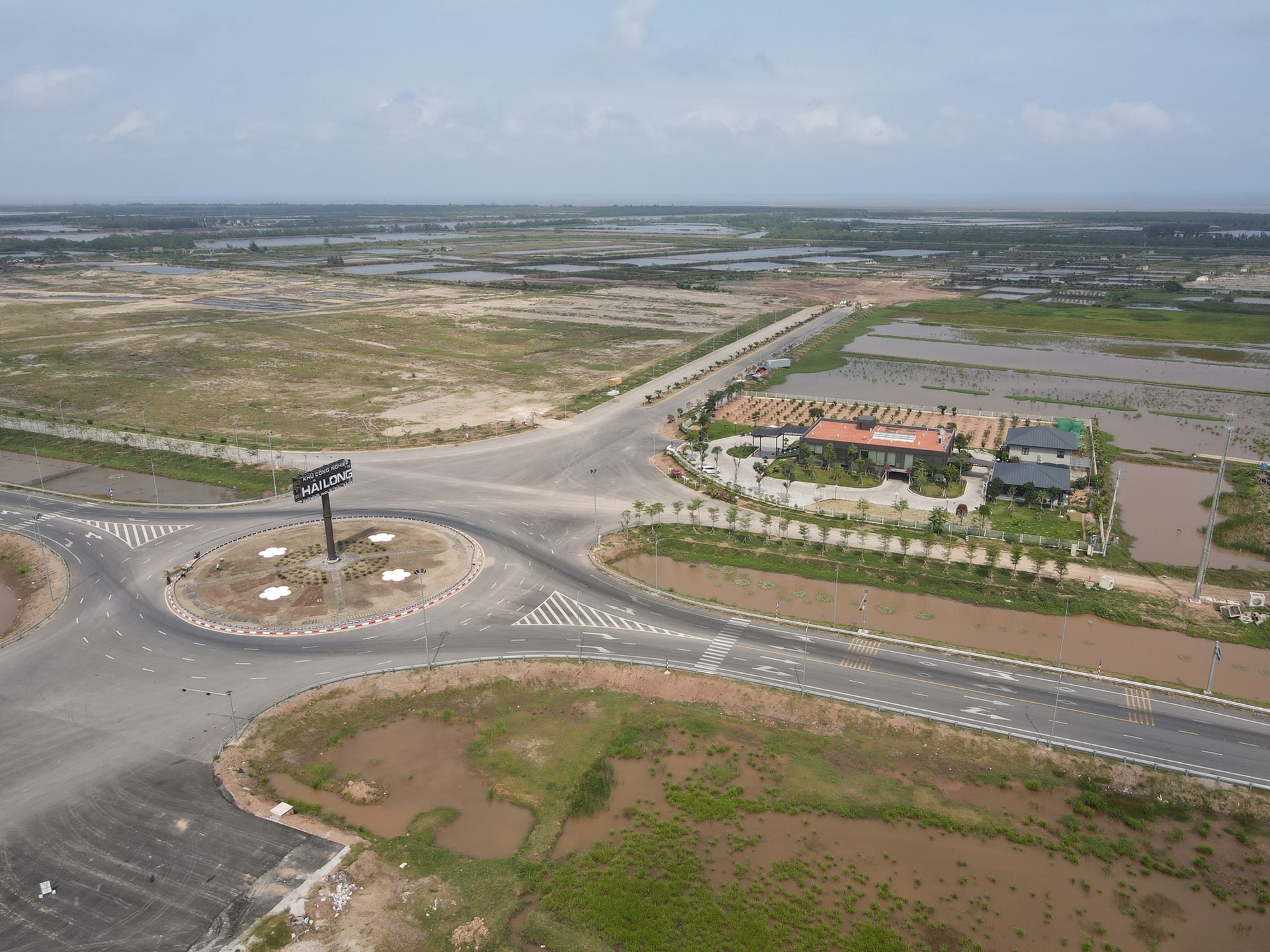
Hai Long Industrial Park, located within the Thai Binh Economic Zone in southern Hung Yen Province, is increasingly being viewed as a new “strategic coordinate” on northern Viet Nam’s industrial map
Against this backdrop, Hai Long Industrial Park, located within the Thai Binh Economic Zone in southern Hung Yen Province, is increasingly being viewed as a new “strategic coordinate” on northern Viet Nam’s industrial map. The combination of geographic advantages, large-scale infrastructure and strong local government support is creating a notable pull for investors.
Positioning a “new industrial gateway”
More than a decade ago, the former Tien Hai coastal area was primarily known for aquaculture, agriculture and gas extraction. Today, however, its landscape is changing rapidly under the impact of coastal industrialization.
Hai Long Industrial Park sits directly along the coastal road corridor, which the Government has identified as a strategic economic route linking Quang Ninh, Hai Phong, Hung Yen and Ninh Binh. This transport axis is gradually reshaping the logistics map of northern Viet Nam.
From Hai Long, goods can quickly connect to Hai Phong seaports, Cat Bi International Airport and the northern coastal expressway network. At a time when FDI manufacturers increasingly prioritize logistics and supply chain resilience, this location is considered a major advantage.
It is no coincidence that many investors are beginning to explore opportunities in coastal industrial parks instead of concentrating solely around Hanoi as before. Land lease prices in traditional industrial hubs have surged for years, while room for expansion has become increasingly limited.
Meanwhile, Hai Long benefits from a large and relatively “clean” land bank, lower labor costs and more competitive lease rates than Hai Phong or Bac Ninh. In particular, its location within a coastal economic zone allows businesses to access various incentives related to taxation, investment and administrative procedures.
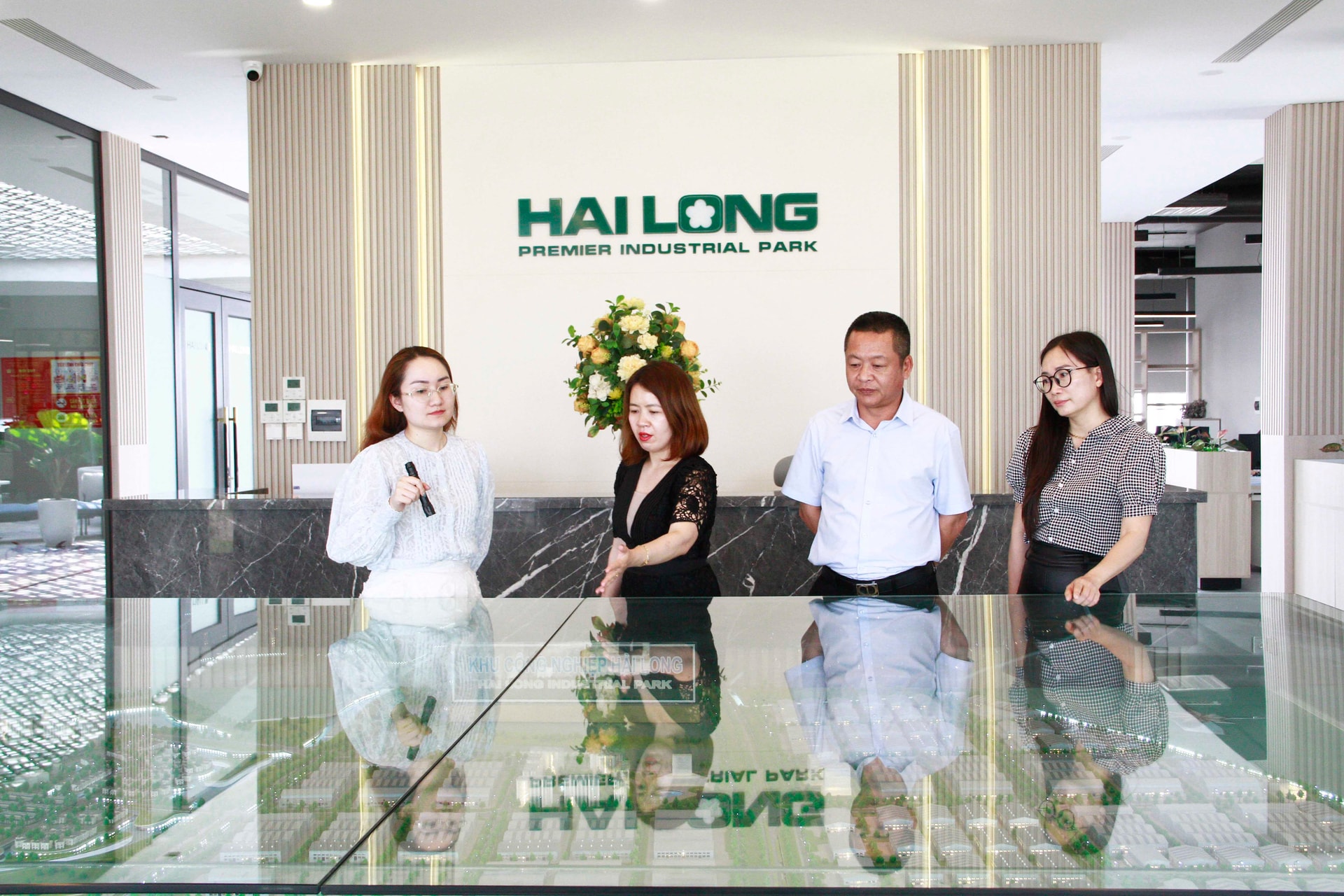
Many foreign enterprises are now seeking newly developed industrial parks with large land reserves and synchronized infrastructure
According to observers, these advantages could position Hai Long as a future “industrial satellite” of the Hai Phong–Quang Ninh–Hanoi economic triangle.
Mr. Do Quang Tuan, General Director of Bao Minh Industrial Park Infrastructure Investment JSC — the project developer — said the ongoing industrial relocation trend is opening major opportunities for coastal industrial parks.
“Businesses today are not only concerned about land lease prices, but also prioritize logistics connectivity, long-term development potential and infrastructure stability. Hai Long holds a unique advantage as it lies along the coastal corridor currently receiving strong central government investment,” Mr. Tuan said.
According to him, many foreign enterprises are now seeking newly developed industrial parks with large land reserves and synchronized infrastructure to build long-term manufacturing chains, instead of nearly full industrial zones in older industrial centers.
Infrastructure race and strong government backing
One factor drawing attention to Hai Long is the scale of infrastructure investment from the very beginning.
The project covers nearly 297 hectares, with total infrastructure investment estimated at around VND 2.214 trillion. While many industrial parks still follow a “build-as-you-fill” approach, Hai Long has opted for synchronized infrastructure development from the outset to secure long-term competitiveness.
Its power system is planned with a capacity of approximately 162 MVA. Clean water supply is expected to reach around 40,000 cubic meters per day, while wastewater treatment capacity is designed at roughly 30,000 cubic meters per day. The project is also oriented toward a “green industrial park” model, featuring extensive green spaces, centralized environmental treatment systems and housing for workers and experts.
As ESG standards, green development and emissions reduction become increasingly mandatory requirements for exporters, environmental infrastructure is emerging as a new battleground among industrial parks.
Mr. Tuan said Bao Minh does not intend to develop Hai Long under a traditional industrial model.
“We see this as an industrial park capable of long-term development, meeting modern manufacturing requirements and the green standards increasingly demanded by international businesses,” he said.
However, experts note that infrastructure alone is not the decisive factor. What many investors care about more is the level of support local authorities can provide in handling administrative and investment procedures. This has become a key area of competition among provinces seeking to improve their investment environments.
For Hai Long Industrial Park, local authorities are placing significant emphasis on creating a new growth engine for southern Hung Yen Province.
Mr. Do Van Lan, Deputy Head of the Thai Binh Economic Zone Authority, said the administration is focusing on resolving investment procedures, site clearance issues and transport connectivity to support businesses.
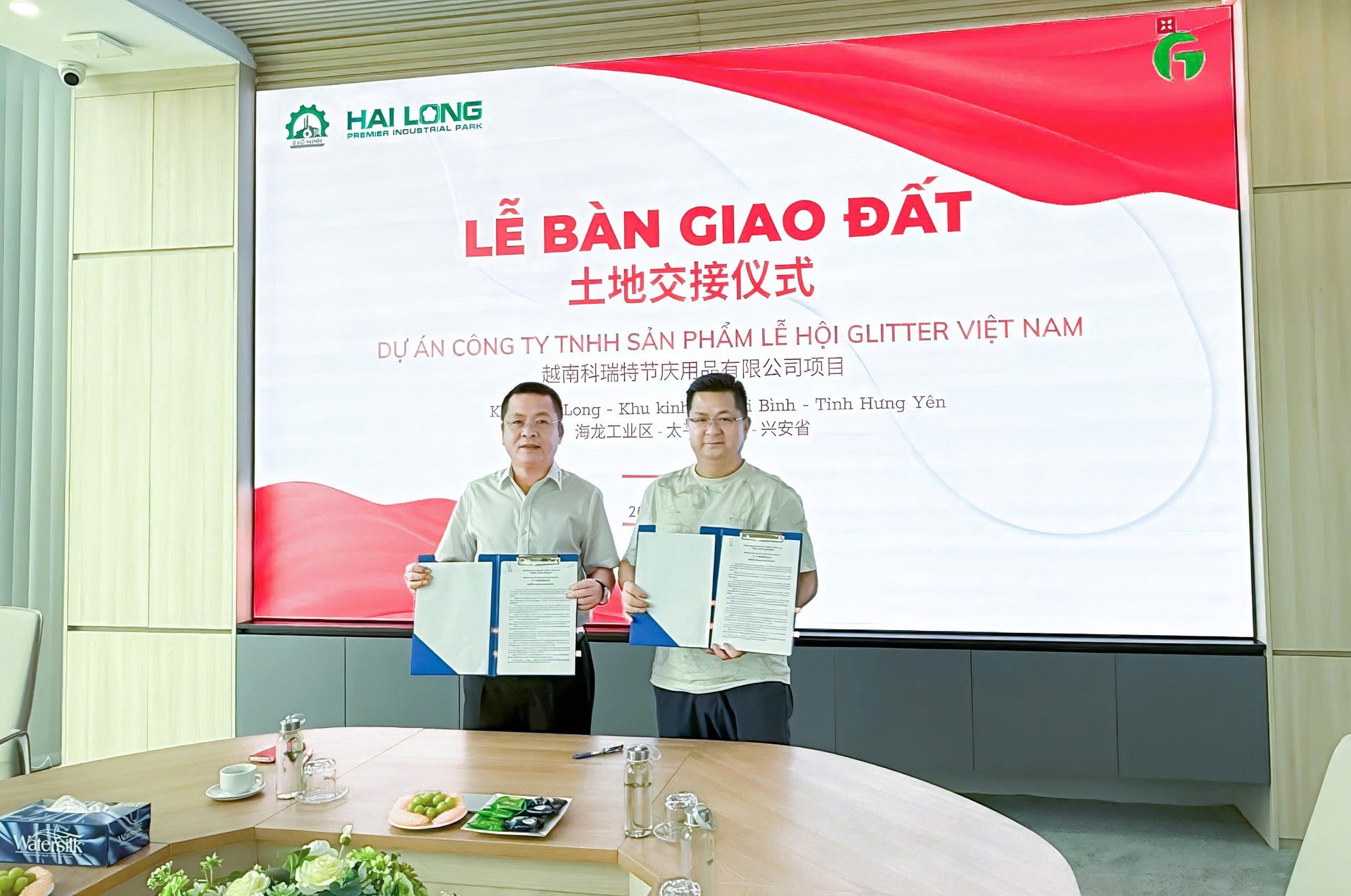
A representative of the Hai Long Industrial Park signed a land transfer contract with Glitter Vietnam Festival Products Co., Ltd.
“The province’s approach is to create the most favorable conditions possible within the legal framework so that strategic industrial projects can be implemented quickly, contributing to the formation of a new growth pole in the southern coastal area,” Mr. Lan said.
According to him, the development of industrial parks such as Hai Long is intended to restructure the local economy, create jobs and accelerate urbanization in coastal areas. The emergence of large-scale industrial parks is also driving demand for housing, services, logistics and skilled labor, creating opportunities for transformation in areas that previously developed more slowly than central regions.
If the northern coastal corridor truly becomes a major industrial construction zone in the coming years, Hai Long is expected to emerge as one of the new industrial centers of northern coastal Viet Nam — especially as Hung Yen moves toward establishing a Free Economic Zone to unlock further investment and industrial growth potential.
Author: KIM DUNG - VU PHUONG
RELATED TOPICS
RECOMMENDED TOPICS