VN
VN
 EN
EN
26/07/2026, 02:00
Investment
Hung Yen determined to elevate its PCI rankings
Unsatisfied with fairly good governance rankings, Hung Yen aims to break through the PCI (Provincial Competitiveness Index) and target the Top 5 nationwide in 2026.
The PCI Report 2025 shows that Hung Yen is among the localities with a fairly good quality of economic governance (ranked 13th out of 34 provinces/cities).
While this result recognizes the province’s efforts to improve its investment and business environment, it also requires more decisive action. In 2026, Hung Yen aims to enter the national top 5, joining the group of localities with good governance quality.
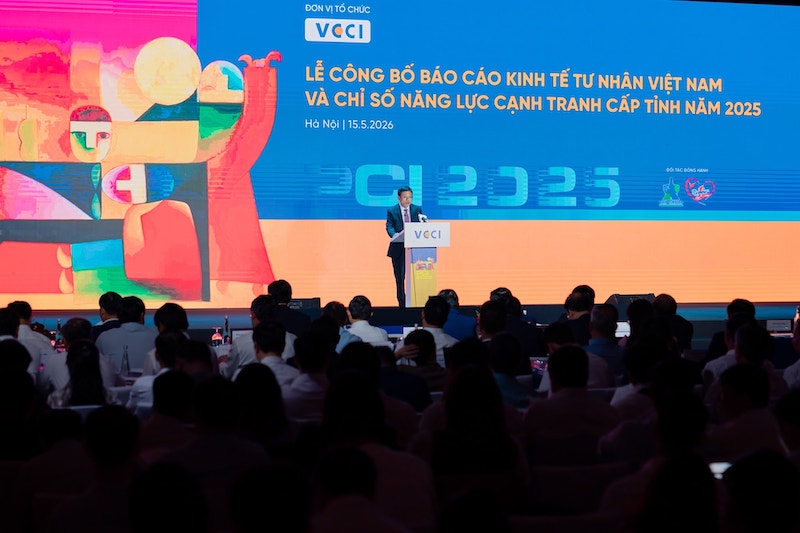
The annual launch of the Provincial Competitiveness Index (PCI) report always draws immense attention from local leaders and private enterprises
Assessing the PCI frankly to identify bottlenecks
For local governments, the PCI serves as a yardstick of the business community's trust. It is a mirror reflecting the quality of governance, level of transparency, effectiveness of reforms, and the operational capacity of the administrative apparatus.
Mr. Nguyen Manh Quyen, Chairman of the Hung Yen Provincial People's Committee, noted that the 2025 PCI rankings directly reflect the level of trust the business community places in the provincial government. This mindset shows that Hung Yen does not only view the PCI as a rankings race but rather as a driving force to review its administrative apparatus, thereby paving the way for more robust improvements in 2026.
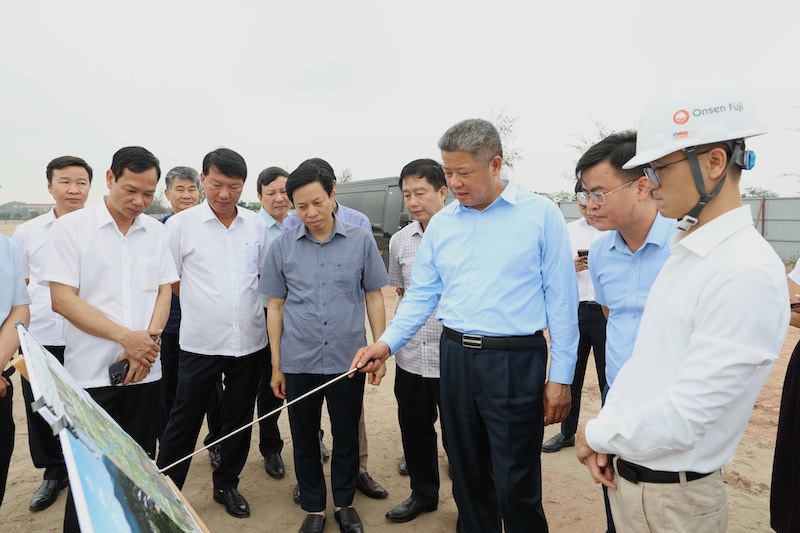
Mr. Nguyen Manh Quyen, Chairman of the Hung Yen Provincial People's Committee, inspected the hot spring area and the Lynn Times Onsen Retreat Hung Yen project, invested by Duyen Hai Hot Spring Joint Stock Company in Dien Ha commune
In the 2025 PCI rankings, Hung Yen achieved several remarkable sub-indices. Transparency scored 7.69 points, ranking 2nd out of 34 provinces and cities; Equal Competition scored 7.24 points, also ranking 2nd; and Informal Charges scored 8.09 points, ranking 3rd.
These rankings among the top nationwide are a positive signal, reflecting ongoing efforts to build an upright, public, and hassle-free administration and fostering confidence among investors and the private economic sector.
However, the PCI also highlighted bottlenecks that cannot be overlooked. The Law and Order sub-index only reached 6.55 points, ranking 30th out of 34; the Proactive Leadership sub-index scored 5.25 points, ranking 23rd. In particular, the low score in "Proactive Leadership" is a clear warning about the governance efficiency of local authorities in the new era. As the two-tier local government model comes into operation, officials are required to be more proactive, flexible, accountable, and genuinely supportive of businesses.
Additionally, Access to Land and Security of Tenure reached 6.16 points (ranking 13th); Market Entry scored 7.26 points; and Time Costs scored 7.31 points, ranking 16th and 17th, respectively. This indicates that businesses still face certain barriers regarding access to land, capital, information, market entry procedures, and regulatory compliance. If not addressed promptly, these bottlenecks will diminish the province's investment appeal and undermine its competitiveness at a time when all localities are reforming aggressively.
Mr. Nguyen Van Hoan, Vice Chairman of the Hung Yen Province Business Association, asserted that PCI scores are a vital channel reflecting the perceptions and trust of the business community toward the administrative apparatus.
According to Mr. Hoan, while the high sub-indices show that the province's reform efforts have been recognized, the low scores must be confronted directly for adjustment. "Businesses expect local authorities in this new phase to act more fastly and transparently, offer more substantive partnership, and use the efficiency of business support as the ultimate measure of reform," Mr. Hoan emphasized.
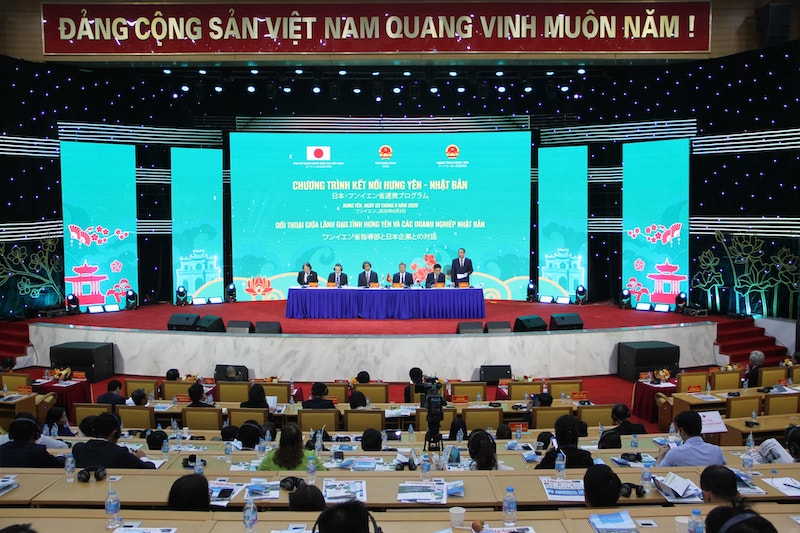
A Revolution Needed in State Management Mindset
To elevate its PCI in 2026, Hung Yen requires a true revolution in its public administration mindset. This means shifting from a state of "management" to "service", from a mindset of "permitting" to "supporting", from waiting for businesses' petitions to proactively identifying and resolving bottlenecks, and from processing dossiers purely by protocol to maximizing facilitation within the legal framework.
Regarding this approach, Mr. Nguyen Le Huy, Vice Chairman of the Hung Yen Provincial People's Committee, highlighted several key solutions:
First, the province will comprehensively review administrative procedures directly impacting businesses, especially those concerning investment, land, construction, environment, fire safety, business registration, labor, and post-licensing procedures. For every procedure, required documents, processing times, responsible agencies, and support focal points must be made publicly transparent. Overlapping, prolonged, and inconsistent procedures among departments, sectors, and commune levels must be cut down, standardized, digitized, and strictly supervised.
Second, Hung Yen will substantially enhance the quality of its two-tier local government apparatus. Commune and ward levels are currently the ones in direct contact with citizens, business households, small enterprises, investors, and local projects. Therefore, grassroots officials must be better trained in professional expertise, public relations skills, dossier handling, policy interpretation, and seamless coordination with provincial departments and sectors.
Third, the province will establish a mechanism for tracking and enforcement of ultimate accountability. Delayed dossiers must be traced to where they are stuck, by whom, and why; business petitions must have a response deadline; and prolonged bottlenecks must be escalated to competent authorities for resolution, eliminating the practice of passing the buck between agencies. The PCI will be difficult to improve if businesses still feel they have to navigate a "maze" of procedures on their own.
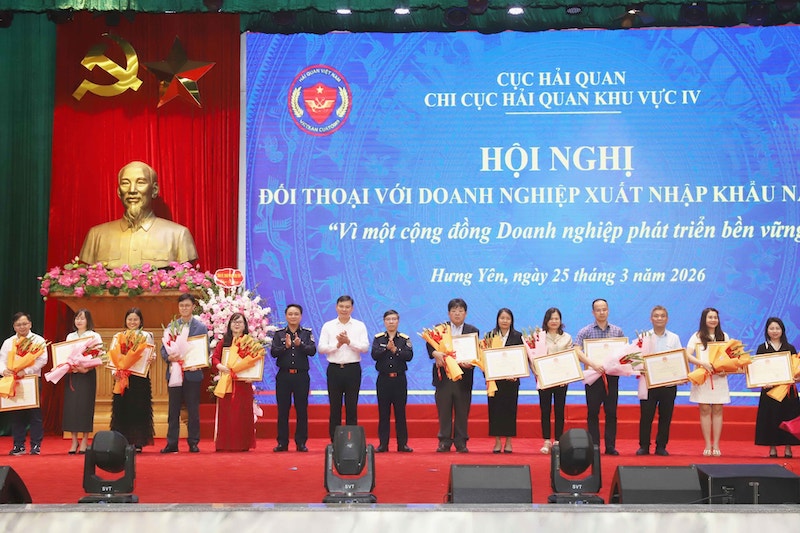
Mr. Nguyen Le Huy (center, in white shirt), Vice Chairman of the Hung Yen Provincial People's Committee, presents Certificates of Merit from the Provincial People's Committee Chairman to enterprises at the dialogue conference with import-export businesses in March 2026.
Fourth, regarding the Proactive Leadership sub-index, the province needs to pivot strongly toward regular dialogue, substantive listening, and rapid response, thereby consolidating trust within the business community.
Fifth, Hung Yen needs to drastically improve its Access to Land and Security of Tenure sub-index. To do this, information regarding planning, land funds, project portfolios, land rental prices, industrial zone and cluster infrastructure, and business support policies must be fully updated, easy to look up, and accessible. Businesses cannot invest long-term without transparent and stable information.
Sixth, the province needs to build upon the sub-indices that are already performing well, such as Transparency, Equal Competition, and Informal Charges. While this is a highly important foundation, complacency must be avoided. The higher the goals set, the more Hung Yen must protect its image as an upright, fair government that does not differentiate between large or small, local or out-of-province, FDI or domestic enterprises.
The goal of reaching the PCI Top 5 in 2026 is a major challenge, but it is also a powerful declaration of Hung Yen's aspiration for innovation. Moving from the "Fair" governance group to the "Good" group will be achieved through public service discipline, procedural reform, information transparency, strict accountability, and a genuine spirit of companionship with businesses and investors
Author: Kim Dung - Vu Phuong (Cam Anh translates)
RECOMMENDED TOPICS