VN
VN
 EN
EN
11/07/2026, 02:00
Business economics
Institutional breakthroughs as catalyst for Hanoi’s next leap
The resolution not only empowers the city and speeds up processes but also outlines a more proactive and efficient model of urban governance for Hanoi’s future.
Hanoi has been granted unprecedented authority to fast-track major strategic projects after the National Assembly adopted a pilot resolution introducing special mechanisms and policies.
The move is seen as a breakthrough for urban governance, infrastructure delivery and socio-economic management in the capital.
The resolution directly targets long-standing legal and institutional bottlenecks that have slowed Hanoi’s transformation into a modern megacity, empowering the city to make faster, more flexible decisions while strengthening legal certainty for both authorities and investors.
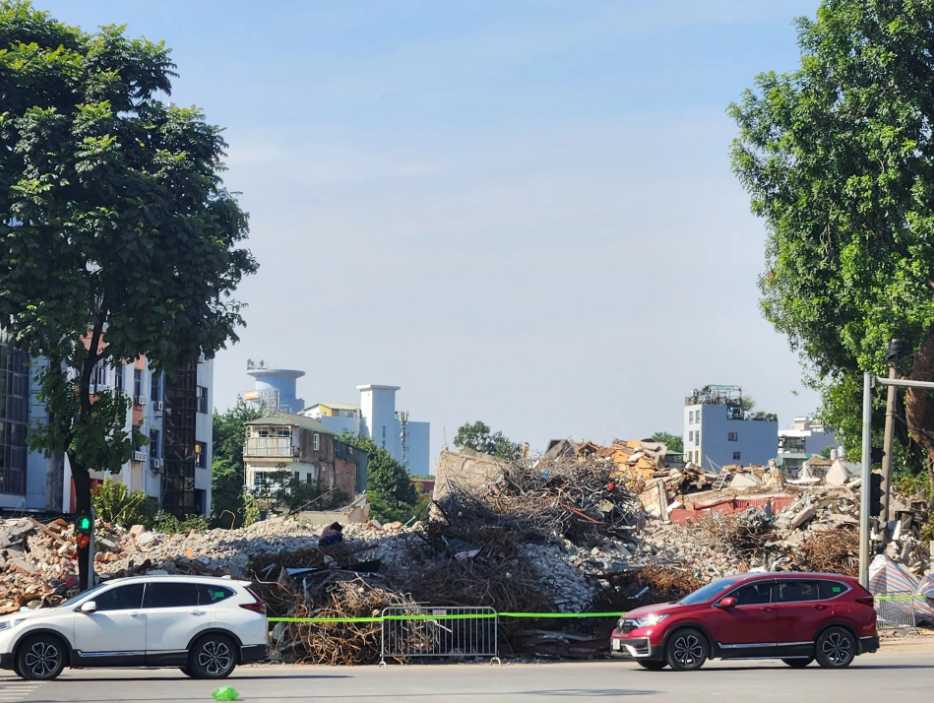
Site clearance for Ring Road 1 on the Hoang Cau–Voi Phuc section in Hanoi. Photo: Thanh Hai/The Hanoi Times
Addressing legal bottlenecks
Hanoi stands at an unprecedented threshold after decades of steady growth that has expanded its scale, role and standing. At the same time, the capital has faced constraints under the existing legal framework which have become institutional bottlenecks to the development of a dynamic megacity.
The pilot resolution on special mechanisms and policies for major strategic projects is set to provide the needed push to break through these limits. It is not merely a legal instrument but a strategic shift in urban development thinking.
The resolution introduces a series of new and superior mechanisms with a clear advantage in that it does not address only a few individual projects but establishes a new governance framework for a national core city.
One of its most fundamental innovations is strong decentralization and delegation of authority in decisions on investment policy and investor selection.
In the past, most large-scale public investment and PPP projects or those classified as nationally important required National Assembly approval, which often took years and did not suit a fast-moving urban model.
Under the special resolution, the municipal People’s Council is authorized to decide on investment policy for large projects even when they meet the criteria for nationally important projects.
At the same time, the chairman of the Hanoi People’s Committee is empowered to approve investment policy for off-budget projects of comparable scale and to attract strategic investors.
This controlled shift of decision-making from the central level to the local level shortens project preparation from years to months and allows key projects to move forward on time in a more flexible and competitive investment environment.
Another major change is the allowance for special procurement and investor selection methods across most projects covered by the resolution.
For urgent projects directed by Party authorities, Hanoi may select investors before formal investment policy approval which enables critical preparatory steps to run in parallel and sharply reduces waiting time.
Overlapping planning has long been one of the most serious constraints on urban development. Hanoi has faced conflicts between the Capital Master Plan, which sets socio-economic direction and the General Construction Plan, which organizes spatial development.
The pilot resolution allows these two plans to be merged into a single comprehensive Capital Master Plan. This creates the highest level of legal and technical consistency, from strategic development goals to spatial management, simplifies planning procedures and avoids conflicts between urban form and socio-economic objectives.
The comprehensive plan will provide a solid foundation for deploying major projects with greater transparency and lower risk for both authorities and investors.
It also supports parallel implementation of procedures such as detailed planning construction commencement and investment policy approval for urgent projects, which gives the city flexibility to respond quickly to pressing challenges.
Legal assurance
Land acquisition and site clearance remain among the most difficult stages of project preparation. The resolution introduces a breakthrough by allowing the municipal People’s Committee to use the city budget to carry out land recovery compensation support and resettlement as soon as detailed plans are approved even before an investor is selected.
This shifts site clearance responsibility from investors to public authorities with the legal mandate and capacity to act effectively. It reduces investor risk enables the city to proactively create clean land reserves shortens project timelines and improves the efficiency of public spending on compensation.
The provision to raise compensation and support levels for urgent projects to up to twice the standard rate is a decisive step to secure land for essential public infrastructure. It also helps build public consensus and supports residents in stabilizing their lives after land recovery.
For long-standing social challenges such as old apartment block renovation, the resolution offers timely solutions. It allows compulsory land recovery for renovation projects once at least 75% of land users and 75% of the required land area agree.
This approach balances individual rights with community interests while creating a strong legal basis to protect public safety and unlock opportunities for urban renewal. The 75% threshold helps the capital move beyond prolonged deadlock caused by minority opposition.
Another notable innovation is the liability exemption mechanism which provides legal assurance for officials acting in good faith.
It allows the exclusion of liability for leaders and staff involved in drafting and implementing the resolution when procedures are followed no personal gain is involved and losses still occur.
This mechanism addresses risk aversion and fear of accountability that have hindered public administration, especially when applying mechanisms that go beyond existing laws. It does not grant unconditional immunity but creates a safer legal environment for responsible initiative which is essential for effective implementation.
Overall the pilot resolution represents a decisive and forward-looking legal package designed to address chronic weaknesses in urban development.
Its strength lies not only in empowering the city and accelerating processes but also in setting out a strategic vision for a more proactive efficient and breakthrough-oriented model of urban governance for Hanoi’s future.
Author: Hanoitimes
RECOMMENDED TOPICS