VN
VN
 EN
EN
26/07/2026, 11:20
Investment
Modernising operation of North-South Expressway
The synchronised deployment of intelligent transportation systems (ITS), electronic toll collection (ETC), and automated weight scales is ushering the North-South Expressway into a new management phase, using technology and accuracy as the foundation for transparent, efficient, and sustainable operation.
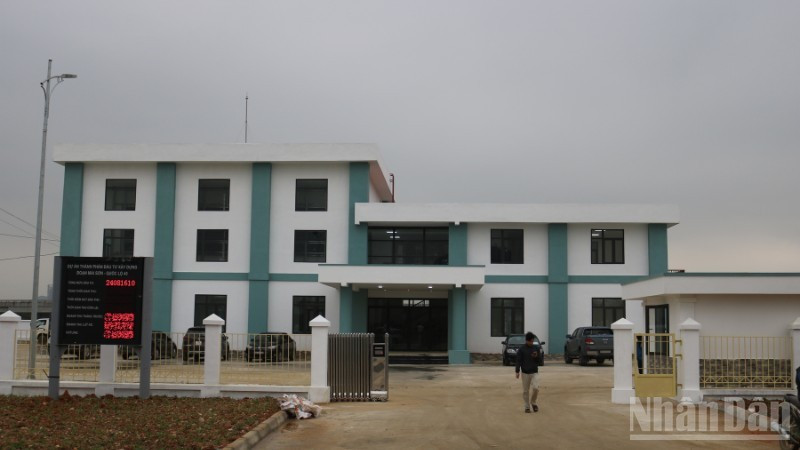
The deployment of Intelligent Transportation Systems (ITS) and Electronic Toll Collection (ETC) on the eastern North-South Expressway projects is not only a technological breakthrough but also a commitment from the transportation sector to an operating system that is “accurate, complete, and absolutely precise.” With 99% of the infrastructure completed, the national transportation backbone is ready to transition to a modern and transparent operational phase.
Strict standards for the toll collection system
To date, the infrastructure for the ITS and ETC systems on the first phase of the North-South Expressway projects has been largely completed. Sharing updates on this progress, Nguyen Viet Huy, Deputy Director of the Viet Nam Road Administration, said: “The system is approximately 99% complete. From the camera system and management software to the operators at the 5 expressways in phase 1, including Mai Son-National Highway 45, National Highway 45-Nghi Son, Nghi Son-Dien Chau, Nha Trang-Cam Lam, and Phan Thiet-Dau Giay, everything is ready for synchronised toll collection.”
However, instead of immediate operation, the system is currently undergoing a rigorous testing process lasting at least 37 days. Explaining this cautious approach, Huy emphasised: “This is the first time the State has invested in building an electronic system for collecting fees for the state budget. Therefore, the KPI coefficient must reach a minimum of 99.8%, meaning that out of 1,000 vehicles in circulation, only a maximum of 2 vehicles are allowed to make a mistake. If it doesn’t meet the target, we will continue to fine-tune it until absolute accuracy is achieved before officially launching the system.”
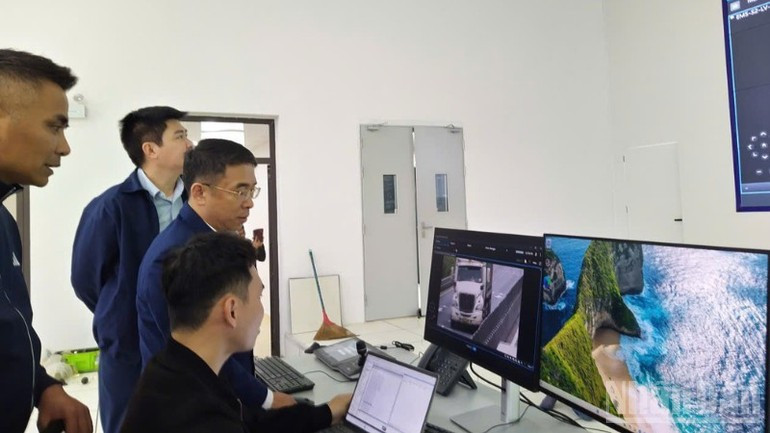
The highlight of this project is the strong application of artificial intelligence in management and operation. Pham Thanh Nhuong, the ITS project manager, stated that the new system integrates three subsystems: ITS, ETC, and automatic weight measurement (WIM).
According to Nhuong, AI technology optimises resources to the maximum: “Previously, a large number of personnel were needed for manual monitoring; now, with the new AI system, only 1 to 2 people are needed at the monitoring centre to manage and detect incidents along the entire route.” The system is capable of sharp license plate recognition at high speeds, automatically detecting violations and sending alerts to the central control centre. In particular, the toll station is designed without barriers at the entrance, allowing for continuous traffic flow and eliminating congestion.
Regarding overloaded vehicles, the WIM weighing system operates fully automatically, displaying warnings directly on electronic signs and recording data for “on-the-spot fines”.
According to Pham Thanh Nhuong, Head of the ITS project, AI technology helps optimise resources to the maximum: “Previously, a large number of personnel were needed for manual monitoring; now, with the new AI system, only 1 to 2 people are needed at the monitoring centre to manage and detect incidents along the entire route."
Overcoming challenges to ensure quality and progress
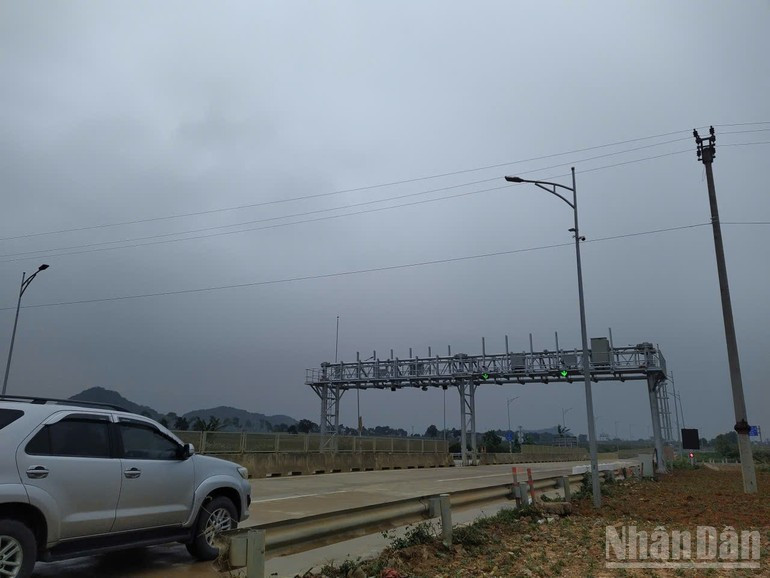
The construction of the ITS system faced numerous challenges due to the lack of synchronised infrastructure and harsh weather conditions. Nguyen Thanh Tung, Consulting Supervisor for Package 34 (Colinco Company), shared the practical difficulties: “We faced frequent equipment theft during the construction phase. To overcome this, the contractor had to increase night patrols and continuously station personnel at all intersections.”
To date, all imported equipment has been inspected by VinaControl, and the weighing system has also passed inspection by T1, ensuring compliance with strict technical standards. The theoretical training of staff has also been completed, ready for the “hands-on” phase on-site before official operation.
Based on the results of the KPI-compliant trial run, the official toll collection is expected to be implemented before or after the upcoming Lunar New Year 2026. The Viet Nam Road Administration has also developed a very detailed roadmap for integrating the back-end system:
For the 5 projects in the 2017-2020 period: Integration is expected to begin on February 12, 2026; acceptance testing will be conducted on February 13, 2026.
For the 12-13 projects in the 2021-2025 period: Integration is expected to begin on March 1, 2026, depending on the actual construction progress of the toll stations.
The expected completion time for construction on some typical sections is as follows:
The Bai Vot-Ham Nghi and Ham Nghi-Vung Ang routes will be completed on March 31, 2026.
The Van Ninh-Cam Lo route will be completed on April 15, 2025.
The Quang Ngai-Hoai Nhon route will be completed on June 10, 2026.
The Hoai Nhon-Quy Nhon and Quy Nhon-Chi Thanh routes will be completed on April 15, 2025.
The Chi Thanh-Van Phong and Van Phong-Nha Trang routes will be completed on April 15, 2026.
Although some issues remain, such as the fibre optic cables still being installed overhead in some sections, the Thang Long Project Management Board and contractors are focusing their efforts on resolving these technical problems. The early implementation of the ITS and ETC systems will provide a safe, convenient, and transparent traffic experience for the public, while also modernising the national transportation infrastructure.
Author: NDO
RECOMMENDED TOPICS