VN
VN
 EN
EN
10/07/2026, 10:58
VCCI
Over 2,000 legal issues were received and processed in 2025
2025 saw strong movements in institutional reform and the business investment environment. According to the "Business Law Flow 2025" report published by the Vietnam Chamber of Commerce and Industry (VCCI), more than 2,000 feedback and recommendations from businesses have been received and processed; thousands of business regulations have been reduced and simplified, contributing to unlocking resources for economic growth.
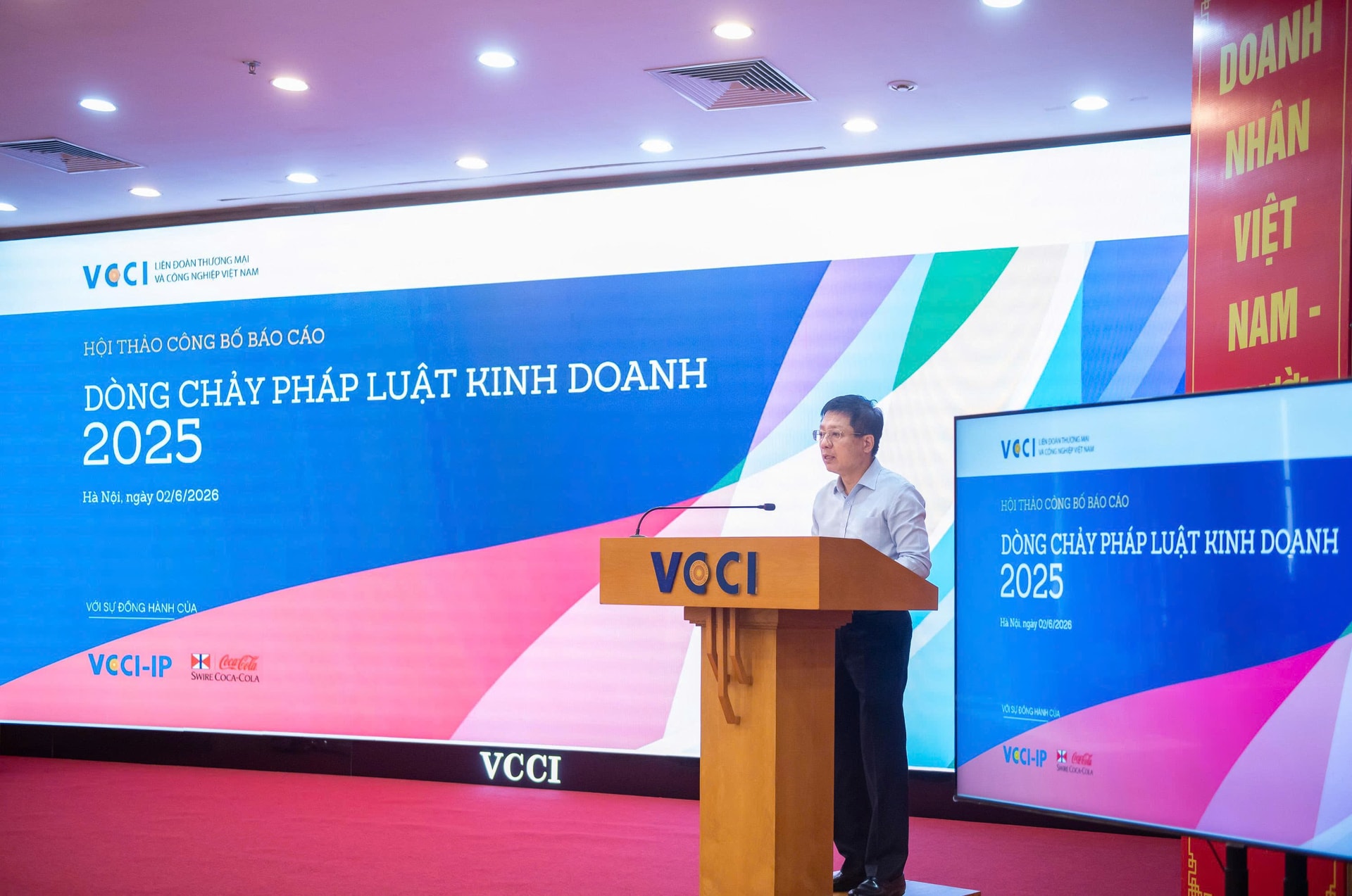
VCCI President Ho Sy Hung
Institutional reforms create new momentum for the business environment.
According to the "Business Law Flow 2025" report published by the Vietnam Chamber of Commerce and Industry (VCCI) on June 2nd, 2025 marks a significant shift in the thinking behind the development and implementation of laws. Despite the volatile global economic environment, Vietnam continues to maintain a GDP growth rate of approximately 8.02%, placing it among the highest in the region.
The report states that the introduction of the "four strategic resolutions"—Resolution 57 on science, technology and innovation, Resolution 59 on international integration, Resolution 66 on reforming the drafting and implementation of laws, and Resolution 68 on the development of the private economy—has created a clear shift in development thinking. The management approach has gradually moved from control to creation, from administrative management to promoting innovation and unlocking resources for development.
"2025 witnessed a series of strategic policy decisions, beginning with the "four pillars" comprising four important resolutions of the Politburo: Resolution 57 on science, technology and innovation; Resolution 59 on international integration; Resolution 66 on reforming the work of drafting and implementing laws; and Resolution 68 on the development of the private economy", shared VCCI President Ho Sy Hung.
Another notable milestone is the National Assembly's issuance of Resolution 206/2025/QH15 on a special mechanism for addressing difficulties and obstacles arising from legal regulations. This is considered a breakthrough in legislative activity, as it marks the first time the Government has been granted the authority to issue resolutions to address urgent "bottlenecks" arising from practical situations. In less than eight months, the Government has issued 15 resolutions under this special mechanism, focusing on resolving obstacles in many areas such as planning, land, minerals, investment, food, administrative procedures, land auctions, and social housing. Notably, Resolution 66.7/2025/NQ-CP has simplified more than 760 administrative procedures based on the principle of not requiring citizens and businesses to re-provide information that the state agency already possesses.
The year 2025 also saw an unprecedented volume of legislative work. The National Assembly passed 89 laws, the highest number in recent legislative history. Overall, during the 2024-2025 period, a total of 129 laws were enacted, exceeding the total number of laws from the previous eight years combined. Not only did the number increase, but the drafting process also significantly shortened. A survey of 33 laws directly related to production and business activities showed that the average drafting time was only about 221 days.
According to the Vietnam Chamber of Commerce and Industry (VCCI), 3,085 business regulations have been reduced and simplified, saving more than 29,300 days in processing procedures. A survey of businesses shows that 89.69% rated online procedures as easy to implement; 89.34% said that online procedures saved time, and 91.18% noted cost savings. More than 80% of businesses reported not having to travel multiple times or contact multiple agencies to complete the same administrative procedure.
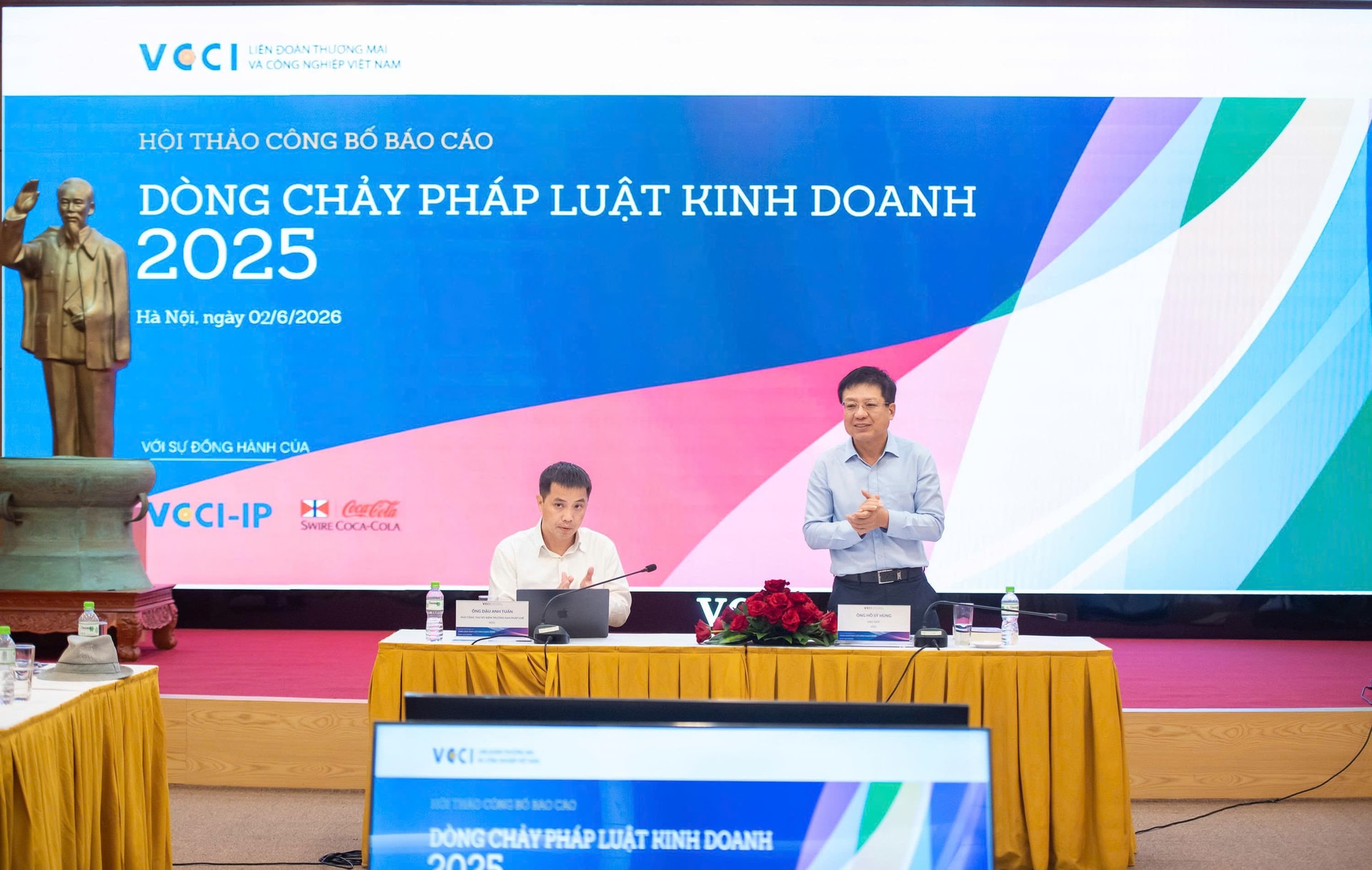
Continue to facilitate the "flow" of business law.
Speaking at the conference announcing the report, Mr. Dau Anh Tuan, Deputy Secretary General and Head of the Legal Department of VCCI, said that from the results of reviewing 2,088 feedback and suggestions from businesses nationwide, ministries, sectors, and localities have received, classified, and processed them. Of these, about 38% (787 feedback) were identified as genuine obstacles that needed to be resolved; the rest were explained and responded to publicly on electronic information portals.
However, according to VCCI representatives, there is still much room for in-depth reform. The report recommends further substantial reductions in compliance obligations, promoting data interoperability between state agencies so that businesses do not have to submit both paper and electronic documents simultaneously; and upgrading information technology infrastructure and standardizing implementation activities at the grassroots level.
The survey revealed significant bottlenecks. 38.18% of businesses reported still having to pay unofficial fees when applying for licenses. Furthermore, 24.04% of businesses had to cancel or postpone their business plans for 2025 due to difficulties related to procedures and licenses. These are considered issues that need to be prioritized in the coming period to ensure the transparency and efficiency of the investment and business environment.
Representing the business community, Mr. Nguyen Quoc Hiep, Chairman of the Vietnam Association of Construction Contractors, highly appreciated the results reflected in the Report. However, he also stated that the promulgation of a large number of laws in a short period of time could pose challenges to the quality of legal documents. According to him, practical feedback from the business community needs to be incorporated more into the law-making process to ensure feasibility and effectively address legal bottlenecks.
Sharing this view, Mr. Nguyen Van Phuc, former Deputy Chairman of the Economic Committee of the 12th National Assembly, believes that the business community is the "breath" of life, bringing practical experience into the law-making process. According to him, data and feedback from businesses are crucial sources of information that help state agencies promptly identify shortcomings in practice. Therefore, the "flow" of business law needs to be continuously improved to create a more favorable environment for sustainable business development in the new era.
Of the 787 identified obstacles requiring resolution, 42% relate to unclear or difficult-to-enforce regulations; 36% stem from regulations that generate compliance costs or fail to keep pace with new business models and innovative activities; and the remaining 22% arise from overlaps and inconsistencies between legal documents.
Author: Vietnam.vn
RECOMMENDED TOPICS