VN
VN
 EN
EN
24/07/2026, 16:11
VCCI
Party members engaging in private business: Strengthening the country
Reforming the policy on Party members engaging in private business will eliminate the stigma surrounding capable Party members who want to legitimately enrich themselves and society; it will help the Party better grasp the pulse of the market through the outstanding individuals within these businesses.
In the context of the country standing at crucial thresholds of reform and deep integration, redefining the role of the private economic sector is not only a practical requirement but also a strategic demand of the Party and the State.
Based on that spirit, the conference "Vietnamese Private Enterprises and Entrepreneurs with the Innovation of the National Development Model and the Policy for Party Members Engaging in Private Business," organized by the Vietnam Chamber of Commerce and Industry (VCCI) in collaboration with the Central Policy and Strategy Commission on May 25th in Hanoi, raised many major issues concerning institutions, resources, technology, and business culture in the new development phase. This was an important dialogue forum, recording new ideas on development that have been formed, aiming to prepare a solid theoretical and practical foundation for major projects to be submitted to the 14th Central Committee of the Communist Party of Vietnam.
Inner strength and the aspiration to reach greater heights
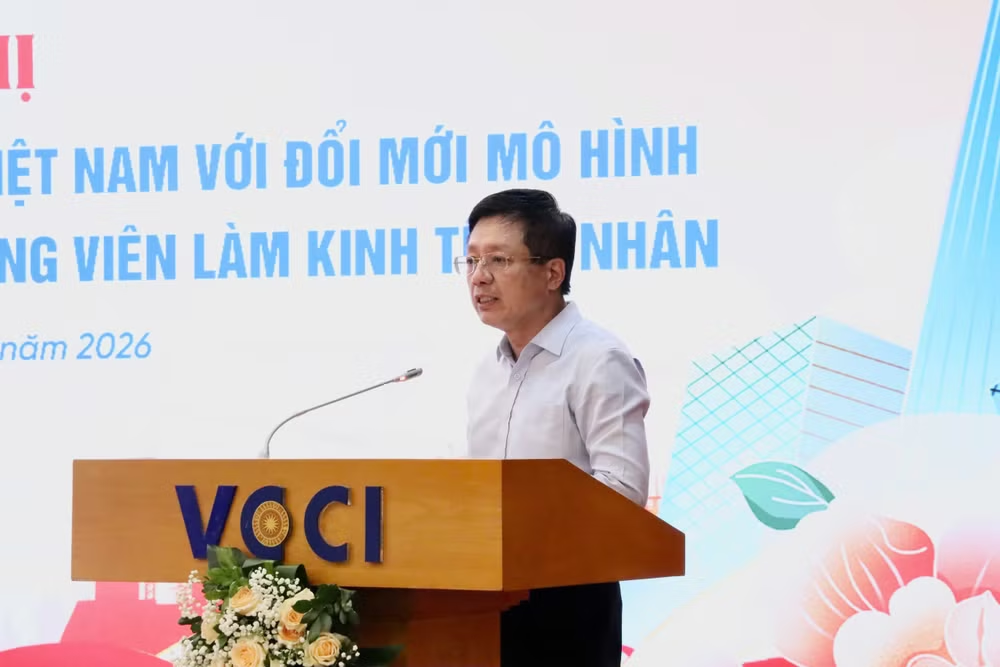
At the conference, Mr. Ho Sy Hung, President of the Vietnam Chamber of Commerce and Industry (VCCI), presented impressive figures to demonstrate the enduring vitality of the private sector. With approximately 1 million businesses, accounting for 97% of the total number of businesses nationwide, this sector contributes over 50% of GDP and more than 30% of total state budget revenue. In particular, its creation of jobs for over 80% of the workforce confirms that the private sector is the cradle of social stability and promotes growth.
However, according to the VCCI President: "These figures still do not fully reflect the potential if we do not have breakthroughs in institutional reform."
In a deeper analysis of the role of private enterprises, Mr. Ho Sy Hung emphasized that today's business community is not only engaged in purely commercial activities but is also becoming a pioneering force in innovation, digital transformation, and green economic development. For the private sector to truly become "the most important driving force," as envisioned by the Party's new direction, a sufficiently open and secure institutional environment is necessary.
"To encourage private businesses to invest long-term and venture into challenging fields and strategic national technologies, we must thoroughly remove bottlenecks related to land, capital, and compliance costs," Mr. Ho Sy Hung pointed out.
Furthermore, the VCCI leader proposed that it is necessary to give opportunities to large private corporations to participate in national infrastructure projects and strategic products. This is the way to "further strongly stimulate the entrepreneurial spirit and the desire to contribute of Vietnamese entrepreneurs." Mr. Hung's view shows that building a team of "leading companies" in the private sector is key to realizing the development model based on science, technology, and innovation that the Central Government is building.
Objectively speaking, the shift from a mindset of "an important driving force" to "the most important driving force" is a historical turning point in the Party's economic development strategy. This necessitates that subsequent policies be substantive, creating a level playing field where all barriers of prejudice or administrative procedures are removed to fully unleash productive forces.
Policy breakthrough
One of the key topics and the one that received the most attention at the conference was the review of 20 years of implementing Regulation No. 15-QD/TW on Party members engaging in private economic activities.
Nguyen Thanh Nghi, Politburo member, Secretary of the Central Committee of the Party, Head of the Central Policy and Strategy Commission, stated that practical experiences from the past two decades need to be compiled to issue a new regulation that is more in line with the spirit of the times.
According to Mr. Nguyen Thanh Nghi, Resolution No. 68-NQ/TW of the Politburo, issued in 2025, has set very high new requirements for the private sector. Encouraging Party members to engage in economic activities not only helps strengthen the country's economic potential but also contributes to building a team of entrepreneurs with political acumen, business ethics, and social responsibility. Mr. Nghi emphasized that this conference is an opportunity for the business community to propose breakthrough policies, not only in the economic field but also in culture, national defense and security, and foreign affairs.
The reform of the policy allowing Party members to engage in private business is seen as a "two-pronged approach." On the one hand, it removes the stigma and invisible barriers for capable Party members who want to legitimately enrich themselves and society. On the other hand, it helps the Party gain a deeper understanding of market dynamics through the elite individuals within these businesses.
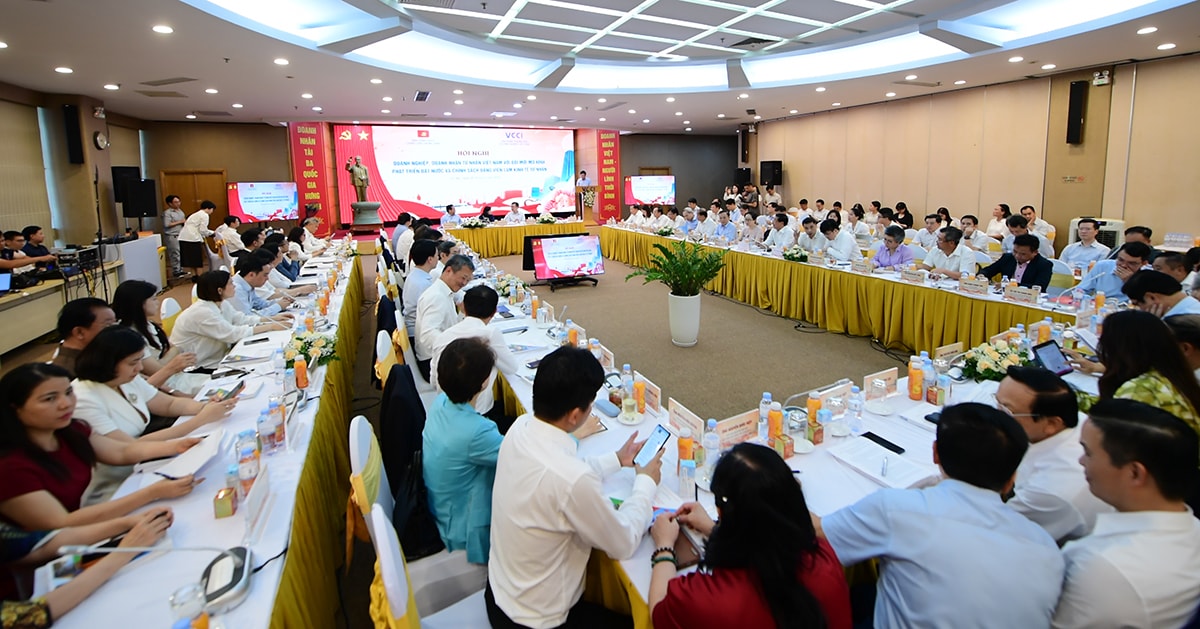
There is a broad consensus on the need to build a Vietnamese business culture based on national identity values.
At the conference, delegates argued that specific guidelines are needed to ensure that Party members not only excel in business but also maintain their integrity and moral character, becoming exemplary role models of honesty in the business environment.
A deeper analysis of the discussions reveals a strong consensus on the need to build a Vietnamese business culture based on national values and identity. In the new development model, science and technology and digital transformation are tools, but people and institutions are the decisive factors.
In addition, entrepreneurs have suggested the need for legal "green lanes" for innovative startup projects and green sectors. They hope that the government will not only provide financial incentives but, more importantly, policy stability so they can plan their investments for the next 10 or 20 years.
Following the conference, the Organizing Committee stated that it would study and refine the reasonable opinions during the process of developing and finalizing the proposals and reports to be submitted to the Central Committee, contributing to the Party and State's efforts in formulating sound policies that are in line with the people's will, for the goal of a prosperous people, a strong nation, democracy, fairness, and civilization.
RECOMMENDED TOPICS