VN
VN
 EN
EN
23/07/2026, 02:00
Business economics
Rate hike puts real estate market under double pressure
Rapidly rising interest rates are exerting significant pressure on the Vietnam real estate market.
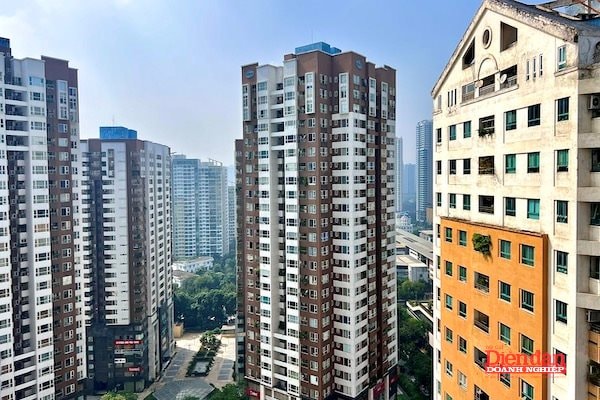
As supply remains scarce and housing prices rise quickly, buyers are compelled to adjust their selection criteria
The upward trend in interest rates is pushing the real estate sector into an unusually difficult phase. Not only homebuyers, but also companies across the industry are facing higher capital costs, tighter cash flows, and more visible financial risks. In this context, the market is being forced into a harsh cycle of adjustment and consolidation.
Escalating capital costs fuel a spiral of pressure
In a short period of time, preferential home-loan packages with interest rates of 5–6% per year—once considered a “lifeline” for buyers—have gradually disappeared. They have been replaced by common rates of 8–10% per year during the initial fixed period, followed by floating rates of 12–14% per year, or even higher once margins are added. As a result, borrowing costs have risen sharply and become increasingly unpredictable.
Adjustments by the Big 4 state-owned banks have created a ripple effect across the market, forcing joint-stock commercial banks to follow suit in order to maintain balance. In this environment, owner-occupiers—already under heavy pressure from persistently high property prices—now face an additional barrier: the cost of capital. The dream of homeownership has thus become more burdensome, not only at the time of signing the contract but throughout the entire life of the loan.
Rising interest rates are not only weighing on housing demand but are also spreading pressure across the corporate side. For real estate developers, the strain is even greater as the State Bank continues to tightly control credit growth, prioritizing capital for production and business activities. Real estate has therefore been classified as a sensitive sector, subject to stricter borrowing conditions and higher interest rates.
Soaring financing costs for project development have pushed many companies into a defensive position. In this context, higher interest rates not only weaken purchasing power but also directly choke off potential supply. Under financial pressure, many developers have been forced to delay project implementation, renegotiate contracts, or even sell off land reserves to maintain cash flow and avoid default risks.
Notably, the corporate bond market has yet to show a clear recovery, while a large volume of bonds is approaching maturity. With both bond issuance and bank credit facing constraints, financial pressure on real estate companies is no longer a short-term issue. For many developers, this has become a matter of survival, where every capital decision carries existential implications.
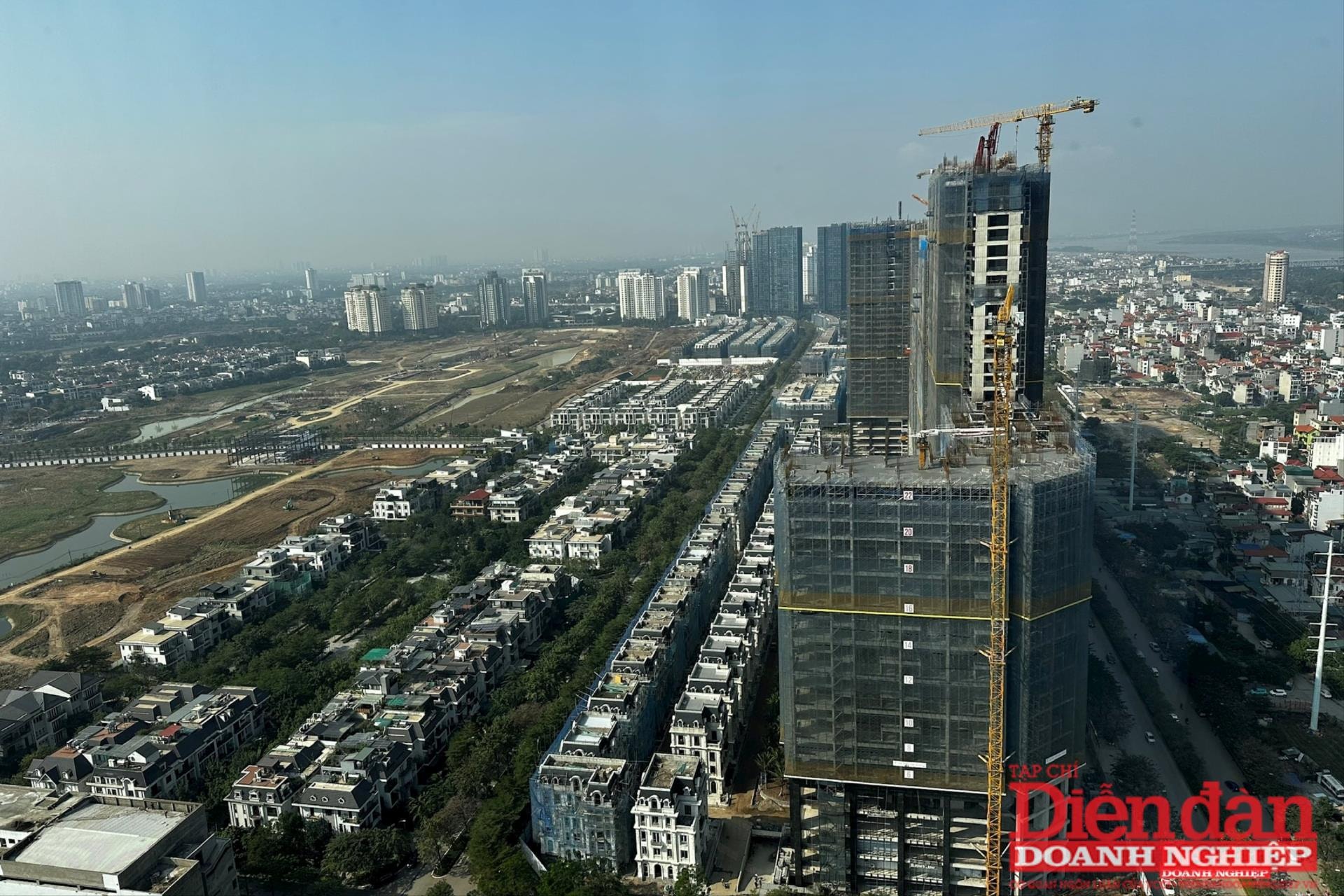
Many developers have rolled out flexible sales policies to stimulate transactions toward year-end.
Companies forced to change strategies to survive
From a corporate perspective, the high interest rate environment is forcing developers to reassess their entire development strategies. A representative of a Ho Chi Minh City–based real estate firm noted that rising interest rates not only make buyers more cautious but also directly affect how companies implement projects and manage cash flows.
As capital costs climb, companies have far less room to expand investment through financial leverage as they once did. Every project decision must now be based on actual absorption capacity, cash inflows, and the ability to withstand risk over the medium to long term. According to this firm, the biggest challenge at present is not a single moment in time but the instability of interest rates, which has made financial planning more cautious than ever.
This reality is forcing developers to prioritize projects with complete legal documentation, moderate scale, and a focus on genuine housing demand, rather than chasing overheated growth. In the current phase, financial safety must take precedence—even if that means accepting slower growth.
Experts warn that the coming period will be a “risk point” for borrowers about to exit preferential interest-rate periods. Đinh Minh Tuấn, Director of Batdongsan in the southern region, noted that this group of borrowers will face significant pressure if new interest rates exceed their financial tolerance.
For investors, risks are even higher when projects are delayed, rental income is insufficient to cover interest costs, and debt repayment obligations continue on a monthly basis. Rising capital costs may also force developers to adjust selling prices to offset expenses, leading to further declines in liquidity.
When prices are slow to fall and transactions stall, the market can easily slip into a negative spiral: buyers hesitate, companies lack cash flow, and projects continue to be delayed. Analysts argue that rising interest rates are creating a dual impact—reducing buyers’ access to capital while simultaneously increasing financial burdens on businesses.
Amid the many grey tones, not all companies are choosing a purely defensive stance. Some developers are proactively seeking ways to adapt, focusing on more substantive solutions for buyers, such as extended payment schedules, reduced initial financial pressure, and products better aligned with genuine housing demand.
Mr. Nguyễn Văn Đính, Chairman of the Vietnam Association of Realtors (VARS), said that rising interest rates are clearly exposing structural weaknesses in the real estate market. According to Đính, for many years a number of companies and investors have grown accustomed to a low-interest-rate environment, relying heavily on financial leverage, while cash-flow capacity and the market’s real absorption ability failed to keep pace with rising prices.
He added that when capital costs increase, development models overly dependent on debt will quickly run into trouble, forcing restructuring or market exit. In contrast, companies focused on segments that meet genuine housing needs, with complete legal frameworks and strong cash-flow management, will have greater chances of staying resilient during this period.
According to the VARS Chairman, high interest rates in the short term will certainly put pressure on both supply and demand, but in the longer term they act as a “filter,” helping real estate return to its intrinsic value, curbing speculation and overheated growth. He also advised homebuyers to be more cautious in using financial leverage, while urging companies to prioritize financial safety and project progress over scale expansion or short-term profit expectations.
Author: MAN NHI - TRUONG DANG (translates)
RELATED TOPICS
RECOMMENDED TOPICS