VN
VN
 EN
EN
11/07/2026, 02:00
Business economics
Reservoir aquaculture set to drive sustainable growth in Viet Nam’s fisheries sector
With its vast water surface area and supportive policy direction, developing aquaculture in reservoirs is emerging as a breakthrough approach. It is expected to generate around 16 trillion VND annually by 2030 and provide sustainable livelihoods for more than 80,000 workers across localities.
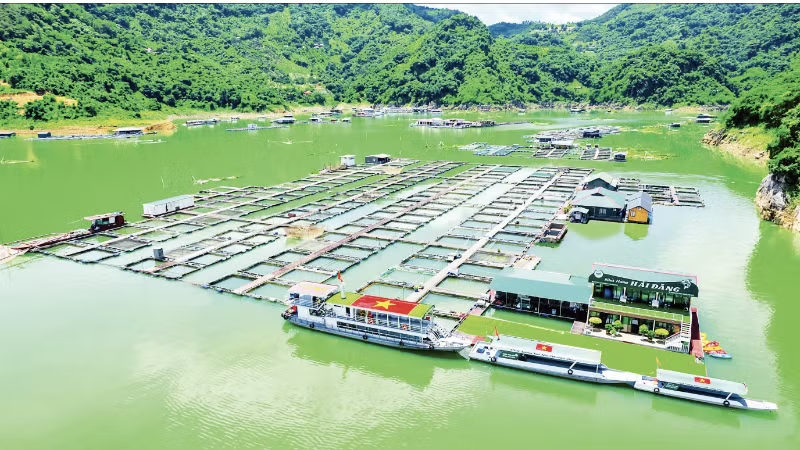
As Viet Nam’s fisheries sector shifts towards greener practices and deeper international integration, aquaculture in ecologically rich reservoirs is becoming a key solution. It not only offsets declining marine catches, which are being deliberately reduced, but also steers the sector towards a foundation built on knowledge and modern technology.
Unlocking the potential of reservoir fisheries
In early May, the Da River reservoir was bustling with the harvest of speciality fish. From dawn, dozens of small boats spread out across the inland waters to net ‘ngan’ (Salanx) and ‘bong’ (goby), two seasonal delicacies prized for their flavour.
‘Ngan’ fish, with its small translucent body and naturally sweet taste, appears in abundance only from March to June, making it rare and highly valued. ‘Bong’ fish, by contrast, has firm flesh and a robust flavour, and is equally popular with diners.
Nguyen Thanh Tuan, a long‑time fisherman on the Da River reservoir, explained that the best catches are made early in the morning or late in the afternoon when the fish feed.
After a day’s labour, boats return to Bich Ha quay, Tan Hoa ward, Phu Tho province, where fish are sorted and weighed on board before being sold directly to traders at about 200,000 VND/kg for ‘ngan’ and 120,000 VND/kg for ‘bong’.
Viet Nam’s reservoir system could become a new growth driver for the fisheries sector, with the potential to yield hundreds of thousands of tonnes of aquatic products annually.
Deputy Minister of Agriculture and Rural Development Phung Duc Tien
These hauls not only provide significant income but also pave the way for long‑term economic development, as local authorities encourage responsible fishing and resource conservation. Thanks to their freshness and appeal, Da River fish have become increasingly popular and are now recognised as a leading reservoir‑based seafood brand nationwide.
Deputy Minister of Agriculture and Rural Development Phung Duc Tien highlighted the scale of Viet Nam’s reservoir system: more than 6,700 irrigation reservoirs with a combined capacity of 14.5 billion cubic metres, alongside 700 hydropower reservoirs.
This “green resource store” could become a new growth driver for the fisheries sector, with the potential to yield hundreds of thousands of tonnes of aquatic products annually.
Northern provinces offer particularly favourable conditions, with large reservoirs such as Hoa Binh, Son La, Thac Ba, Na Hang and Lai Chau providing vast production spaces suited to cage farming and combined release‑and‑culture practices. Many reservoirs also boast clean water, great depth and low industrial pollution, enabling the cultivation of both conventional and speciality species.
Building a green and sustainable value chain
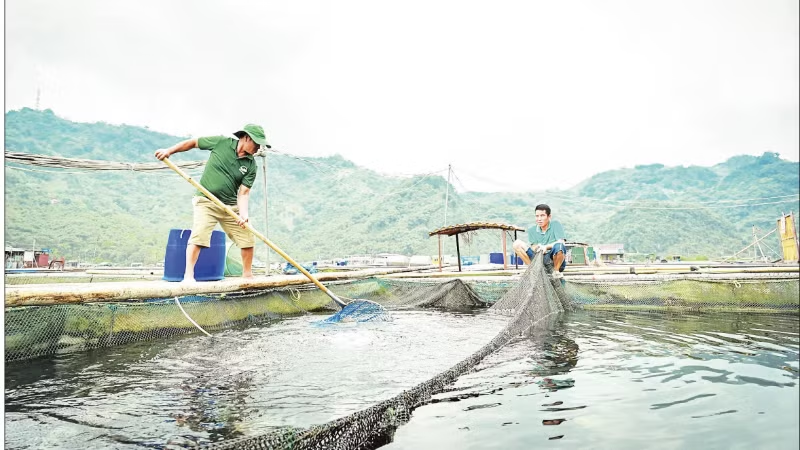
Harnessing the water surface of hydropower reservoirs, Son La province is advancing high‑tech aquaculture and product processing, while safeguarding natural resources and linking development with tourism.
Deputy Director of the Provincial Department of Agriculture and Rural Development Vu Tien Dinh said the province is encouraging businesses to invest in deeply processed products with high added value, while strengthening certified brands such as “Son La sturgeon” and “Da River fish from Son La”. QR codes will be applied to each product and fish cage to ensure transparency and traceability.
The Da River reservoir, renowned for its scenic beauty, is also a rich fish basin with clean water ideal for cage farming. Hai Dang Seafood Group Co., Ltd in Hoa Binh ward, Phu Tho province has partnered with cage farmers to build a stable raw‑material base and developed Da River fish floss, certified as OCOP 4‑star.
Executive Director Nguyen Thi Dung said the company will continue expanding production, diversifying processed products and working towards upgrading its OCOP rating. Maintaining supply‑chain links with cage farmers not only secures raw materials but also creates jobs and raises incomes for local communities.
Despite its promise, reservoir aquaculture remains underdeveloped. Production is fragmented and lacks coordination, while overlapping regulations in the Irrigation Law, Fisheries Law and related documents pose legal challenges.
To unlock the “golden” potential of more than 6,700 irrigation reservoirs and 700 hydropower reservoirs nationwide, with a combined capacity of around 50 billion cubic metres, the Ministry of Agriculture and Rural Development has launched a scheme for reservoir aquaculture development for 2026–2030.
To unlock the “golden” potential of more than 6,700 irrigation reservoirs and 700 hydropower reservoirs nationwide, with a combined capacity of around 50 billion cubic metres, the Ministry of Agriculture and Rural Development has launched a scheme for reservoir aquaculture development for 2026–2030.
The plan targets annual production of more than 260,000 tonnes, valued at about 16 trillion VND by 2030, and aims to create jobs for over 80,000 workers, around 30% of whom are ethnic minorities.
Deputy Minister Phung Duc Tien emphasised the need to complete institutional frameworks, particularly mechanisms for allocating water surface areas, zoning aquaculture and managing environmental capacity. Incentive policies should encourage investment, including credit support, reduced water‑surface rental fees, and investment in hatcheries and feed projects.
At the same time, scientific innovation and digital transformation are vital, with modern HDPE cages, automated feeding systems, environmental monitoring and product traceability all playing a role.
With supportive policies and strong collaboration between localities and businesses, the fisheries sector is poised to accelerate innovation and breakthroughs, turning reservoir resources into a new growth engine and fully realising the potential of Viet Nam’s vast waters.
Author: NDO
RECOMMENDED TOPICS