VN
VN
 EN
EN
26/07/2026, 11:20
Investment
Slow disbursement of public investment capital due to obstacles from policies
Disbursement of public investment capital still has faced many obstacles, mainly focusing on mechanisms and policies related to specialized ministries.
 |
|
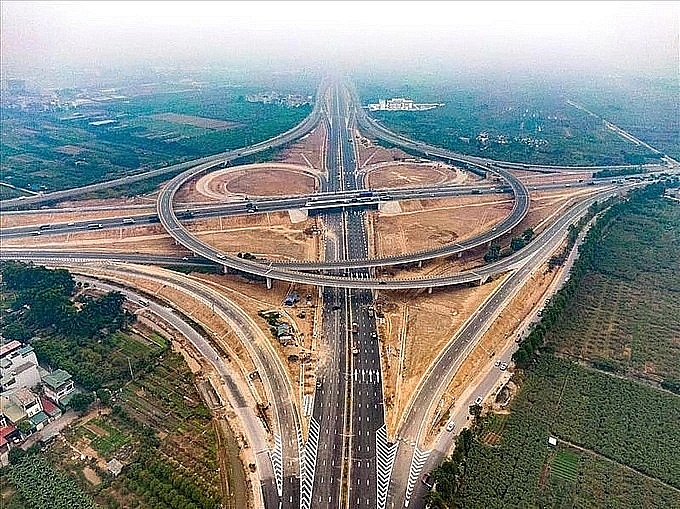
Site clearance is a major difficulty for many public investment projects. Illustrative photo: S.T |
The main obstacles are in mechanisms and policies
The recent report of the Government's Working Group No. 5 (headed by the Minister of Finance) on urging the disbursement of public investment capital in provinces: Ninh Thuan, Binh Thuan, Dak Lak, Dak Nong, Gia Lai, Kon Tum, Lam Dong, Dong Nai, Binh Duong, Binh Phuoc, Tay Ninh, Ba Ria - Vung Tau, clearly stated that the difficulties and obstacles are mainly in mechanisms and policies on capital allocation, procedures for project implementation (Ministry of Planning and Investment); planning and acceptance of works (Ministry of Construction); site clearance, building materials (Ministry of Natural Resources and Environment); conversion of land use purposes, obstacles in the implementation of national target programs (Ministry of Agriculture and Rural Development, Committee for Ethnic Minorities); problems related to equipment procurement (Ministry of Health, Ministry of Science and Technology).
In addition, many provinces have not been serious in the implementation of disbursement. The allocation of capital plans by provinces for projects has not been meet the capital absorption capacity of the projects. Many projects have large capital volumes but the disbursement rate is still low, some projects have not yet disbursed.
According to the representative of the Department of Finance of Can Tho City, the slow disbursement is due to the difficulties in compensation and site clearance for many large projects, mainly because people still complain about compensation prices and resettlement support policies; the resettlement progress is slow, projects do not have construction sites; projects starting at the end of 2023 are given advance payment for construction contracts according to regulations, so in the first months of 2024, the completed volume outside the construction site is only partially paid, so the disbursed capital is not much; new projects starting in 2024 are mostly in the stages of design, technical files, cost estimates, and bidding procedures, so they have not yet started and do not have volume.
Focusing on developing and amending a number of Law projects
To promote public investment disbursement, the Ministry of Finance said that cities and provinces need to have solutions to solve difficulties and obstacles to speed up the progress of key infrastructure projects, national key projects and national target programs, held regular meetings of working groups to accelerate public investment disbursement at the local level, as well as promptly remove difficulties and obstacles. In particular, specialized ministries need to urgently study and develop amendment plans, report to competent authorities for consideration and decision on amendments to create favorable conditions, reduce procedures to boost disbursement of projects, ensuring the effective and economical investment.
The Ministry of Finance and ministries, central and local agencies have repeatedly proposed amendment to policies to remove above obstacles. In particular, before the National Assembly, the Minister of Finance once raised the issue that if the legal regulations on public investment are not amended, there will be continued discussions about slow public investment.
Therefore, the Ministry of Planning and Investment is currently proposing to draft the Law on Public Investment (amended), and develop a project to amend and supplement a number of articles of the Law on Planning, the Law on Investment under the public-private partnership model and the Law on Bidding (one law amending four laws).
The 2019 Law on Public Investment has recently revealed a number of difficulties and problems, such as the decentralization and delegation are not yet effective, some procedures still have to be submitted to many authorities, causing time loss and affecting the progress of implementing the medium-term public investment plan. The adjustment of the medium-term public investment plan (including the addition of a new list of projects compared to the list that the Government has reported to the National Assembly to issue the medium-term public investment plan) is mainly adjusted through resolutions of the National Assembly.
Furthermore, some contents are still overlapping, not specific or there are many ways to understand the same content, causing confusion for ministries, agencies and localities in the implementation, such as adjustment of project investment policies, project scope using public investment capital and tasks of using recurrent expenditures.
Experts say that amending legal regulations to perfect mechanisms and policies related to public investment will help optimize and increase the efficiency of using public investment capital. Therefore, this work requires authorities at all levels and sectors to resolutely implement as soon as possible.
| According to a report from the Ministry of Finance, in the first seven months of 2024, 38 out of 63 cities and provinces had an estimated disbursement rate higher than the national average. 25 cities and provinces had disbursement rate lower than the national average. Some localities had disbursement rates below 20% such as Ho Chi Minh City (14.31%), Phu Yen (16.27%), Bac Ninh (16.08%), and Hai Duong (18.36%). According to the Ministry of Finance, the low disbursement rate of some cities and provinces with large capital plans such as Ho Chi Minh city (VND79,263.78 billion) and Hanoi city (VND 81,033 billion) has a great impact on the country’s disbursement rate. |
Author: Customsnews
RECOMMENDED TOPICS