VN
VN
 EN
EN
23/07/2026, 01:50
Legal environment
Solutions to EPR implementation challenges
The implementation of Extended Producer Responsibility (EPR) policy still faces multiple bottlenecks, requiring further refinement.
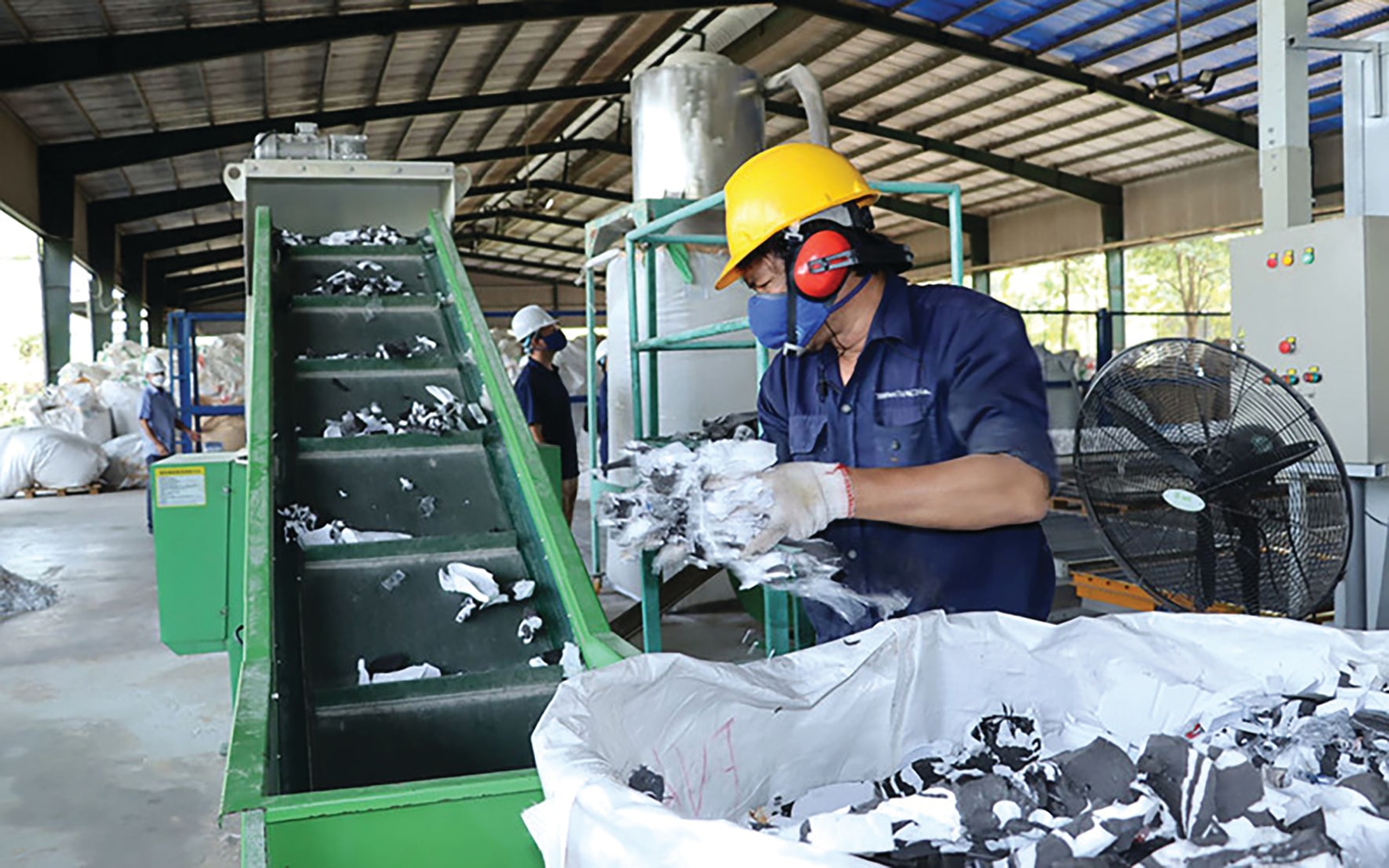
The EPR policy, codified in the 2020 Law on Environmental Protection and further detailed through guiding decrees and circulars, not only marks a significant shift in environmental governance thinking but also imposes fundamental transformation requirements on the business community.
Persistent bottlenecks
Vietnam is considered one of the pioneering countries in the region for integrating the EPR mechanism into its 2020 Law on Environmental Protection. Articles 54 and 55 of the Law clearly stipulate that producers and importers are responsible for recycling or making financial contributions toward the collection and treatment of waste generated from the products and packaging they place on the market.
However, practical implementation reveals several unresolved challenges. One of the most prominent issues is the gap between policy design and the realities of the recycling market.
According to Mr. Vu Thai Truong, Head of Climate, Environment and Energy at UNDP Vietnam, while a basic legal framework has been established, the financial mechanism for the EPR system remains incomplete. Financial resources from EPR are expected to serve as a key supplementary funding source for waste collection and recycling activities. However, the lack of clear regulations on how these funds are used—particularly in attracting private investment into waste treatment—has limited the policy’s effectiveness.
“Another challenge lies in monitoring capacity and data transparency.
Currently, the national database on actual collection and recycling rates, as well as financial flows of EPR contributions and disbursements, remains incomplete. Verification of product and packaging volumes placed on the market largely relies on self-reporting by producers and importers. This creates an urgent need to strengthen monitoring, verification systems, and data transparency to ensure fairness and policy effectiveness,” he noted.
At the same time, awareness and readiness among businesses regarding EPR remain uneven. While many FDI enterprises and multinational corporations have experience implementing EPR across different markets, a significant number of domestic small and medium-sized enterprises still perceive it as a cost burden. If this mindset persists, EPR risks being reduced to minimal compliance rather than becoming a driver for product design innovation and sustainable business models.
He also pointed out that the operational mechanism of Producer Responsibility Organizations (PROs) is another constraint. Currently, the number of PROs in Vietnam remains limited, and few possess sufficient governance capacity and financial resources to invest in large-scale, multi-regional collection systems.
Key “bottlenecks” to address
Given these realities, experts emphasize that improving the legal framework, strengthening implementation capacity, and optimizing the EPR system structure are critical to ensuring the policy’s effectiveness in Vietnam. In particular, reviewing and revising Article 54 (recycling responsibility) and Article 55 (waste collection and treatment responsibility), along with related guiding documents, is seen as a strategic step.
Specifically, transitioning from policy establishment to full-scale effective implementation requires fine-tuning core design elements, including: clarifying obligations of producers and importers and the scope of regulated products; strengthening governance mechanisms for EPR registration and reporting systems; enhancing monitoring, verification, and enforcement frameworks to prevent non-compliance; improving transparency and accountability in managing and allocating financial contributions for waste treatment; and aligning domestic practices with regional and global best practices in EPR governance and circular economy implementation.
From a policy perspective, Ms. Anke Boykin, Senior Director of Global Environmental Policy at PepsiCo, noted that a key lesson for Vietnam is the need to build an accurate data system and ensure fairness among stakeholders. Companies subject to EPR must fully register and report the volume of products and packaging placed on the market, as well as recycling outcomes, thereby creating a transparent and trustworthy system.
“In addition, publishing periodic performance reports and establishing independent auditing mechanisms will further enhance transparency and accountability. At the same time, developing a strategic roadmap with clearly defined roles for PROs, coordination with urban waste management systems, and engagement of the informal waste collection sector will help EPR operate more effectively in the long term,” she added.
Regarding EPR policy, at a previous consultation meeting on the draft decree detailing certain provisions of the Law on Environmental Protection related to recycling responsibilities and waste treatment obligations of producers and importers, Deputy Prime Minister Tran Hong Ha emphasized that all regulations must be designed clearly and transparently. This is to ensure that financial resource collection and management are practical and well-defined, avoiding situations where policies are issued without clearly identifying responsible entities or leading to inconsistent interpretations during implementation.
Author: GIA NGUYEN - TRUONG DANG
RELATED TOPICS
RECOMMENDED TOPICS