VN
VN
 EN
EN
10/07/2026, 10:58
VCCI
Solving operational challenges for the carbon market
As Vietnam enters a critical preparation phase ahead of the official launch of its carbon market, understanding businesses’ implementation capacity and market sentiment has become particularly important.
To gain a comprehensive view of the carbon market before its official operation, on the morning of June 17, 2026, the Vietnam Chamber of Commerce and Industry (VCCI), in collaboration with the Department of Climate Change under the Ministry of Agriculture and Environment, organized a workshop entitled “Business readiness for trading greenhouse gas emission allowances and carbon credits on the domestic carbon exchange”.
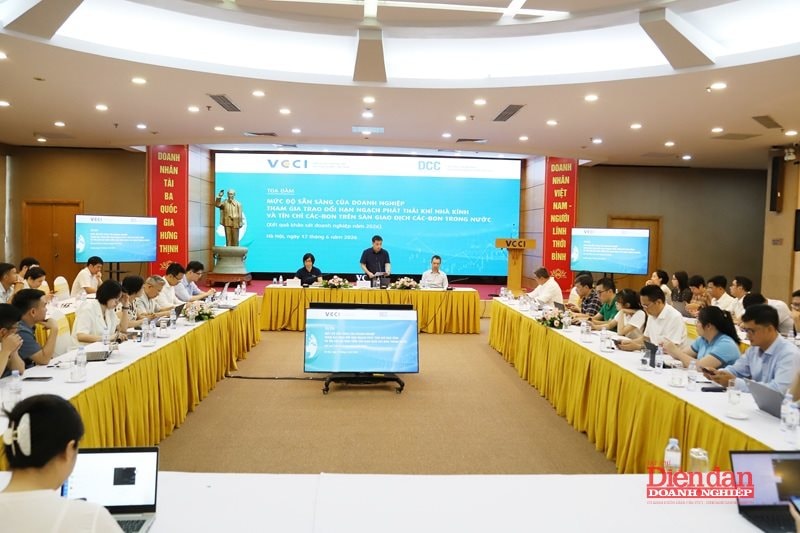
Workshop on “Business readiness for trading greenhouse gas emission allowances and carbon credits on the domestic carbon exchange”, jointly organized by VCCI and the Department of Climate Change under the Ministry of Agriculture and Environment on the morning of June 17
In his opening remarks, Mr. Dau Anh Tuan, Deputy Secretary General and Director of the Legal Department of VCCI, stated that the operation of a domestic carbon credit exchange is a highly technical issue but also one of great importance for businesses, particularly those currently required to conduct greenhouse gas inventories.
According to Mr. Tuan, the workshop took place at a very special moment, just before the launch of Vietnam’s carbon exchange.
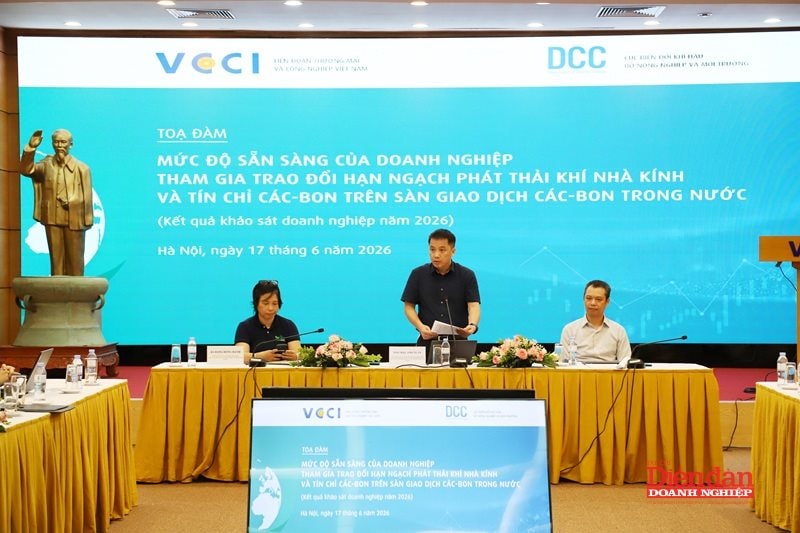
Mr. Dau Anh Tuan, Deputy Secretary General and Director of the Legal Department of VCCI, delivers the opening remarks
“This is no longer a story of the future that we often talk about; it is a story of the coming days. The carbon market marks the first time in Vietnam that greenhouse gas emissions become a priced commodity that can be traded, and therefore become a very important variable in corporate financial and strategic planning,” Mr. Tuan shared.
He also noted that the Government and the Ministry of Agriculture and Environment have made thorough and systematic preparations to help businesses enter this new “playing field” with a relatively comprehensive legal framework.
According to Mr. Tuan, Article 139 of the 2020 Law on Environmental Protection has been detailed through Decree No. 06/2022/ND-CP, amended by Decree No. 119/2025/ND-CP, and most recently supplemented by Decree No. 29/2026/ND-CP, which specifically regulates the domestic carbon exchange.
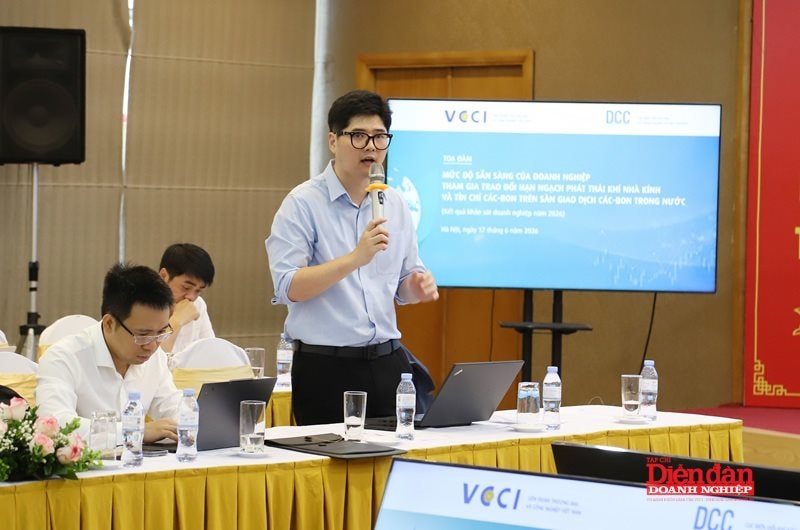
Representative of the Department of Climate Change under the Ministry of Agriculture and Environment speaks at the workshop
“The legal and technical infrastructure is now ready. The remaining question is how ready businesses are. We believe this is both a compliance obligation and an opportunity. Businesses that understand carbon costs and pricing early will be able to proactively shape their investment strategies. Those that lag behind will inevitably face disadvantages in terms of finance and competitiveness,” Mr. Tuan emphasized.
He further noted that Vietnam is operating in an increasingly competitive international environment. For export-oriented industries such as steel and cement, becoming familiar with domestic carbon pricing is also an important preparation for mechanisms such as the Carbon Border Adjustment Mechanism (CBAM) in major import markets like the European Union.
Addressing the gap between awareness and implementation capacity, Mr. Tuan stressed that the demand for guidance, training and capacity building is both urgent and legitimate. Particularly in a new and important field such as the carbon market, businesses cannot be left to navigate the market on their own.
“That is why today’s workshop aims to assess the actual level of business readiness, understand expectations regarding carbon pricing, and identify existing obstacles. We also hope businesses will openly share their views so that together we can discuss support and training roadmaps, while helping the Ministry of Agriculture and Environment continue to refine and improve the legal framework in the coming period,” Mr. Tuan stated.
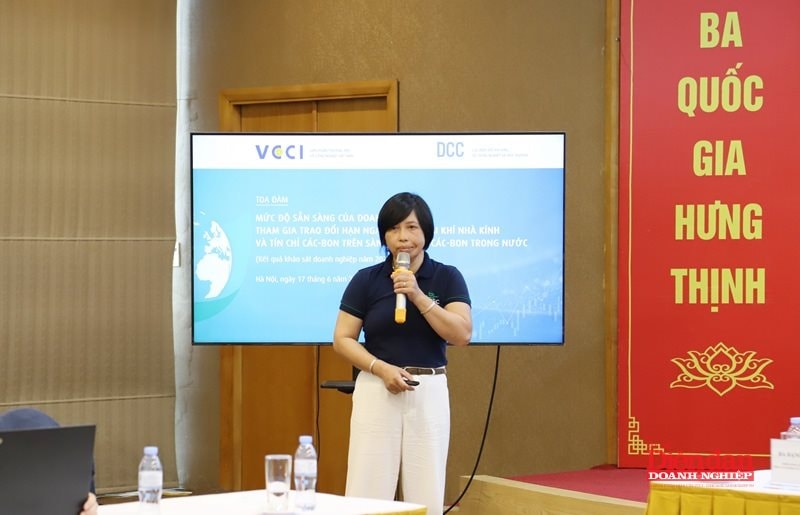
Representative of VNEEC presents at the workshop
At the workshop, representatives of the Department of Climate Change shared updates on the overall preparation efforts of state management agencies, highlighting the legal roadmap and technical support mechanisms available to businesses before they officially participate in greenhouse gas emission allowance trading on the domestic carbon exchange.
A representative of the Vietnam Energy and Environment Consultancy Joint Stock Company (VNEEC) presented key findings from a survey and analysis of reference price ranges. Based on expectations collected from 110 major emitting facilities allocated emission allowances, combined with assessments of marginal abatement costs under Vietnam’s Nationally Determined Contribution (NDC) and international experience, a reference price range of USD 5–10 per ton of CO₂ equivalent was identified as appropriate for initial transactions on the market.
According to VNEEC, this price range is comparable to the starting prices observed in several international carbon exchanges. Notably, most businesses supported a controlled pricing mechanism incorporating a price floor, a price ceiling and a market stability reserve, indicating a preference for supervised market operation during the initial phase rather than allowing the market to regulate itself entirely.
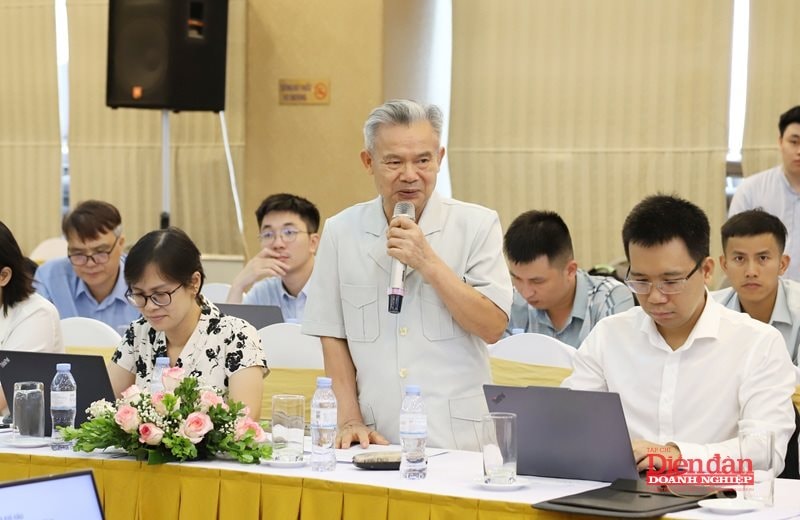
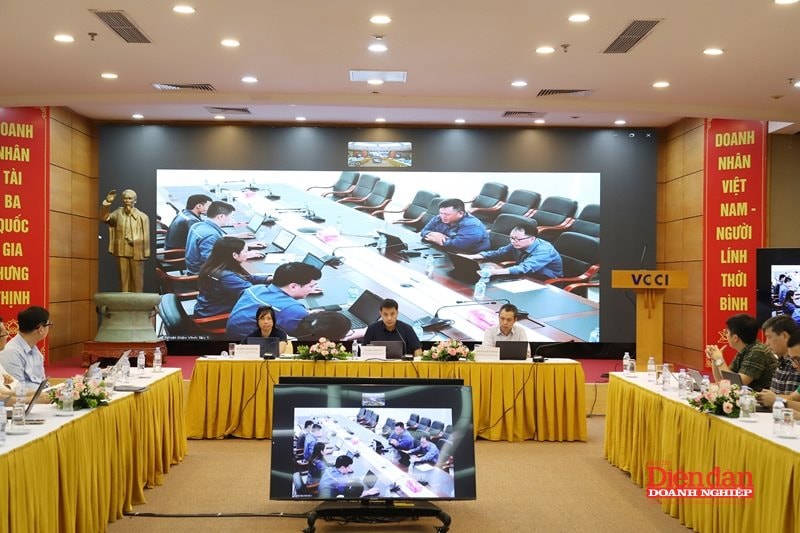
The workshop collected opinions from businesses through both in-person and online participation
Regarding readiness, the VNEEC representative noted that while facilities have developed awareness and preparation plans, their actual implementation capacity remains limited. Most businesses prioritize internal emission reduction strategies rather than participating in exchange trading, while the number of facilities expecting allowance shortages is nearly double the number anticipating surplus allowances for sale. As a result, there is a risk of low liquidity on the carbon exchange during the pilot phase.
High investment costs, a shortage of experienced personnel and insufficient guidance from regulatory authorities were identified by businesses as the three most significant barriers to participating in the carbon market and complying with emission reduction targets.
Current training needs remain focused on fundamental technical issues but are gradually shifting toward market operations, carbon finance management and digital transformation.
In addition to the issues presented, business representatives and stakeholders engaged in direct discussions on practical challenges, policy expectations and necessary support measures ahead of the market’s official launch.
To provide practical evidence for policymakers, VCCI, in cooperation with the Department of Climate Change, conducted an in-depth survey of major emitting facilities included in the pilot greenhouse gas emission allowance allocation list under Decision No. 699/QD-BNNMT dated February 27, 2026, issued by the Ministry of Agriculture and Environment. The survey covered facilities in thermal power generation, steel production and cement manufacturing. VNEEC served as the technical support partner responsible for processing and analyzing all collected data.
The survey focused on three main areas: expectations regarding carbon prices and market operations; corporate management capacity and internal preparedness; and support needs for compliance obligations.
The survey results provide a practical basis for regulatory agencies to assess business capacity and readiness, thereby refining carbon market policies to better reflect real-world conditions. At the same time, they serve as a valuable reference source for businesses seeking to engage in early market transactions with optimal compliance costs and proactively develop emission reduction investment roadmaps while integrating carbon costs into their long-term financial strategies.
Author: VCCI
RECOMMENDED TOPICS