VN
VN
 EN
EN
10/07/2026, 10:58
VCCI
Strengthening the relationship between the press and businesses
The press is increasingly serving as a link between companies, groups, and regulatory bodies in the process of strengthening institutions and advancing the private sector. This helps to represent reality, encourage changes, and foster a more open business climate.
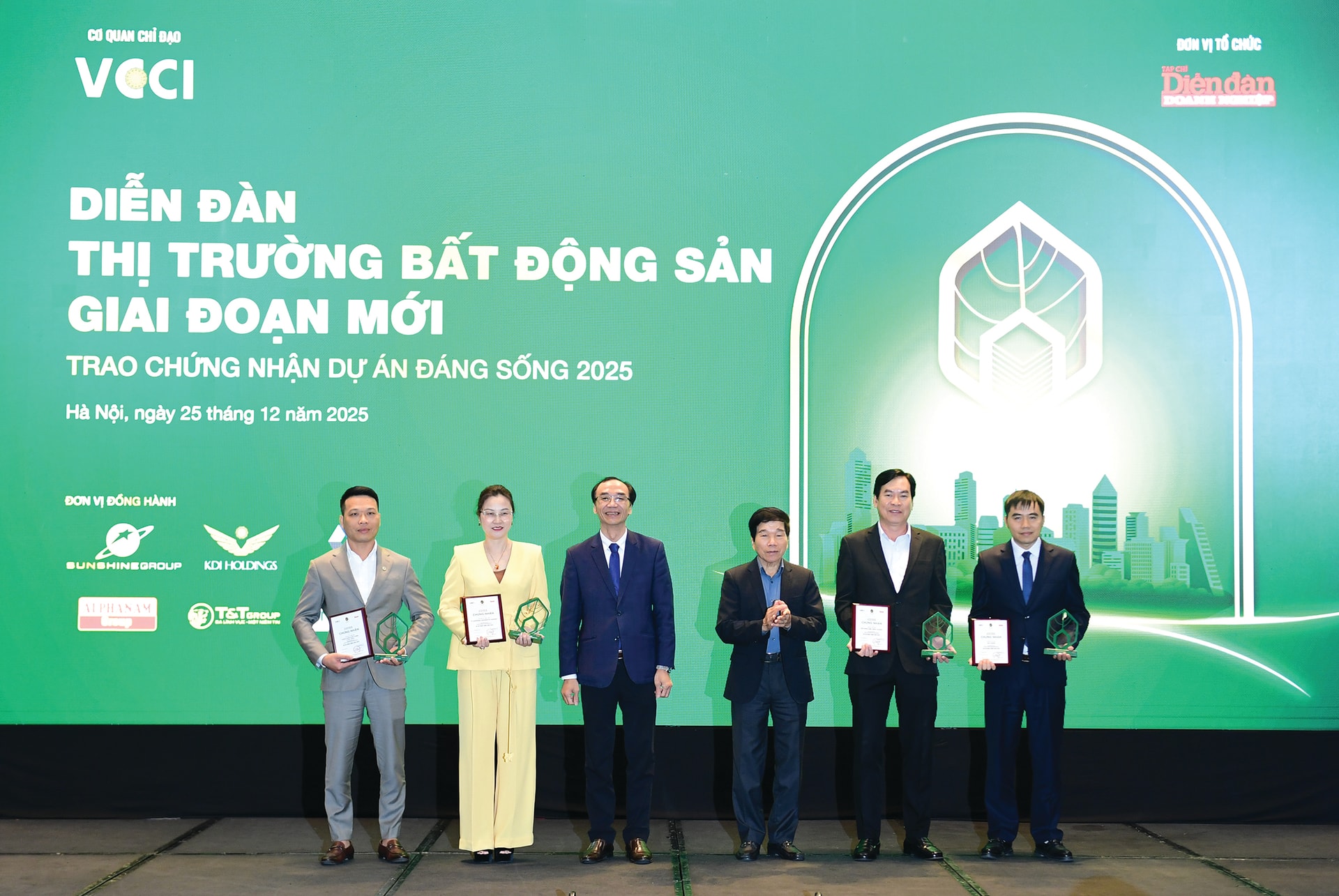
Journalist Nguyen Linh Anh - Editor-in-Chief of Business Forum Magazine and Mr. Nguyen Quoc Hiep - Chairman of the Vietnam Construction Contractors Association, along with representatives of the projects that won awards in the Apartment and Social Housing category, at the "Livable Project 2025" certification ceremony.
The press is no longer only serving as a source of information in the context of Vietnam's efforts to strengthen its legal system in order to institutionalise significant policies on private sector development and institutional reform. Instead, it is playing an increasingly significant role in reflecting reality, connecting policies together, and helping businesses overcome obstacles.
Turning corporate issues into targeted regulations
Stakeholders participating in policy review and enforcement are becoming more and more important as Vietnam works to institutionalise significant policies, particularly Resolutions No. 66-NQ/TW and No. 68-NQ/TW. In this context, companies' day-to-day operations serve as the basis for associations to solicit feedback and offer policy criticism, as well as the basis for the press to communicate pressing concerns to Governmental authorities.
The simultaneous engagement of enterprises, associations, and the press has allowed for the obvious identification of many problems in the investment and business climate. The majority of these problems originate from real-world observations, ranging from regulatory barriers in the real estate, construction, and bidding industries to deficiencies in credit, administrative processes, and corporate inspections and audits.
However, the business community's unwillingness to speak up was one of the main drawbacks of the earlier era. Even big companies were reluctant to confront fundamental problems at times, and very few ventured to speak up. Because it would be extremely impossible for state management agencies to adequately identify the issues occurring in practice if companies did not voice their concerns, many deficiencies persisted.
In this setting, the mediating role of the press becomes even more vital. The press facilitates two-way communication between the market and regulatory agencies by turning corporate voices into particular policy concerns through reporting, inquiry, research, and critical analysis.
In the contemporary market economy, economic journalism contributes to institutional changes, enhancing the quality of governance and bolstering the trust of the business community in addition to reflecting market trends.
An environment where businesses dare to speak the truth is needed
Currently, the spirit of Resolution 68-NQ/TW is to reduce inconvenience and compliance costs, streamline administrative procedures, and create a favourable business environment. However, the gap between policy and enforcement remains a major challenge for the current business environment. This requires the participation of all stakeholders, and for associations, the opinions, findings, and feedback from the business community regarding institutional shortcomings are crucial.
For policies to be effectively implemented, it's not just about issuing new resolutions or laws, but also about the ability to receive feedback from the market.
In this process, the press is the most suitable to uncover shortcomings in business practices, thereby enabling the business community to propose initiatives to amend or develop new policies and laws that meet practical demands.
From the perspective of the business community, the role of the press in monitoring and providing recommendations is not only highly valued but also holds great expectations.
A petition, if not disseminated through the press, will simply remain in a file. The press is the force that can bring information to the public, shape social awareness, and strongly influence the policy-making process.
The truth is that the press has truly become an effective bridge, contributing to encouraging reulatory authorities to take more decisive action, reducing policy delays, and creating a more transparent and stable business environment for the business community.
In the construction sector in particular, thanks to the press, existing shortcomings and inadequacies regarding unit prices and norms in construction have been reflected in a practical, detailed, and frequent manner. Through media coverage, Government authorities have begun to review, research, and make adjustments to improve mechanisms and policies.
It can be said that at the present time, construction businesses are standing on the brink of "survival or extinction." I sincerely hope that the press will continue to stand alongside and share the difficulties of construction contractors, promoting the process of improving mechanisms and policies, and restoring confidence to the contractor and investor community.
Author: Nguyen Quoc Hiep, Chairman of the Vietnam Construction Contractors Association
RECOMMENDED TOPICS