VN
VN
 EN
EN
23/07/2026, 01:50
Legal environment
Strive to effectively implement Global Minimum Tax in Vietnam
The application of Qualifying domestic minimum top-up tax (QDMTT) in implementing Global Minimum Tax allows to deduct the value of tangible assets and salaries when calculating top-up tax. This shows that the Global Minimum Tax aims to encourage the actual investment activities in the investment recipient country through the existence of tangible assets and workers, Deputy Director General of the General Department of Taxation Dang Ngoc Minh said.
 |
|
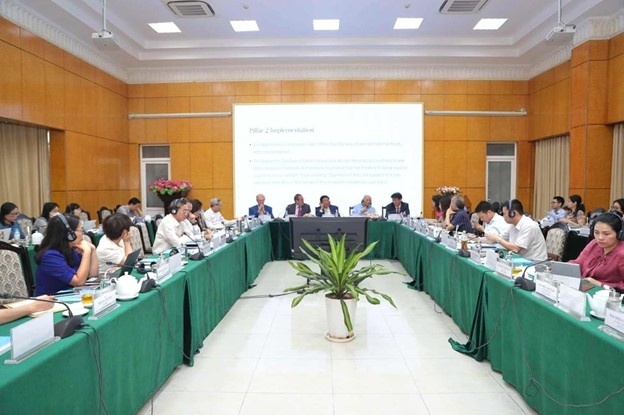
The workshop. |
The challenge of transferring regulations into a domestic legal system
The Vietnam's Association of Foreign Invested Enterprises (VAFIE) and the International Tax and Investment Center (ITIC) held an international workshop themed “Pillar 2 Global Minimum Tax Implementation in Vietnam” on May 7.
Speaking at the opening of the workshop, Dr. Nguyen Anh Tuan, VAFIE’s Permanent Vice Chairman, said that on November 29, 2023, the National Assembly of Vietnam issued Resolution No. 107/2023/QH15 on the application of Top-up Tax under the Global Anti-Base Erosion Rules. Currently, the Ministry of Finance develops a Government decree to guide the implementation of the Resolution.
At the workshop, Mr. Jonathan Pemberton, ITIC senior expert, said that Pillar 2 of Global Minimum Tax is applied to big multinational enterprises (MNEs) with a turnover of 750 million euros or more (companies that have been required to complete country-specific reporting).
MNEs will pay 15% minimum effective tax rate (ETR) on all profits; profits, losses and taxes will be paid by different entities in each jurisdiction.
In addition, permanent establishments are considered independent entities to ensure that their profits are within the applicable scope. When the paid ETR is less than 15%, the Top-up Tax be paid to increase the tax rate to 15%.
 |
|
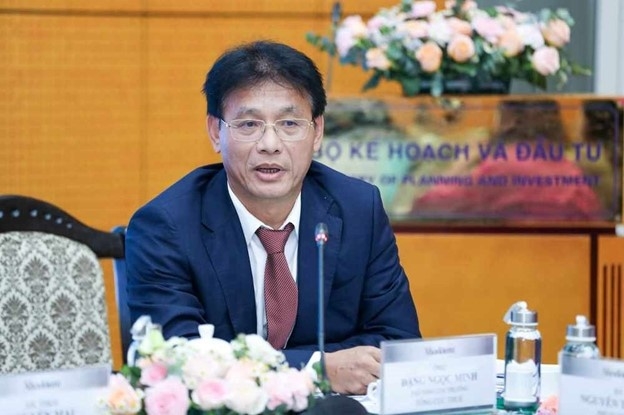
Deputy Director General of the General Department of Taxation Dang Ngoc Minh speaks at the workshop. |
Mr. Jonathan Pemberton also said that countries face challenges in understanding regulations and implementing regulations into domestic legal systems, ensuring compatibility with the OECD. For Vietnam, legal mechanisms and processes will be needed to implement the regulations, but it would be more appropriate to regulate them in by-law documents.
Encourage effective investment activities
At the workshop, Deputy Director General Dang Ngoc Minh emphasized that the promulgation of Top-up Tax under the Global Anti-Base Erosion Rules in Vietnam is consistent with the Government’s policies.
The application of regulations on Global Minimum Tax opens new opportunities for Vietnam, such as increasing the state revenue, strengthening international integration, reducing the tax evasion or avoidance, transfer pricing and profit transfer.
On November 29, 2023, the National Assembly approved Resolution No. 107 on the application of Top-up Tax under the Global Anti-Base Erosion Rules. Accordingly, Vietnam applies two regulations, including the Qualified Domestic Minimum Top-up Tax (QDMTT), and the Income Inclusion Rule (IIR).
The Deputy Director General affirmed that the application of QDMTT in implementing Global Minimum Tax allows to deduct the value of tangible assets and salaries when calculating top-up tax. This shows that the Global Minimum Tax aims to encourage the actual investment activities in the investment recipient country through the existence of tangible assets and workers.
At the same time, 0% QDMTT will be applied in a financial year if the average revenue under regulations on Global Minimum Tax in Vietnam is less than EUR10 million; and average income is less than EUR1 million or loss.
Regarding the IIR regulation, to determine the amount of To-up tax paid by the parent company in Vietnam, the IIR regulation also comes from determining the Top-up Tax in each investment recipient country.
The Top-up Tax under IIR will be zero if the conditions of average revenue and average income or loss are met.
According to the plan, in May-June, the draft Decree detailing Resolution No. 107 will be consulted by ministries, branches, associations, relevant agencies and affected entities.
In July, the drafting agency will review and gather feedback to complete and send to the Ministry of Justice for appraisal. The Decree is expected to be issued in October 2024.
Author: Customnews
RECOMMENDED TOPICS