VN
VN
 EN
EN
20/07/2026, 14:32
Legal environment
Bac Ninh Department of Justice: Contributions to a Stable and Transparent legal environment
As Bac Ninh strives to become a high-tech industrial hub and a centrally governed city, the Department of Justice plays the role of a legal “gatekeeper”, helping create a transparent and investor-friendly business environment.
.jpg)
Mr. Luu Dinh Thuc, Director of the Bac Ninh Department of Justice, presents flowers to recognize and honor outstanding organizations and enterprises at the ceremony in response to Vietnam Law Day
Business Forum Magazine spoke with Mr. Truong Minh Thang, Deputy Director of the Bac Ninh Department of Justice, about the Department’s role in safeguarding the legal framework and fostering a transparent institutional environment that serves as a driving force for the province’s industrial and technological development.
- A stable and transparent legal environment is always a magnet for investors. How has the Department of Justice advised provincial authorities to ensure continuity in the legal system and strengthen business confidence?
Recognizing that a sound legal environment is the fundamental foundation for development, the Bac Ninh Department of Justice proactively determined from the very beginning of the provincial merger process that institutional development must stay one step ahead.
.jpg)
Mr. Truong Minh Thang, Deputy Director of the Department of Justice of Bac Ninh Province
We have advised the Provincial Party Committee, the People’s Council, and the People’s Committee to implement comprehensive measures to improve the quality of institutional development in line with Resolution No. 66-NQ/TW dated April 30, 2025, issued by the Politburo. A key priority has been ensuring the Party’s comprehensive leadership in lawmaking. The Department advised the Party Committee of the Provincial People’s Committee to submit a specialized directive to the Provincial Party Standing Committee, clearly defining the responsibilities of Party leaders at all levels in directing legislative development and law enforcement.
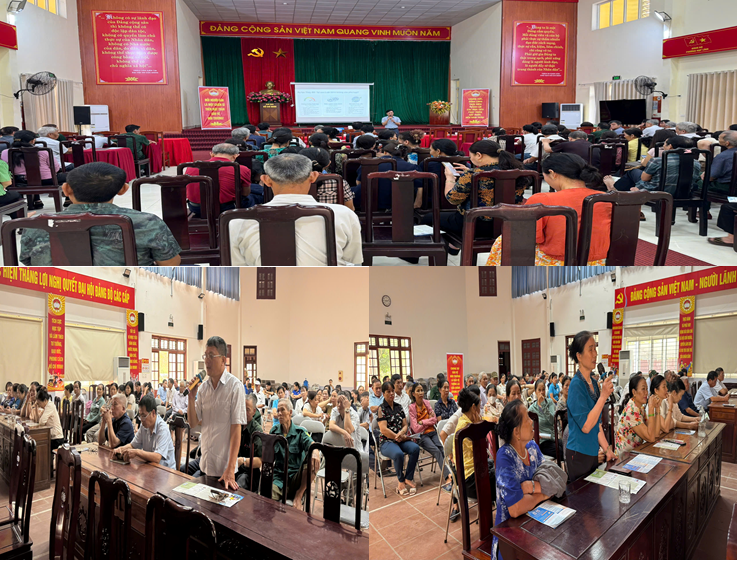
On April 7, 2026, the Bac Ninh Department of Justice, in coordination with the Vietnam Fatherland Front Committee of Bac Ninh Province, organized a legal awareness conference on environmental protection and food safety in Cao Duc Commune and Hap Linh Ward
In particular, after July 1, 2025, the task of handling the system of legal normative documents inherited from the two pre-merger provinces placed tremendous pressure on the local administration. Of the total 668 legal documents requiring review and processing (including 221 resolutions and 447 decisions), the Department proactively proposed the establishment of a dedicated review task force while mobilizing its leadership and staff to focus on the task with the highest level of determination. By the end of the first quarter of 2026, the Department had advised on, processed, and facilitated the issuance of 471 documents, including 160 resolutions and 287 decisions.
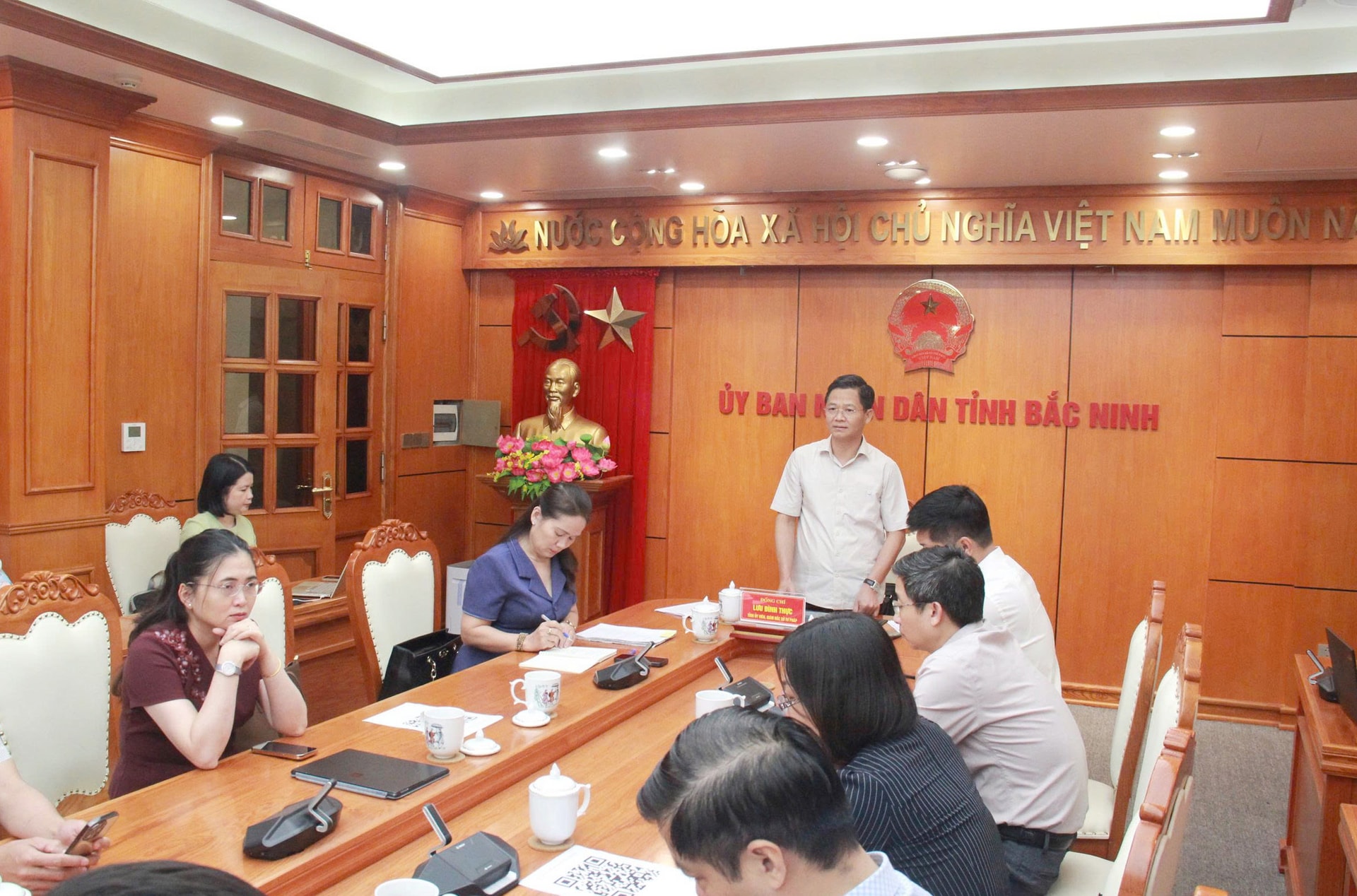
The conference to launch the comprehensive review of the system of legal normative documents was held on April 29, 2026
These efforts have not only ensured the smooth operation of the two-tier local government system but have also helped institutionalize special policies and social welfare measures, thereby creating a solid foundation for attracting large-scale FDI projects to the province.
- The appraisal process is often considered a “filter” for eliminating inconsistent or overlapping regulations. How has the Department fulfilled this role to ensure that newly issued documents are practical and enforceable?
We believe that legal appraisal is not merely about reviewing constitutionality and legality; it must also assess the practical applicability of legal documents. To this end, the Department has strengthened close coordination with provincial departments and agencies from the very stage of conducting regulatory impact assessments.
We carefully review draft documents to identify inconsistencies, overlaps, and potential conflicts. Our goal is to ensure that once a legal document is issued, businesses do not have to ask, “How should this be implemented?” but can apply it immediately in practice. Our guiding principle is to create the most open and transparent business environment possible, where the law serves not as a barrier but as a catalyst for development.
- What breakthrough solutions will the Department focus on in the coming period?
The Department of Justice has identified six key priorities. First, strengthening leadership accountability. We will continue to closely follow Resolution No. 66-NQ/TW of the Politburo and Directive No. 01-CT/TU issued by the Provincial Party Standing Committee on enhancing the Party’s leadership over legislative development, law enforcement, legal dissemination and education, and grassroots mediation. Heads of agencies and local authorities must directly oversee lawmaking activities rather than regard them as the sole responsibility of justice or legal affairs units.
Second, renewing institutional development thinking. We aim to shift from a “management-oriented” approach to one focused on facilitation and resource mobilization. Provincial legislation should become a competitive advantage. Policies that unlock productive capacity and encourage innovation will be prioritized. The Department will proactively advise on the development of special mechanisms and coordinate with relevant sectors to help the Provincial People’s Council adopt breakthrough policies to attract high-tech investment.
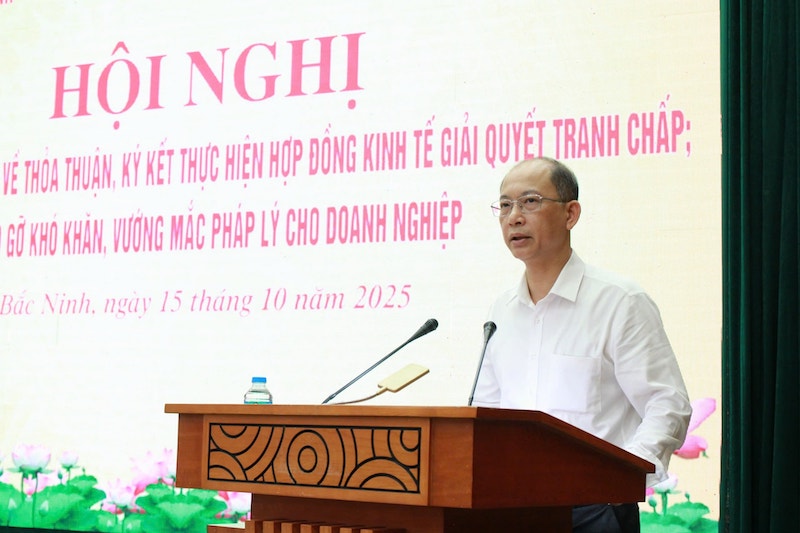
The Department of Justice organized a legal awareness and training conference on the negotiation, signing, and implementation of commercial contracts, dispute resolution, and legal support for businesses in addressing legal difficulties and obstacles
Third, conducting a comprehensive review and restructuring of the legal framework. The year 2026 will mark a province-wide review of legal normative documents. This process will help remove outdated regulations and prepare for the national initiative on “Improving the Structure of Vietnam’s Legal System to Meet Development Requirements in the New Era.”
Fourth, attracting highly qualified legal experts. The Provincial People’s Committee has issued a plan to enhance the capacity of legal personnel during the 2026–2030 period, including attracting leading legal experts and lawyers to participate in policy drafting and review. Notably, Bac Ninh is among the ten centrally governed provinces and cities selected to pilot the National Assembly’s resolution on the public lawyer mechanism.
Fifth, promoting the application of artificial intelligence in judicial administration. This is considered a strategic solution. The Department will accelerate the use of AI in legal research, consistency checks of legal documents, and monitoring law enforcement. The province’s legal information system will also be integrated with the National Legal Portal.
Sixth, enhancing the role of the business community and citizens. All economic-related legal documents should incorporate feedback from those directly affected. Businesses and citizens must have opportunities to contribute from the policy assessment and drafting stages to ensure objectivity and practicality.
- The Department of Justice serves as the final “gatekeeper” before provincial legal documents are promulgated. How would you assess the Department’s performance in fulfilling this role?
Indeed, we act as a “gatekeeper,” but not to close doors—rather, to open them safely. If a legal document is issued in violation of regulations, the consequences for businesses and the broader socio-economic environment can be significant.
However, in this new phase, the Department is evolving from a traditional gatekeeper into an institutional facilitator. We no longer simply point out that “this provision is incorrect”; instead, we work together with relevant agencies to find solutions and answer the question, “How can this be done correctly and as efficiently as possible?” Our approach is based on partnership, problem-solving, and creating space for development.
In 2026, the Department will strengthen thematic inspections, particularly in the areas of land management, investment, and environmental protection. Any inappropriate legal documents will be promptly recommended for amendment or repeal to prevent losses and risks for both citizens and investors.
- What message would you like to send to businesses and investors interested in Bac Ninh?
Bac Ninh is entering a new phase of development with significant opportunities and advantages following the merger. As the province’s legal advisory body, the Department of Justice is committed to ensuring that every legal normative document issued reflects the principles of service, transparency, and modernization. We are always ready to listen to feedback from businesses regarding institutional bottlenecks so that timely amendments can be proposed to support their growth and success.
Bac Ninh is not only inviting investors through its strategic location and industrial infrastructure; we are also inviting them with the promise of the safest and most sustainable legal infrastructure possible.
Thank you very much for your time.
Author: Kim Dung (Cam Anh translate)
RECOMMENDED TOPICS