VN
VN
 EN
EN
08/07/2026, 09:25
Culture- travel
Sun Group adopts next-generation construction technologies for APEC Phu Quoc projects
With just over a year to go before APEC 2027, Phu Quoc is witnessing one of the largest infrastructure investment campaigns in its history. It is not only a race against time, investment scale, and workforce capacity, but also a race in construction technology.
As the investor behind a series of key APEC 2027 projects, including the APEC Convention Centre, the Multi-purpose Theater, the expansion of Phu Quoc International Airport, as well as hotels and tourism infrastructure, Sun Group is taking a different approach. Rather than deploying more workers or machinery to construction sites, Sun Group is embracing next-generation construction technologies to shorten project timelines, secure material supply, improve construction quality and minimise the impact on the Pearl Island's ecosystem.
From traditional construction sites to industrialised construction
The biggest challenge facing projects in Phu Quoc is not only their scale but also the island's geography. Transporting every tonne of construction materials, equipment and manpower to the island takes more time and costs significantly more than on the mainland. Instead of simply expanding construction capacity, Sun Group has chosen to rethink the construction process itself by accelerating research into technologies that reduce reliance on conventional building materials, increase the use of prefabricated components and shorten on site construction time.
Alongside solutions already in use, including gangform systems, aluminium formwork and prestressed concrete structures, the Group is working with domestic and international companies and organisations to introduce new technologies into its construction ecosystem.
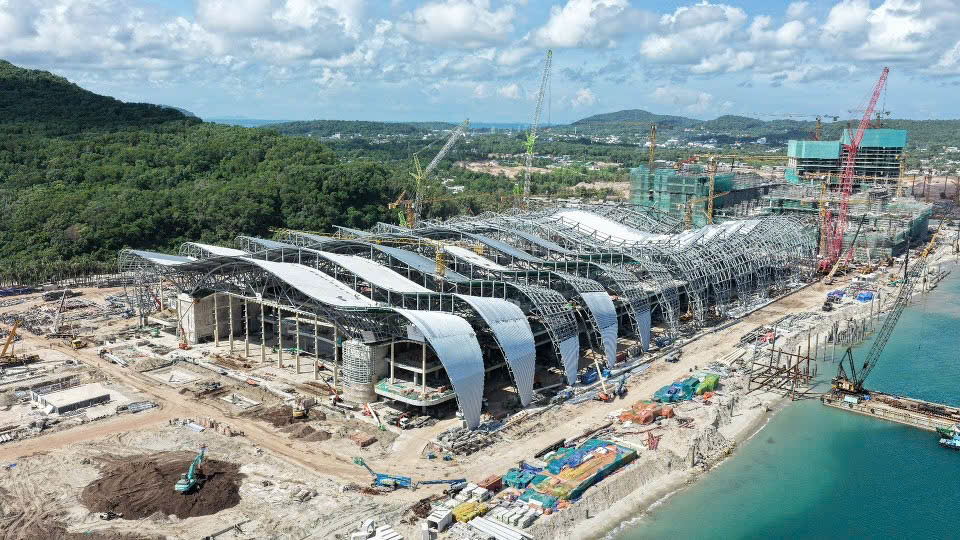
Projects developed for APEC 2027 in Phu Quoc are being designed and built using next generation construction technologies to accelerate delivery and enhance construction quality
One of the technologies receiving particular attention is Modular Construction, often described as the Lego approach to building. Under this model, hotel rooms, bathrooms and individual building modules are fully manufactured in factories and quality checked before being transported to Phu Quoc for installation.
This approach can reduce construction time by 30 to 60 percent while significantly cutting the amount of work carried out on site, reducing construction waste and limiting environmental impact.
Working alongside the modular approach is DfMA, or Design for Manufacturing and Assembly. Instead of carrying out most construction activities on site, the majority of building components are manufactured in factories before being delivered for assembly. This method offers better quality control, improves productivity by around 60 percent and shortens construction schedules by approximately 30 percent.
At the same time, Building Information Modelling (BIM) is integrated into the design and construction management process, allowing design, manufacturing and installation data to be synchronised. This helps minimise errors, optimise project schedules and improve overall project management efficiency.
Building faster while building greener
Beyond shortening construction schedules, the technologies being explored by Sun Group also support a longer term goal of greener and more sustainable construction.
One solution that helps accelerate construction is the wider use of pre engineered steel structures. Instead of fabricating each steel component on site, entire steel frames are manufactured to a high level of precision in factories before being transported for installation. This approach is particularly well suited to large scale developments such as convention centres, performance venues and hotels serving APEC.
It is also an ideal solution for long span structures including convention centres, hotels and restaurants. At the same time, it significantly reduces construction time, minimises material waste generated on site and lowers the overall structural weight of buildings.
Alongside pre engineered steel structures, various lightweight panel systems are also being studied as an alternative to traditional brick construction. A single panel can replace dozens or even hundreds of bricks, reducing the weight of the structure while shortening construction time. It also significantly reduces manual bricklaying and plastering work, cutting the reliance on labour intensive construction methods.
The gradual shift towards prefabricated components, lightweight materials and factory certified products will help reduce dependence on traditional construction resources while improving overall construction quality.
Looking beyond the technologies currently being applied, Sun Group has also begun exploring the use of 3D printing in construction. If successfully adopted, the technology could mark another major step forward by enabling more complex building components to be produced more quickly, with less material and greater flexibility in architectural design.
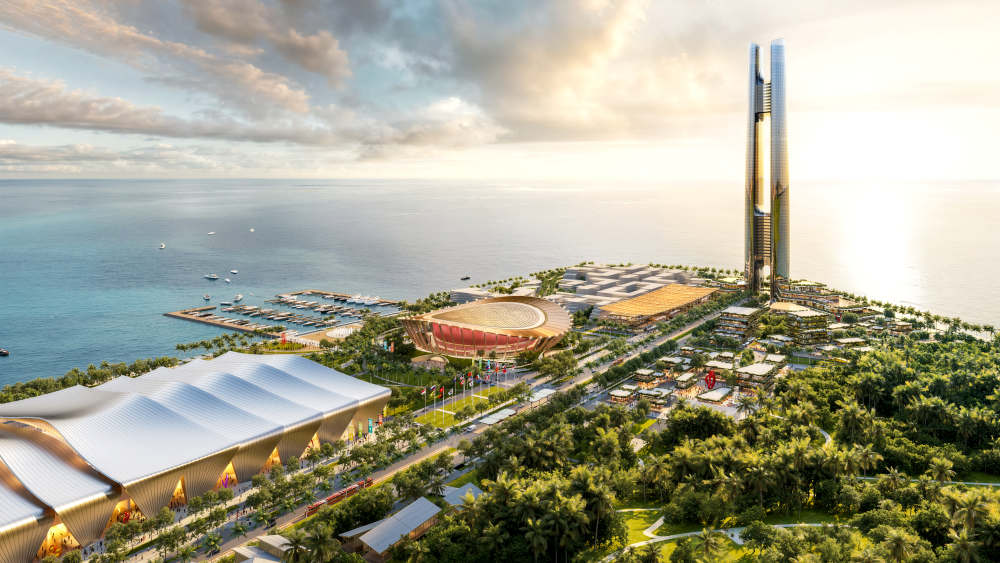
APEC 2027 will last only a few days, but the projects built for the event will continue to shape the future of Phu Quoc for decades to come
According to a Sun Group representative, the objective goes beyond delivering key APEC 2027 projects on schedule. By investing in advanced construction technologies, the Group aims to develop more industrialised construction capabilities, improve quality, reduce emissions and build a stronger foundation for future large scale developments.
APEC 2027 will last only a few days, but the infrastructure built for the event will continue to define the future of Phu Quoc for decades to come. The technological race taking place on construction sites today is therefore about far more than meeting the APEC deadline. It is laying the foundation for a modern infrastructure system capable of positioning the Pearl Island as an international destination for tourism, hospitality and major events. That is why Sun Group is investing in advanced construction technologies today, not only to build faster, but also to build better, more sustainably and with lasting value.
Author: DUONG NAM HOANG
RECOMMENDED TOPICS