VN
VN
 EN
EN
10/07/2026, 10:58
VCCI
The leader who elevated VCCI’s role and paved the way for the business Voice
Ms. Pham Chi Lan affirmed that former VCCI President Doan Duy Thanh left a profound mark on economic reform and the journey of accompanying the Vietnamese business community.
The passing of former Deputy Prime Minister and former President of the Viet Nam Chamber of Commerce and Industry (VCCI) Doan Duy Thanh marked the end of a lifetime of persistent dedication to the country’s economic reform process, but the legacy he left for the business community remains intact. Business Forum had a conversation with Ms. Pham Chi Lan, former Vice President of VCCI, to look back on that journey.
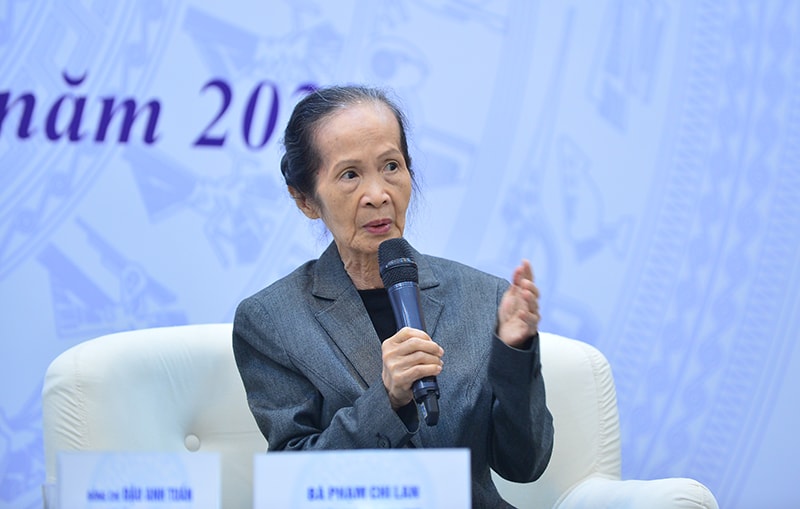
Economist and former VCCI Vice President Pham Chi Lan
Based on your observations, under the leadership of former President Doan Duy Thanh, what notable changes did VCCI experience in representing and supporting businesses?
In the early 1990s, it must be said frankly that VCCI’s role was still relatively modest. Previously, VCCI did not have a truly full-time President, as the position was mainly concurrently held by leaders of the Ministry of Foreign Trade, who could not devote their full time to activities serving the business community. In the context of a centrally planned economy, with the private sector still underdeveloped and the number of enterprises limited, VCCI’s function of representing and supporting businesses had not been fully promoted, although we still made efforts in external relations to help break the blockade and embargo.
The real turning point came in 1993, when Mr. Doan Duy Thanh was elected as the official President at the VCCI Congress. With the reputation of a former Deputy Prime Minister who had held many key positions in the State’s economic apparatus, his presence immediately elevated VCCI’s position to a new level, both domestically and internationally. Foreign partners, especially Western countries, highly value the role of chambers of commerce, so the leadership of a senior-level figure helped VCCI gain higher recognition and credibility in international cooperation.
More importantly, under former President Doan Duy Thanh, the relationship between the Government and VCCI was established more clearly in the direction of partnership. Government Decision No. 310 allowed the VCCI President to attend meetings on trade and business, participate in policy consultations and join working delegations. This enabled the voice of the business community to be formally incorporated into the policy-making process for the first time.
Within VCCI, former President Doan Duy Thanh also focused on organisational development, membership expansion, attracting private enterprises, establishing additional branches and promoting business support services under a financially autonomous mechanism. As a result, VCCI gradually became a truly dynamic organisation, closely connected to enterprises and effectively serving as a bridge between the State and the business community.
Could you share your most memorable experiences or impressions while working with and accompanying former VCCI President Doan Duy Thanh?
For me, the most profound impression of former VCCI President Doan Duy Thanh was his highly responsible and meticulous working style, and particularly his emphasis on empowering staff. Before officially assuming his duties, he spent time in private discussions, asking me to present in detail about the charter, congress reports, operational mechanisms, as well as the advantages and challenges facing VCCI. Many of his questions were very specific: why VCCI is a non-governmental organisation, how the financial autonomy mechanism operates, what resources are available for expansion, and what barriers need to be removed. Such thorough preparation reflected his serious sense of responsibility and his determination to fully understand issues before taking charge, which I deeply respected.
After the congress, I was assigned greater responsibilities, particularly in legal affairs and policy-making participation. When the State began drafting business-related laws, VCCI was facilitated to participate deeply in the steering committee and drafting committee of the Enterprise Law. As a result, the voice of the business community was substantively reflected in the law-making process for the first time. In my view, the 1999 Enterprise Law, with the spirit that “businesses are allowed to operate in all sectors not prohibited by law,” was a major turning point, and it bore a clear imprint of the former President’s strong reform-driven thinking and his high regard for the private economic sector.
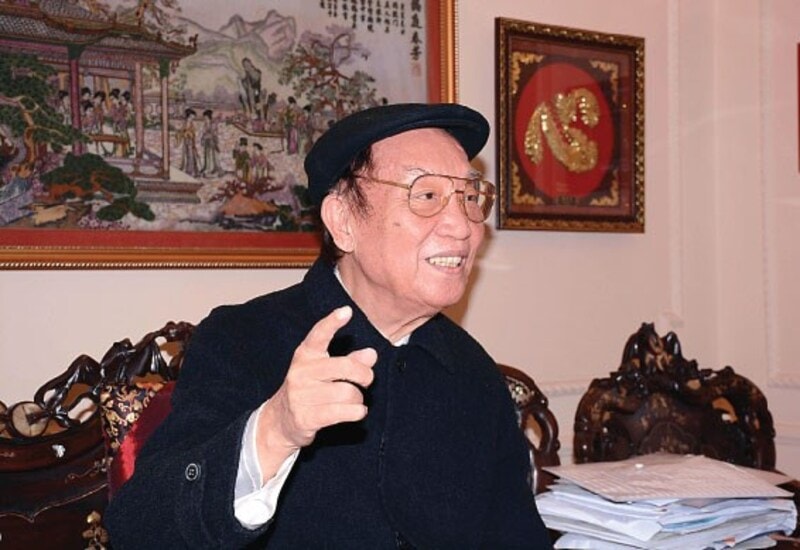
From the memories of Ms. Pham Chi Lan, the portrait of former VCCI President Doan Duy Thanh emerges with many reform imprints and dedication to supporting businesses. (Photo: Duy Dong)
In external affairs, the general orientation was to boldly expand cooperation with various international partners, including new or sensitive markets, and to accept investments in human resources and costs to build long-term support channels for businesses. What I appreciated most was the trust he placed in staff, encouraging initiative and responsibility. This approach created strong motivation for the team to further promote VCCI’s role during the reform period.
Looking back on Viet Nam’s economic reform journey, how do you assess the role and legacy that former VCCI President Doan Duy Thanh left for the business environment and today’s generations of entrepreneurs?
In my view, the legacy left by former VCCI President Doan Duy Thanh should not be limited to his time leading VCCI but should be considered within the overall process of Viet Nam’s economic reform. From a very early stage, he was recognised as one of the leaders with strong reformist thinking, always willing to experiment with new approaches and take responsibility for practical effectiveness.
During his tenure in Hai Phong, when the centrally planned mechanism still imposed many constraints, he and local leaders boldly applied the output contracting model in agriculture to create motivation for farmers. The city also implemented many new economic initiatives, such as developing ship dismantling activities to utilise post-war materials and generate additional budget revenue. Hai Phong also became one of the first localities permitted to establish its own import-export enterprises, gradually breaking the monopoly in foreign trade. These decisions clearly demonstrated his practical vision and strong reform spirit.
When holding positions at the central level and later as VCCI President, this reformist mindset continued to be consistently demonstrated. The former Chairman promoted the improvement of the legal framework, facilitated VCCI’s participation in policy-making, particularly contributions to the Enterprise Law and dialogue mechanisms between the Government and the business community. As a result, the voice of enterprises, especially the private sector, has been increasingly heard and respected.
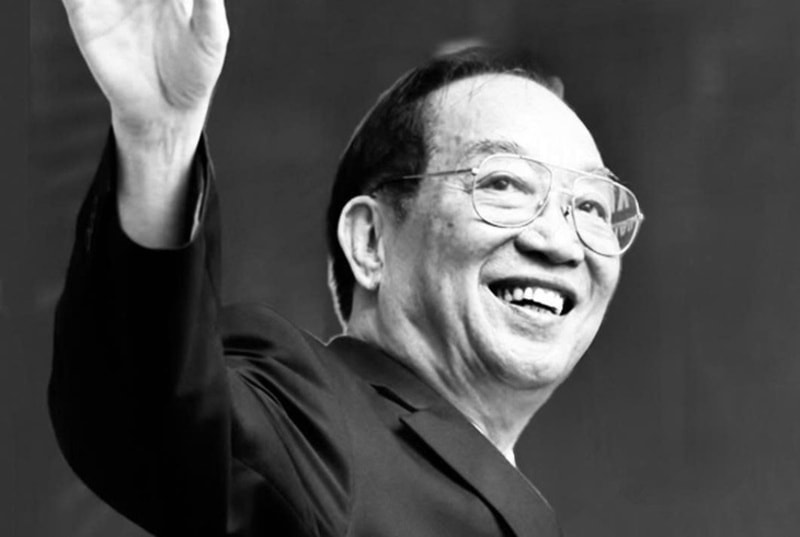
Reform-oriented thinking, bold decisions and close companionship with businesses created the enduring legacy of former VCCI President Doan Duy Thanh.
I believe the most valuable asset that today’s generations of entrepreneurs have inherited is a more open business environment, where the right to freedom of business is recognised and protected. This is the result of a persistent reform process, in which the imprint of former VCCI President Doan Duy Thanh is particularly profound.
Thank you very much!
Author: VCCI
RECOMMENDED TOPICS