VN
VN
 EN
EN
26/07/2026, 02:38
Business economics
Unlocking new engines of economic growth
Regarded as a particularly significant year for the country, marked by the convergence of difficulties, challenges, internal strengths and a strong reform resolve, 2025 recorded economic growth of 8.02%, leaving a notable imprint amid a complex mix of favourable conditions and headwinds.
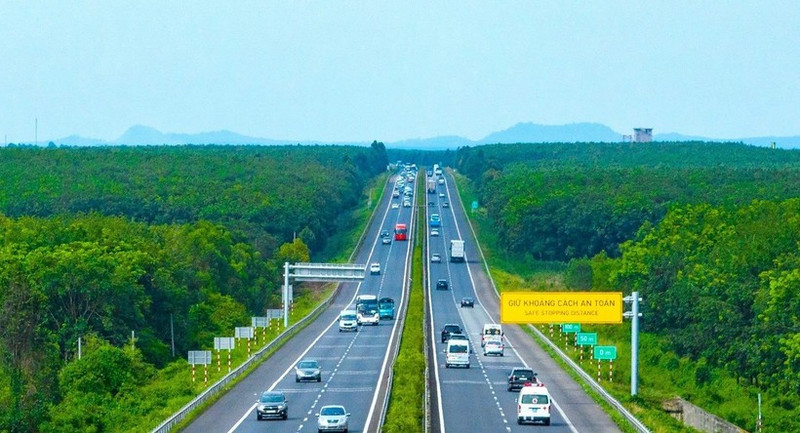
This provides both a foundation and an opportunity for Viet Nam to unlock new growth space, creating momentum for acceleration in 2026 and beyond.
Laying the foundations with determination
The year 2025—marked by a series of natural disasters and floods that caused severe damage to production, livelihoods and businesses—has passed. It was also the first year in which localities nationwide operated under new models and on a new scale, while undertaking a number of tasks of historic significance. This went hand in hand with demands for renewed approaches and more effective governance. Against that backdrop, Viet Nam still achieved one of the highest growth rates globally, while maintaining macroeconomic stability, keeping inflation below 3.5%, and ensuring the major balances of the economy.
Notably, for the whole of 2025, total merchandise exports and imports, according to the latest data from the General Statistics Office (Ministry of Finance), reached 930.05 billion USD, up 18.2% year on year. This contributed to macroeconomic stability and placed Viet Nam among the world’s 15 largest trading economies, underscoring its role as a key link in global supply chains.
According to Associate Professor Dr Tran Dinh Thien, member of the Prime Minister’s Policy Advisory Council and former President of the Viet Nam Institute of Economics, 2025 was a “special” year, characterised by the simultaneous presence of difficulties, challenges, strong internal capacity and a firm commitment to reform. It was a period in which Viet Nam concentrated on creating foundational conditions for future breakthroughs. Of particular note was a fundamental shift in the development approach, with Viet Nam identifying the private sector as “the most important growth driver”. Preparations in terms of policy frameworks, digital infrastructure and the green economy were other critical steps towards transforming growth into a new quality phase.
Running in parallel was a marked change in infrastructure investment thinking. Viet Nam has shifted to a strategy of comprehensive, integrated, system-wide investment, marked by unprecedented decisiveness and speed in implementation. The commencement and completion of 564 major projects in 2025, with total capital of 5.14 quadrillion VND, stands as clear evidence—not only of national scale and ambition, but also of the economy’s capacity to mobilise substantial internal resources.
Enhancing the quality of growth
The year 2025 closed with Viet Nam’s economy recording many notable achievements amid global uncertainty, alongside the issuance of a series of new legal frameworks that are expected to create momentum for high growth in 2026 and subsequent years. However, this strong momentum also brings no small number of challenges for the next development phase. According to economists, the interplay between sustainable drivers and short-term growth factors has underscored a clear requirement: to look beyond the current cycle and clearly define the foundations for the next stage of development.
As 2026 approaches, the task will not only be to maintain growth momentum but also to build sustainable development drivers, enhance the quality of growth, and strengthen confidence among businesses, the public and investors. While noting that “double-digit GDP growth is not overly difficult given the available headroom”, Professor Dr Hoang Van Cuong, a member of the Prime Minister’s Policy Advisory Council, stressed: “We prioritise growth, but it must be based on maintaining macroeconomic stability, controlling inflation and ensuring major economic balances. Otherwise, growth loses much of its meaning and leads to many adverse consequences.”
Echoing this view, Dr Phan Duc Hieu, Standing Member of the National Assembly’s Economic and Financial Committee, emphasised: “The core challenge does not lie in the growth target itself, but in the ability to simultaneously achieve high growth while maintaining macroeconomic stability and the major balances of the economy.”
According to Dr Phan Duc Hieu, sustainable growth cannot rely on short-term efforts; the real test lies in the capacity to consolidate growth foundations and translate institutional reform into concrete action. If institutions truly become a competitive advantage, public investment is implemented effectively, and policy space is used judiciously, high growth targets will have a solid basis. Conversely, if reforms lose momentum and implementation remains inconsistent, high growth is unlikely to be sustainable in the medium and long term.
Alongside this, public investment continues to be identified as a crucial growth anchor. However, Dr Phan Duc Hieu cautioned that public investment creates socio-economic infrastructure systems with long life cycles and lasting impacts on development capacity. If speed is prioritised at the expense of quality, the cost will not be confined to a single budget year, but will extend for many years thereafter. For this reason, 2026 will be a major test of policy implementation quality. In the context of ambitious growth targets, delays arising from situations where “laws are passed quickly, but guiding decrees and circulars lag behind” may no longer be a technical issue, but a direct drag on the economy.
Viet Nam’s economic scale has officially surpassed 510 billion USD, climbing five places to 32nd globally. GDP per capita in 2025 is estimated at around 5,000 USD, officially placing the country in the upper-middle-income group.
Author: NDO
RECOMMENDED TOPICS