VN
VN
 EN
EN
17/07/2026, 01:00
VCCI
VCCI and PCCI establish new cooperation framework for Vietnamese and Philippine businesses
The signing of the Memorandum of Understanding (MOU) between VCCI and PCCI is expected to provide additional momentum for the business communities of both countries to effectively capitalize on cooperation opportunities amid the growing Vietnam–Philippines relationship.
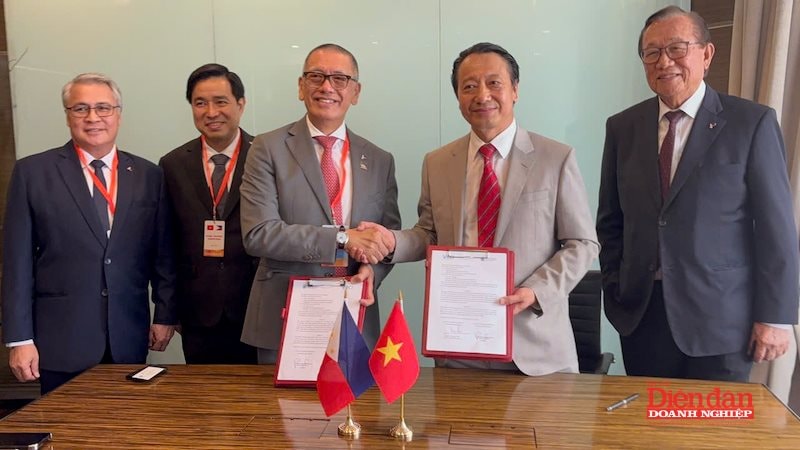
VCCI Vice President Nguyễn Quang Vinh (second from right) and Mr. Ferdinand Ferrer, President of PCCI, at the MOU signing ceremony between VCCI and PCCI.
As part of the state visit to the Philippines by General Secretary and President Tô Lâm, Mr. Nguyễn Quang Vinh, Vice President of the Vietnam Chamber of Commerce and Industry (VCCI), signed a Memorandum of Understanding (MOU) with Mr. Ferdinand Ferrer, President of the Philippine Chamber of Commerce and Industry (PCCI).
The agreement is expected to establish a framework for cooperation in information exchange, trade promotion, business networking, and the advancement of investment opportunities between Vietnam and the Philippines in the coming years.
Under the MOU, VCCI and PCCI will cooperate in accordance with the functions and responsibilities of each organization, while complying with the laws and regulations of their respective countries as well as relevant international agreements to which both nations are parties.
The two organizations agreed to cooperate and make joint efforts to further improve and expand trade and economic relations between the business communities of Vietnam and the Philippines. VCCI and PCCI will also regularly exchange information and share perspectives on opportunities for expanding bilateral economic and trade cooperation through the provision of trade related information and publications.
The MOU further stipulates that the two organizations will support one another in participating in trade exhibitions, fairs, forums, seminars, and similar events within their respective mandates.
In addition, VCCI and PCCI will encourage and support trade missions, working delegations, and business visits by entrepreneurs from both countries, whether individually or as part of organized groups. Both sides also committed to contributing to the promotion of trade and investment opportunities in their respective areas of expertise.
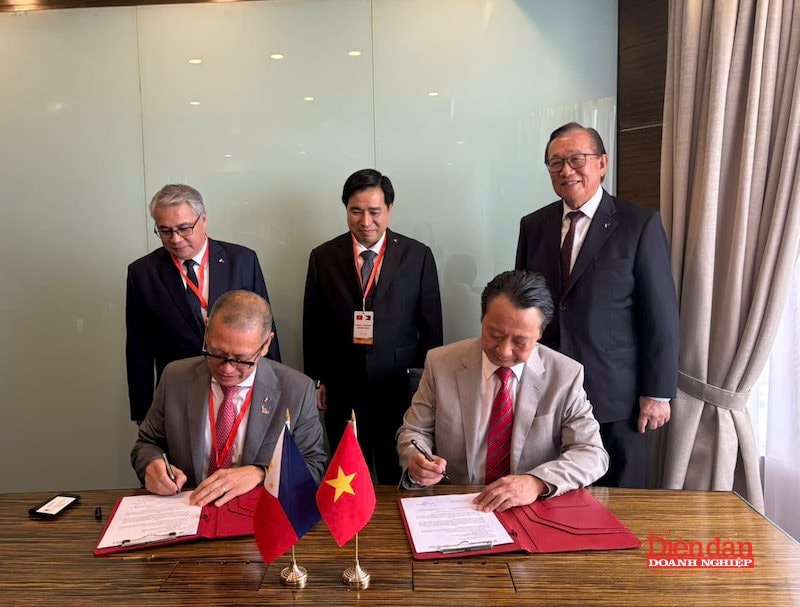
VCCI Vice President Nguyễn Quang Vinh and PCCI President Ferdinand Ferrer sign the MOU.
According to the agreement, the Memorandum of Understanding takes effect on June 1, 2026, and will remain valid for a period of three years.
VCCI and PCCI have maintained a longstanding cooperative relationship in promoting trade, investment, business connectivity, and coordination within regional cooperation mechanisms. The two organizations previously signed a cooperation agreement in Manila in 2003.
Over the years, VCCI and PCCI have jointly organized numerous business delegations, business forums, and trade and investment promotion activities within the framework of high-level visits, the ASEAN Business Advisory Council (ASEAN-BAC), the East Asia Business Council (EABC), and other related cooperation mechanisms.
The signing of this latest MOU comes as the Philippines continues to be regarded as a promising market for Vietnamese businesses due to its large population, youthful demographic structure, strong domestic purchasing power, and stable import demand for a wide range of essential goods.
Demand for rice, food products, construction materials, electronics, machinery and equipment, logistics services, cold storage facilities, e-commerce, and digital services is expected to remain high in the years ahead.
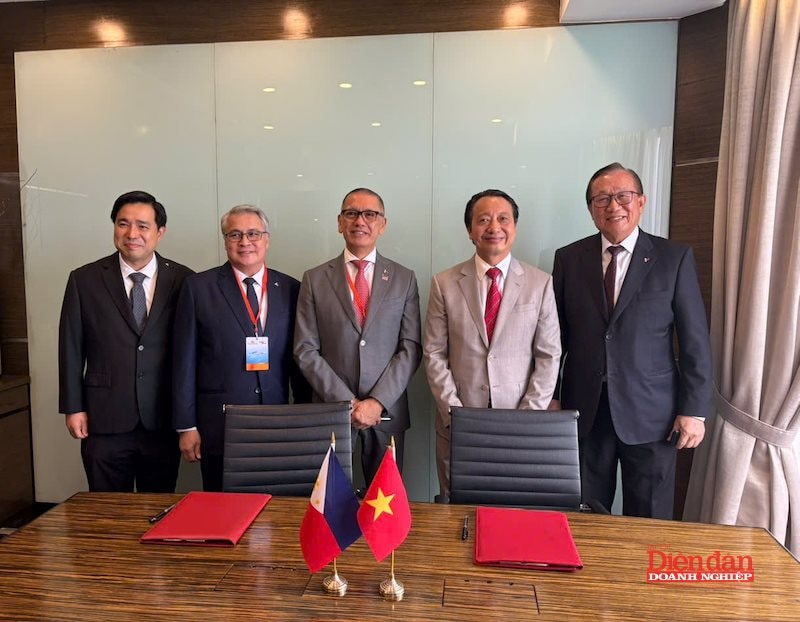
Leaders of VCCI and PCCI pose for a commemorative photograph following the signing ceremony.
Furthermore, the Vietnam-Philippines Strategic Partnership, the Philippines’ role as ASEAN Chair in 2026, and the cooperation framework established between VCCI and PCCI are expected to create more favorable conditions for business networking activities and the expansion of bilateral economic cooperation.
To effectively seize opportunities in this market, Vietnamese enterprises are advised to enhance product quality, strengthen long-term partnerships with local counterparts, and pay close attention to requirements concerning standards, quality, food safety, quarantine procedures, rules of origin, and English-language labeling. At the same time, businesses operating in logistics, cold storage, retail, digital services, renewable energy, and high-tech agriculture may explore suitable cooperation or joint-venture models with Philippine partners.
Author: VCCI
RECOMMENDED TOPICS