VN
VN
 EN
EN
10/07/2026, 10:58
VCCI
VCCI proposes practical initiatives at the 7th ASEAN–Korea Business Council meeting
Recently, Vice President of the Vietnam Chamber of Commerce and Industry, Nguyen Quang Vinh, attended the 7th meeting of the ASEAN–Korea Business Council.
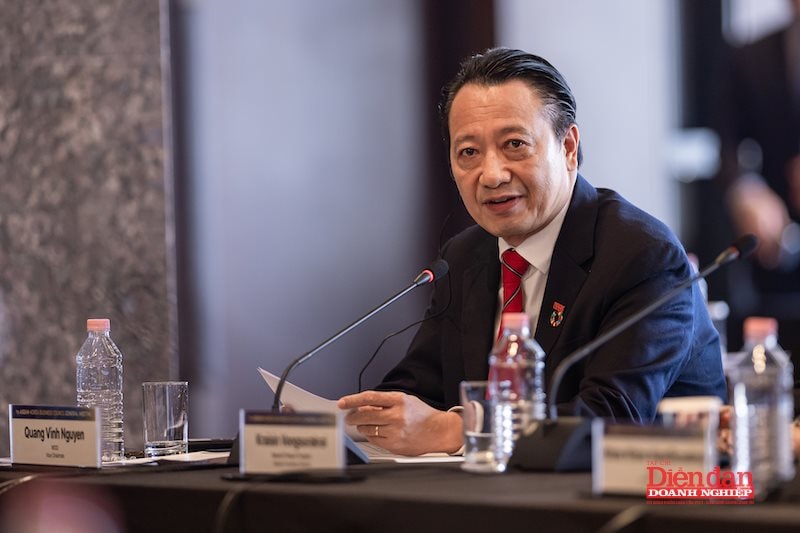
Vice President of VCCI Nguyen Quang Vinh speaks at the 7th ASEAN–Korea Business Council meeting.
The event aimed to strengthen cooperation among member chambers of commerce and to explore forward-looking initiatives to build a sustainable and mutually beneficial economic partnership between ASEAN and South Korea.
The meeting took place in the context of deepening ASEAN–Korea relations, not only in trade and investment but also in emerging areas such as technology, digital transformation, human resource development and sustainable growth. It also served as a platform to reassess existing cooperation potential and propose new directions in response to a rapidly changing global economic landscape.
Speaking at the session, Nguyen Quang Vinh highlighted that in recent years, ASEAN–Korea cooperation has achieved significant progress, particularly in trade, investment and industrial collaboration, contributing positively to regional growth and stability.
Regional frameworks such as the ASEAN–Korea Free Trade Agreement and the Regional Comprehensive Economic Partnership have provided an important foundation for deeper economic integration. ASEAN is increasingly becoming an attractive investment destination for Korean businesses thanks to its large market size, dynamic workforce and strategic position in global supply chains.
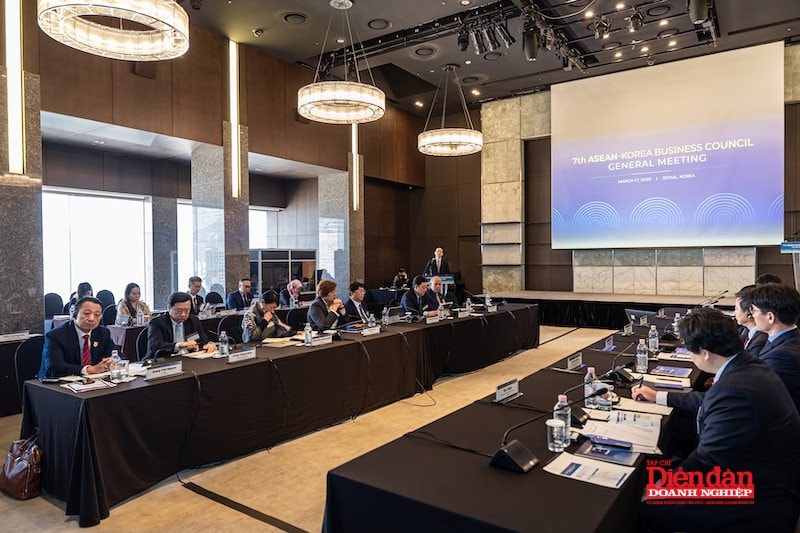
Overview of the 7th ASEAN–Korea Business Council meeting.
For Vietnam, cooperation with Korea has also developed strongly, with the two countries establishing a comprehensive strategic partnership in which economic and business cooperation plays a central role.
“These developments demonstrate the increasingly close linkages between ASEAN economies and Korea within regional value chains,” Vinh noted.
In the context of rapid global changes, particularly supply chain restructuring, digital transformation and green transition, Vinh suggested that AKBC could play a more proactive role in promoting practical cooperation initiatives between business communities on both sides.
He proposed three key initiatives. First, to deepen ASEAN–Korea supply chain linkages, noting that many SMEs still face difficulties in integrating into the supply chains of large corporations. Strengthening connections between Korean conglomerates and ASEAN supporting industries—especially in electronics, automotive, industrial equipment and logistics—would be essential.
Second, to promote cooperation in innovation and emerging technologies. Korea is a global leader in technology and innovation, while ASEAN is one of the fastest-growing digital markets. AKBC could facilitate collaboration programmes between ASEAN startups and tech firms with Korean corporations and investment funds, particularly in areas such as artificial intelligence, e-commerce and smart manufacturing.
Third, to enhance supply chain connectivity through digital platforms. Such platforms would enable businesses to share information on production demand, technical standards and partnership opportunities, while helping SMEs better access large corporations within value chains.
These efforts, he stressed, would improve transparency, efficiency and connectivity across regional supply chains.
Looking ahead to 2026, the global and regional outlook is expected to remain complex and uncertain. For Vietnam, 2026 marks the beginning of a new development cycle, serving as a crucial period to realise strategic orientations and sustain high economic growth.
Vinh reaffirmed that Vietnam remains an attractive investment destination for ASEAN and Korean investors and could serve as a pilot location for implementing AKBC cooperation initiatives, particularly in manufacturing, technology and innovation.
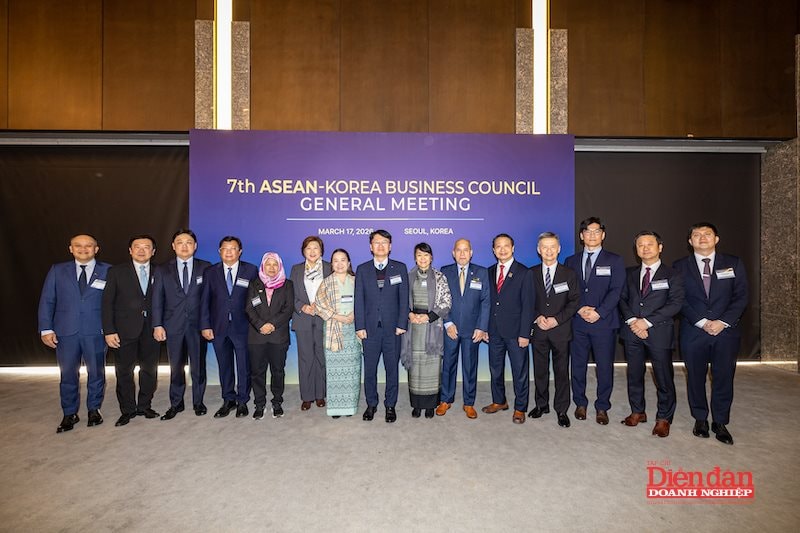
Delegates attend the 7th ASEAN–Korea Business Council meeting.
At the meeting, delegates focused on future ASEAN–Korea cooperation orientations, including economic cooperation strategies, potential sectors for collaboration and Korea’s programmes on recruitment and skilled workforce development targeting ASEAN countries.
Based on discussions, participants agreed on several key directions. These include strengthening ASEAN–Korea supply chain resilience, promoting more substantive trade, investment and business connectivity through concrete projects, and supporting SMEs to integrate more deeply into value chains.
Human resource development, particularly in vocational education and training (TVET), was also identified as a key pillar. In addition, technology cooperation and sustainable development were highlighted, with a focus on AI, digital transformation and renewable energy.
Representatives from ASEAN member countries also emphasised the need for cooperation with Korea in high-tech industries, especially batteries and electric vehicles, smart cities and renewable energy.
Overall, ASEAN–Korea cooperation is increasingly taking shape in a more substantive manner, centred on key pillars such as supply chains, technology, human resources and sustainable development. In this process, Vietnam’s proposals not only reflect current business needs but also demonstrate its proactive role in shaping new regional cooperation initiatives.
Author: VCCI
RECOMMENDED TOPICS