VN
VN
 EN
EN
25/07/2026, 12:00
Business economics
Viet Nam’s textile and garment exports reach 18.8 billion USD in five months
Viet Nam’s textile and garment exports reached 18.8 billion USD in the first five months of 2026, up 5.6% year-on-year, despite weak global demand, geopolitical uncertainties and tariff-related challenges, according to the Viet Nam National Textile and Garment Group (Vinatex).
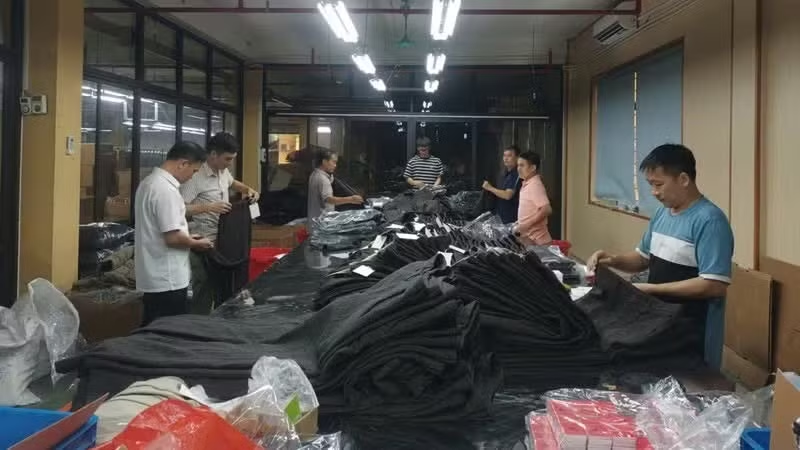
The industry benefited from a temporary window of opportunity as the US continues to apply an additional tariff of 10% until July 24, 2026, allowing businesses to accelerate production and deliveries while improving operational efficiency.
However, significant challenges remain. To achieve its 2026 export target of 48-49 billion USD, the sector will need to generate more than 30 billion USD in export revenue during the remaining seven months of the year. This will require average monthly exports of 4.31-4.46 billion USD, well above the nearly 4 billion USD recorded in May.
Vinatex Director General Cao Huu Hieu said the group had maintained positive growth thanks to proactive market monitoring, flexible business management and effective cost controls. In the first six months of the year, consolidated revenue reached 9.77 trillion VND (374 million USD), up 6.5% from the same period last year, while consolidated profit rose 14.4% to an estimated 763 billion VND (29.2 million USD).
The yarn segment remained a key growth driver, with profit reaching 205 billion VND (7.8 million USD), equivalent to 82% of its annual target. Most yarn producers have secured orders through June, with some extending into July and August.
Meanwhile, garment manufacturers have maintained stable production, with many firms holding orders through the third quarter and, in some cases, until the end of 2026. Nevertheless, uncertainty surrounding fourth-quarter demand, pricing pressures and tighter delivery schedules continues to weigh on the sector.
Looking ahead, Vinatex plans to focus on green transformation, digitalisation, supply-chain development and smart manufacturing. The group is also expanding carbon footprint measurement programmes, circular production models and rooftop solar power projects to strengthen competitiveness and meet global sustainability standards.
Author: NDO
RECOMMENDED TOPICS