VN
VN
 EN
EN
11/07/2026, 07:27
Business economics
Vietnam charts bold development path toward high-income future
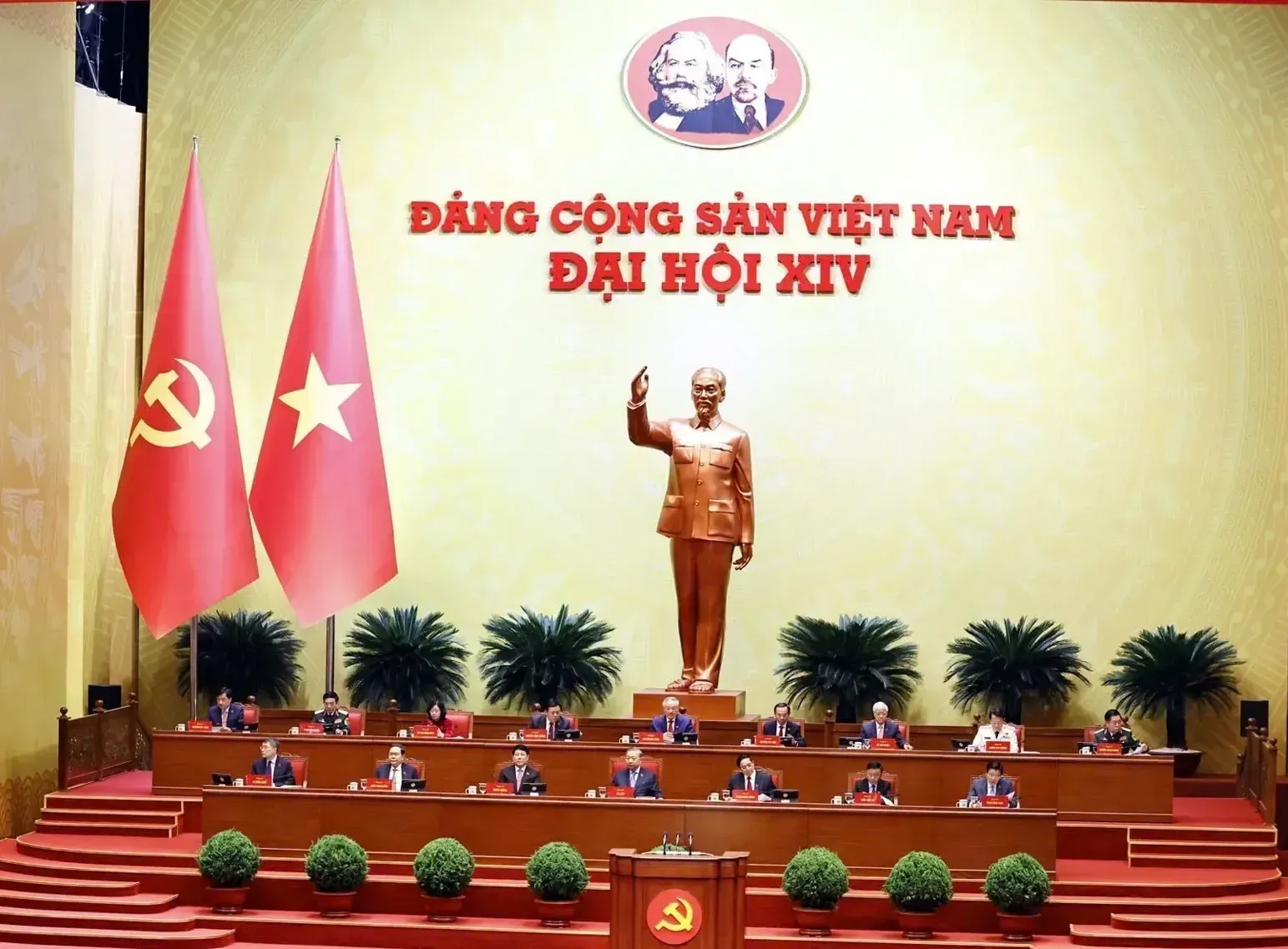
As Vietnam looks toward the 14th National Party Congress, Party members and citizens say the Congress’s guiding principle of “Solidarity, Democracy, Discipline, Breakthroughs, Development” is not only a rallying call but also a historic mandate, expected to lay down “launchpad” decisions for the country’s development in a new era.
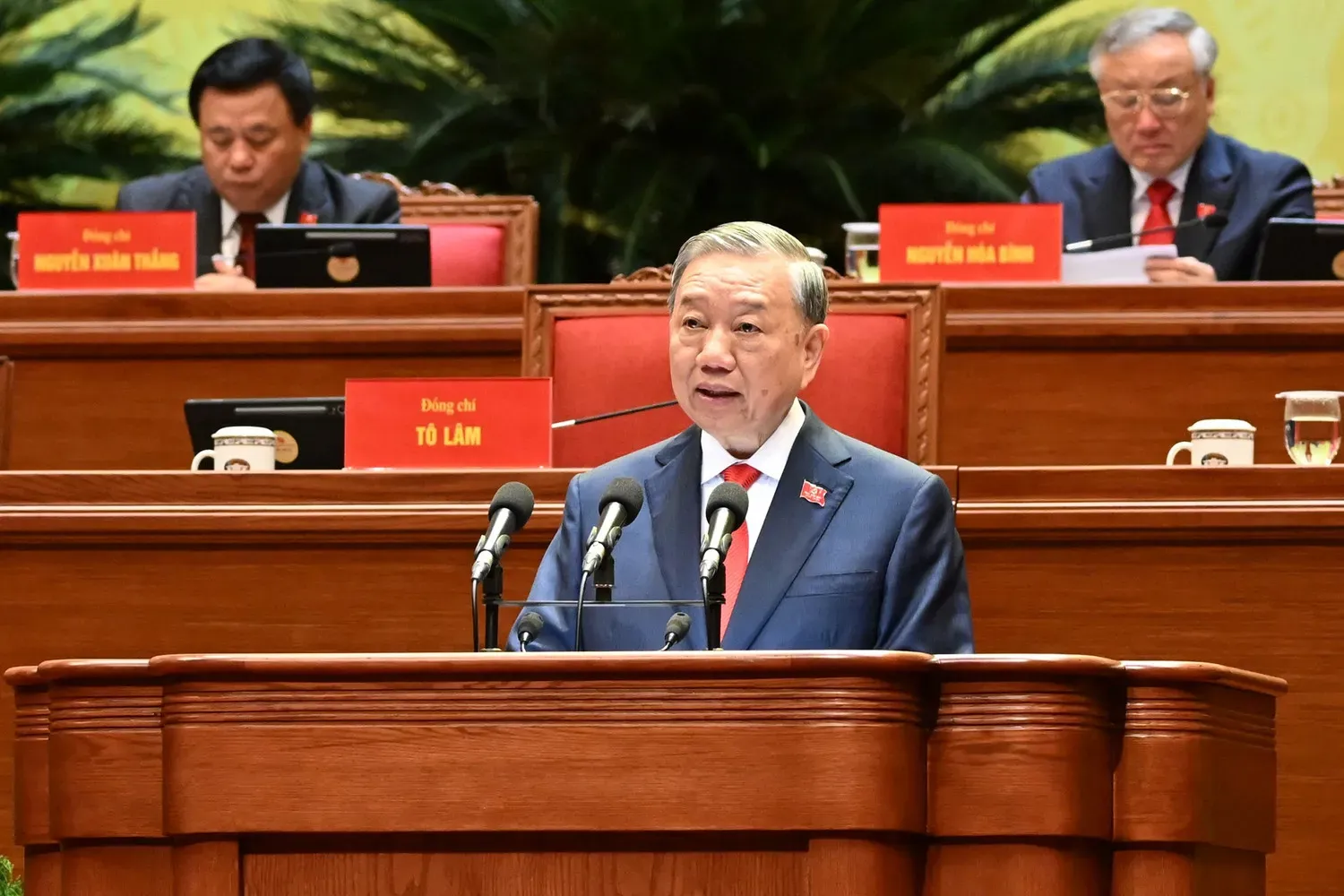
General Secretary To Lam, on behalf of the 13th Party Central Committee, presented the report on draft documents submitted to the Congress, highlighting key priorities and new points for discussion and decision, at the opening session of the 14th National Party Congress,
Focusing on development goals for 2026-2030 with a vision to 2045, General Secretary To Lam stressed that the Congress’s theme reflects a deep sense of responsibility before history.
Calls for greater unity, discipline and creativity
Under the Party’s flag, the entire Party, people and armed forces are uniting in determination to renew, act decisively and strive for a peaceful, independent, democratic, prosperous, civilized and happy Vietnam advancing steadily toward socialism, the General Secretary said.
“The theme of the 14th National Party Congress requires us to be more united, more disciplined and more creative, while remaining humble, willing to learn, ready to listen and correct ourselves to continuously improve,” he said.
The Congress, he added, bears a historic responsibility to establish breakthrough policies serving as a launchpad to successfully realize the country’s two centenary strategic goals.
According to the report, Vietnam’s overarching objectives include maintaining a peaceful and stable environment, achieving rapid and sustainable development and comprehensively improving people’s living standards. The country aims to strengthen strategic autonomy, self-reliance and confidence and move decisively forward in a new national era.
By 2030, Vietnam targets becoming a developing country with a modern industry and upper-middle-income status. By 2045, it seeks to become a developed, high-income nation, a peaceful, independent, democratic, prosperous, civilized and happy socialist Vietnam.
Key economic targets include average GDP growth of at least 10% per year during 2026-2030, with GDP per capita reaching around US$8,500 by 2030.
|
Five major guiding viewpoints To achieve these goals, the political report outlines five major guiding viewpoints: First, firmly uphold the Party’s principled leadership, Marxism-Leninism, Ho Chi Minh Thought and the renewal policy, while continuously refining them in line with practice. Strengthen strategic autonomy, establish a new development model and pursue development for stability and stability for rapid, sustainable growth, while safeguarding the socialist Vietnamese Fatherland. Second, proactively identify and seize opportunities, overcome challenges and closely integrate key tasks. Economic and social development alongside environmental protection remains central; Party building is crucial; cultural and human development forms the foundation; while national defense, security, foreign affairs and international integration are essential and ongoing. Third, strongly inspire patriotism, development aspirations, national solidarity and self-reliance. Culture and people are to be promoted as internal resources and drivers of growth. Institutions for rapid and sustainable development will be improved, bottlenecks removed, productivity unleashed and all resources mobilized. A new growth model will be established alongside digital, green and energy transitions, improved human resources, and stronger talent attraction to develop new productive forces. Fourth, harness the strength, resolve and intellect of the Vietnamese people and the great national unity bloc, combining national strength with the power of the times. Vietnam will proactively and steadfastly safeguard independence, sovereignty, unity and territorial integrity, defending the nation early and from afar. Economic, cultural, social and environmental development will be closely aligned with national defense, security, foreign affairs and international integration, ensuring national interests in accordance with international law and the UN Charter. Fifth, continue building and rectifying a clean, strong and comprehensive Party and political system, ensuring unity and smooth, effective operation of the new organizational apparatus. The Party’s leadership and governing capacity, as well as the State’s management and development-enabling capacity, will be enhanced. Greater emphasis will be placed on improving the quality of cadres and Party members, strengthening ties between the Party, the State and the people, expanding socialist democracy, tightening power control and resolutely combating corruption, waste, negativity as well as self-evolution and self-transformation among Party members. |
|
Eight cross-cutting priorities drive implementation of strategic decisions To translate the stated goals into reality, General Secretary To Lam said the Political Report has identified 12 major orientations, six key tasks and three strategic breakthroughs, with an accompanying action program specifying tasks that can be implemented immediately. The core spirit is distilled into eight cross-cutting priorities, highlighting a clear requirement: right choices, rapid implementation, thorough execution and results-based measurement. 1. Refining development institutions and a socialist rule-of-law state: implementation as the benchmark Institutions are described as the “bottleneck of bottlenecks,” but also the “breakthrough of breakthroughs.” Vietnam must continue to comprehensively refine development institutions, remove barriers, unlock resources and create new growth drivers. The goal is to build a socialist rule-of-law state of the people, by the people and for the people, under the Party’s leadership. National governance will be modernized toward greater transparency and accountability, with stronger decentralization and delegation of authority alongside power control, stricter administrative discipline, and a professional, integrity-based and service-oriented civil service. The report calls for the firm elimination of the “ask–give” mechanism, drastic cuts to administrative procedures and comprehensive digitalization with end-to-end, interconnected data systems. Reform quality will be measured by the time and costs borne by citizens and businesses, while ensuring a safe, transparent and fair business environment. Alongside reform, legal discipline and implementation discipline must be strengthened to decisively address persistent problems such as laws that are sound but hard to enforce, policies approved at the top but stalled at the grassroots, or correct decisions implemented too slowly, which waste resources and erode public trust. Power-control mechanisms will ensure authority remains within the bounds of law, ethics, culture, national traditions and public confidence. 
2. A new growth model: knowledge-based, digital, green and circular economy The General Secretary stressed that rapid growth must go hand in hand with sustainability. Vietnam will improve national, regional, sectoral and local master planning, prioritize growth quality aligned with international standards and ensure proper economic accounting. Growth will rely mainly on productivity, quality, efficiency and innovation, gradually reducing dependence on resource extraction and low-cost labor. Integrated development of industry, agriculture and services along value chains will form strong growth poles, key economic regions, modern cities and next-generation economic zones competitive at regional and global levels. The country aims to build an international financial center, high-quality service and tourism hubs and large logistics centers linked to seaports, international transit airports and major border gates, with high levels of automation. Technological self-reliance and resilient supply chains in important sectors will be strengthened. Green transition and energy transition will be pursued decisively and systematically, tied to energy security, environmental security and competitiveness. The circular economy will be promoted, with efficient resource use, technological upgrading by enterprises, and proactive adaptation to new global trade and investment standards. “All economic sectors will be fully mobilized. The state sector will play a leading role in macroeconomic stability and strategic orientation, while the private sector is identified as one of the most important growth drivers, with improved business conditions, secure property rights and incentives for domestic firms to grow and compete internationally,” said Lam. 3. Science, technology, innovation and digital transformation: the core driver Science, technology, innovation and digital transformation must truly become the central drivers of growth, underpin productivity and competitiveness, enhance governance efficiency and national autonomy, safeguard defense and security and generate new business models, jobs and added value. Priority will be given to strategic technologies and comprehensive national digital transformation, starting with digital infrastructure and data. The development of digital government, digital economy, digital society and digital citizens will go hand in hand with cybersecurity and data safety, wider digital skills, reduced digital gaps, and innovation-friendly regulatory sandboxes. Innovation ecosystems linking enterprises, research institutes and universities will be developed, embedding science and technology into every sector, locality and business. “Breakthroughs in technology must begin with people and institutions, including talent-attraction mechanisms, product-based evaluation, flexible financing, public–private partnerships and mission-oriented research aligned with development needs,” said Lam. 4. Culture and people: spiritual foundation and internal strength According to the General Secretary, sustainable development must be rooted in people and culture. “Vietnam will build and implement a comprehensive national value system, cultural values, family values and standards for Vietnamese people suited to the new development stage,” he said. The strategy seeks to inspire patriotism, self-reliance and aspiration, while nurturing compassion, integrity, responsibility and discipline, and fostering healthy cultural environments in families, schools, communities and cyberspace.” Social policies will prioritize inclusiveness, equity and sustainability, ensuring social security, breakthroughs in education and training, stronger healthcare and public health, sustainable poverty reduction and improved quality of life. Economic growth will be closely linked to social progress, equity and environmental protection to continuously raise both material and spiritual living standards. 5. National defense, security and foreign affairs: peace for development, development for strength Maintaining a peaceful and stable environment is a prerequisite for development. National defense and security will be strengthened, with revolutionary, regular, elite and modern armed forces, enhanced forecasting and preparedness and firm prevention of strategic surprises. Foreign affairs will continue to play a pioneering role in safeguarding national interests, upholding independence and self-reliance, promoting proactive and responsible international integration, deepening partnerships, and closely linking diplomacy with defense, security and economic development. Security in the new era extends beyond borders and territory to include regime security, cultural-ideological security, economic and financial security, data security, energy security, water security and food security. Sustainable development and strategic autonomy must therefore be embedded in the mission of safeguarding the nation early, from afar and from the grassroots. 
6. Building a clean, strong Party and political system: cadre work as the “key of the key” Building a comprehensively clean, strong and civilized Party is decisive for all successes. The Party will enhance leadership and governing capacity, strengthen political, ideological and ethical foundations, reform organizational structures, tighten power control, and resolutely combat corruption, waste and misconduct. Cadre work is identified as the “key of the key”: selecting the right people for the right jobs, and evaluating officials based on outputs, effectiveness and public trust. Strict discipline “appointment and removal” and “promotion and demotion” will be combined with effective protection for officials who dare to think, act and take responsibility for the public interest, while preventing opportunism and power-seeking. 7. Building a sound, disciplined, civilized, safe and developed society The Party chief said Vietnam aims to build a society that is ethically sound, law-abiding, culturally refined, well-governed, safe in daily life and progressive in development, steadfastly pursuing the goal of a prosperous, strong, democratic, just and civilized nation. The immediate priority is to strengthen social discipline through respect for the rule of law, administrative reform, and the prevention and control of corruption, waste and misconduct. This includes building a public service corps that is ethical, dedicated, proactive and accountable, ensuring that state authority goes hand in hand with public trust and shared social responsibility. At the same time, efforts focus on developing a modern Vietnamese culture with strong national identity; improving education, healthcare and social protection; narrowing inequalities; and supporting vulnerable groups so that no one is left behind. The objective is to substantially reduce crime and move toward a safe, civilized and happy society. Human security is ensured through public order and safety, traffic and food safety, fire prevention, disaster and epidemic preparedness and the creation of green, clean and safe living spaces. By strengthening social trust and promoting shared values that uphold the rule of law, integrity, responsibility, equality and cooperation for the common good, the nation builds the resilience needed to confidently enter a new era. 8. Great national unity: the foundation of national strength Lam stressed that great national unity is identified as the fundamental source of Vietnam’s strength, enabling the country to overcome challenges and advance toward prosperity and strength. The policy of national unity will continue to rest on the alliance of workers, farmers and intellectuals under the Communist Party’s leadership. The approach emphasizes the harmonization of interests, ensuring equity and equality among ethnic groups, religions, social classes and strata, as well as for every citizen, in access to opportunities and the sharing of development outcomes, promoting democracy alongside strengthened responsibility, order and discipline, and fostering a strong sense of responsibility among individuals and communities toward the nation and the people. |
|
Three Strategic Breakthroughs: Focused resources, leadership and implementation The three strategic breakthroughs identified at the 13th National Party Congress remain relevant for the entire 2021–2030 period. Entering the term of the 14th Congress, however, the requirement is to act with greater intensity, speed and determination, as these breakthroughs constitute decisive levers for national takeoff. The first breakthrough focuses on institutions and implementation. This includes the coherent completion of the legal system, improved policy quality, strengthened discipline in execution, and the assurance that all policies are accompanied by clear roadmaps, adequate resources and effective monitoring mechanisms. Administrative reform, decentralization and delegation of authority will be accelerated, with service quality and effectiveness for citizens and businesses serving as the primary benchmarks. The second breakthrough centers on human resources, particularly high-quality talent linked to science, technology and innovation. Comprehensive reforms in education and training will be pursued, aligned with labor market demand and strengthened digital capacity, aiming to build a strong workforce of capable managers, experts, entrepreneurs, scientists and highly skilled workers to meet the country’s development ambitions. The third breakthrough prioritizes the development of modern and integrated infrastructure. Strategic investment will focus on transport, energy, urban and telecommunications infrastructure, especially digital and data infrastructure, alongside climate-resilient systems. Development space will be expanded in line with the national master plan, ensuring stronger regional, inter-provincial and regional and global connectivity. These three breakthroughs are organically linked. Institutions pave the way, human resources determine speed and quality, and infrastructure creates space and momentum. Synchronized implementation will generate new momentum and positioning, while partial or fragmented efforts risk missing strategic opportunities. The 14th National Party Congress has generated strong confidence and expectations among officials, Party members and the people nationwide. Experts note that progress toward the two centenary goals requires steadfastness alongside flexibility and innovation. With renewed thinking, long-term vision and strong political will, the Congress’s major orientations are expected to be translated swiftly into concrete actions, driving rapid and sustainable development and advancing Viet Nam’s aspiration to become a strong and prosperous nation in the new era. |
Author: Hanoitimes
RECOMMENDED TOPICS