VN
VN
 EN
EN
26/07/2026, 02:38
Business economics
Vietnam construction materials rebound as prices rise and public investment accelerates
Rising steel and cement prices, stronger public investment spending and improving consumption across key material segments point to a broad recovery in Vietnam’s construction materials sector as 2026 begins.
Vietnam’s construction materials market showed clear signs of recovery in early 2026, driven by faster public investment disbursement and rising demand from residential construction.
Since the start of the year, steel producers have continued to raise construction steel prices amid market volatility and persistently high input costs.
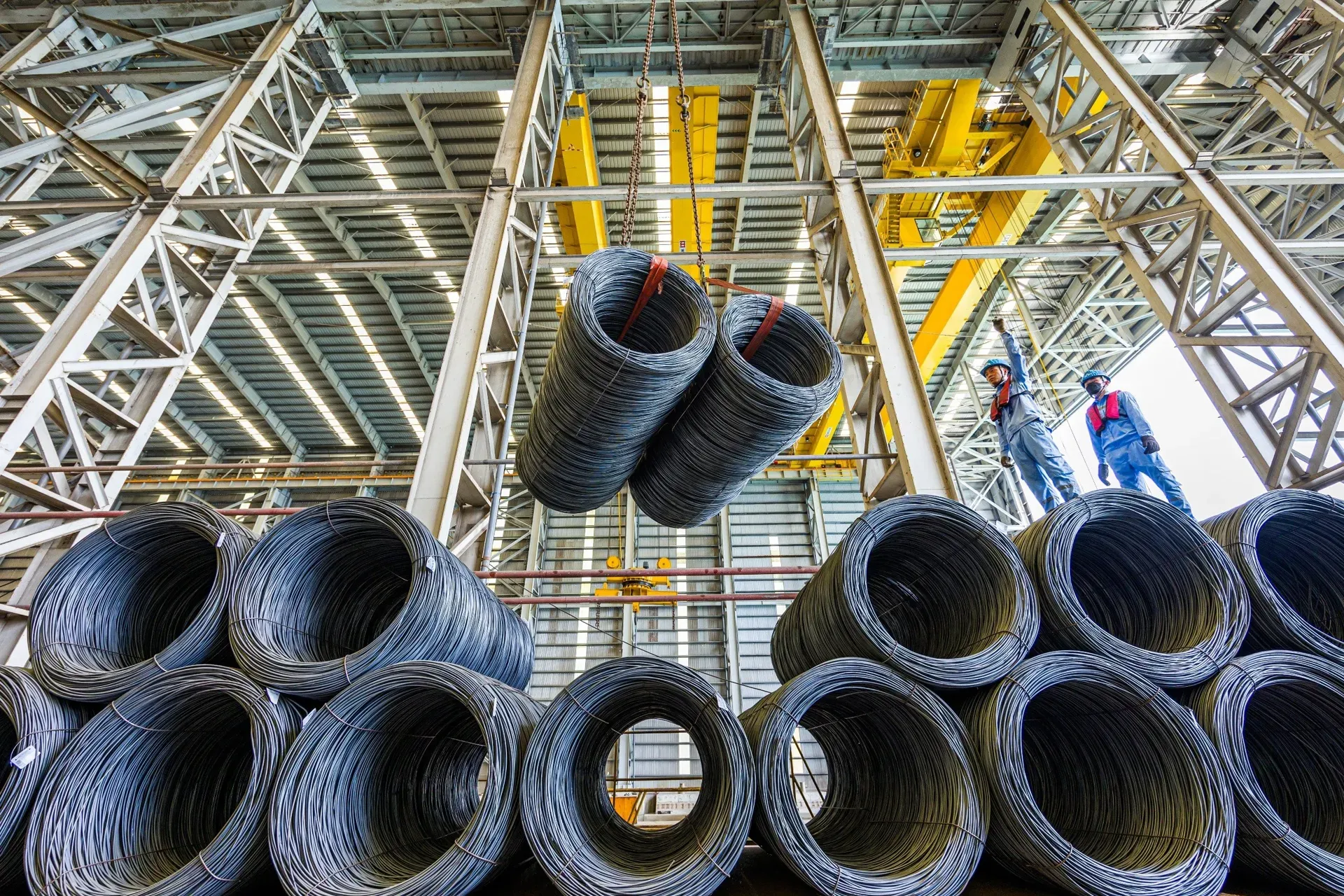
Inside a steel factory of Hoa Phat Group. Photo courtesy of the company
The domestic steel market recorded broad-based price increases across all three regions.
Prices in the North and South remained elevated, while prices in the Central region in some cases surpassed northern levels.
Major northern brands, including Hoa Phat, Vietnam-Italy, Vietnam-Germany and Vietnam-Singapore, kept prices high, with CB240 steel coil hovering around VND14,000 ($0.54) per kilogram.
Vietnam-Italy Steel JSC posted the sharpest increases. In the Central region, Vietnam-Germany Steel recorded the highest prices nationwide, with steel coil exceeding VND14,200 ($0.55) per kilogram.
In the South, prices continued to rise, with Hoa Phat maintaining CB240 steel coil above VND14,000 ($0.54) per kilogram. VAS Group stayed in the lower price segment but followed the overall upward trend.
While recent increases remained moderate, frequent adjustments over a short period reflected sustained pressure from iron ore, coking coal and energy costs.
Several cement producers, including Vicem Ha Tien, SCG Vietnam, Insee Vietnam, Fico YTL and Vicem Ha Long, simultaneously announced cement price hikes in January 2026, averaging about VND100,000 ($3.8) per ton.
Producers cited high energy and raw material costs, saying adjustments remained necessary to maintain stable production.
After widespread output cuts in 2024, construction steel production rose about 6%-7% in 2025, supported by infrastructure and housing demand. Capacity utilization, however, has yet to fully recover as producers remain cautious amid market uncertainty.
Other building material segments also improved. Ceramic tile output rose 9% year on year to 550 million square meters, while consumption increased 8% to 485 million square meters.
Sanitary ware output reached about 16 million units, up 9%, with consumption rising 11% to 15.5 million units. Construction glass output increased 7.5% to 158 million square meters, while consumption matched that pace at 153 million square meters.
Thai Duy Sam, vice chairman and secretary-general of the Vietnam Building Materials Association, said project construction nationwide accelerated from early Q4 2025 to boost capital disbursement.
The trend lifted material consumption, pushed prices slightly higher and signaled stronger growth momentum for 2026, he said.
Market outlook for 2026
According to MB Securities’ construction and building materials industry report, 2026 will mark a pivotal year in the 2026–2030 public investment cycle, while real estate supply is expected to remain high.
Growth will come from both public investment and residential construction. In the social housing segment alone, supply could rise about 45% in 2025 and 50% in 2026, creating significant opportunities for contractors and material suppliers.
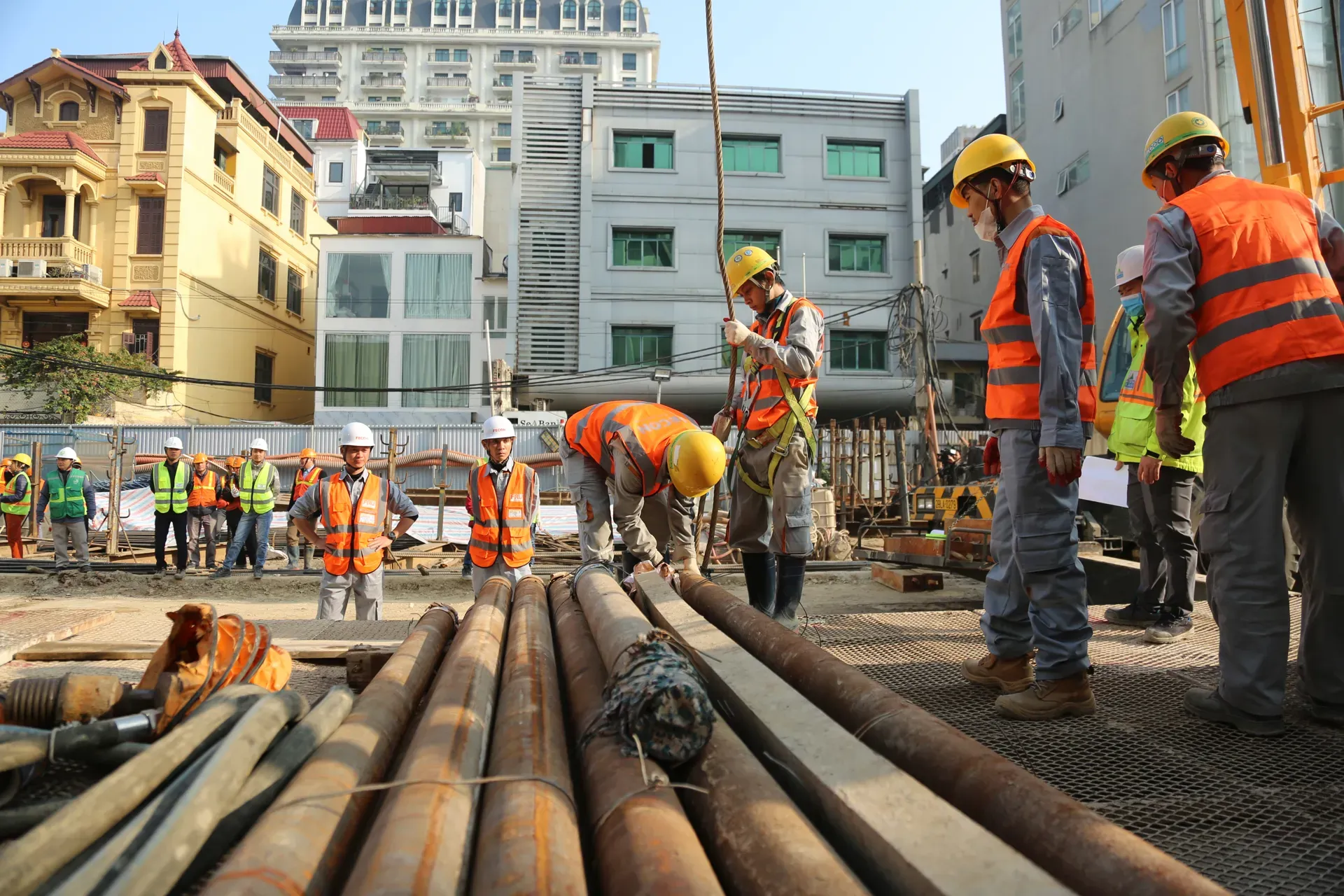
Public investment projects will be the key driver for construction material sector. Photo: Cong Hung/The Hanoi Times
Dinh Hong Ky, chairman of the Ho Chi Minh City Construction and Building Materials Association, said faster public investment typically drives strong demand for heavy materials such as stone, sand, concrete, asphalt and steel.
As projects move from approval and bidding into large-scale construction, material consumption rises sharply, he said.
Renewed activity in several real estate segments has also supported demand for finishing materials.
The Ministry of Finance estimates total public investment allocation in 2026 could rise 12% year on year to about VND1.08 quadrillion ($41.5 billion).
Major national projects, including the Ho Chi Minh City–Long Thanh Expressway expansion, the Bien Hoa–Vung Tau Expressway and Long Thanh International Airport, are expected to reach completion by the end of Q2 2026.
These projects are likely to expand construction firms’ backlogs over the same period.
MB Securities forecasts listed construction companies’ backlogs could grow 24% year on year in 2026, driven mainly by large enterprises.
Stable workloads and faster execution could improve bid prices compared with 2023–2024, as better selling prices give investors greater flexibility in cost estimates, the firm said.
According to Vietnam Report’s survey, 47.2% of VNR500 companies expect strong growth in construction and building materials over the next year.
Optimism reflects a new public investment cycle and policies aimed at unlocking infrastructure resources, particularly in transport, energy, urban development and social housing.
Despite the positive outlook, construction firms still face labor shortages, capital constraints and outdated pricing norms.
Nguyen Quoc Hiep, chairman of the Vietnam Association of Construction Contractors, said labor shortages remain the industry’s most pressing issue, affecting both engineers and unskilled workers.
He added that labor cost norms in public investment projects lag market conditions, forcing contractors to absorb additional costs.
Capital constraints also persist. About 95% of construction firms have capital below VND100 billion ($3.8 million), limiting access to credit for material preparation in large projects.
“This remains a key risk for investors during the sector’s recovery,” Hiep said.
Le Trung Thanh, director of the Department of Science, Technology, Environment and Building Materials under the Ministry of Construction, said construction materials remain essential inputs for infrastructure, urban development, housing and national defense projects.
Ensuring stable supply, appropriate quality and reasonable prices remains critical, alongside promoting green, circular and low-emission materials to support sustainable growth, he said.
Construction Law No. 135/2025/QH15 updated regulations governing materials used in construction projects and encouraged research, investment and use of new, recycled, lightweight and environmentally friendly materials.
Decree No. 09/2021 strengthened state management, but implementation revealed gaps in material classification, supply-demand coordination and crisis response. Several provisions were later revoked under Decree No. 144/2025.
Against this backdrop, a draft decree aims to clarify regulations, promote sustainable materials, improve coordination for major projects and encourage market-based use of ash, slag, gypsum and non-fired materials.
Industry experts say the new framework will support investment, energy efficiency, emission control and transparency, helping stabilize the market and sustain long-term growth.
Author: Hanoitimes
RECOMMENDED TOPICS