VN
VN
 EN
EN
22/07/2026, 02:00
Business economics
Vietnam’s momentum
According to Assoc. Prof. Dr. Bui Hoai Son, Standing Member of the National Assembly’s Committee on Culture and Education, 2026 has been identified as a pivotal year marking the beginning of a new development cycle, as Vietnam enters a phase of synchronized implementation of major Party and State resolutions and strategies, with the goal of achieving GDP growth above 10% in the years ahead.
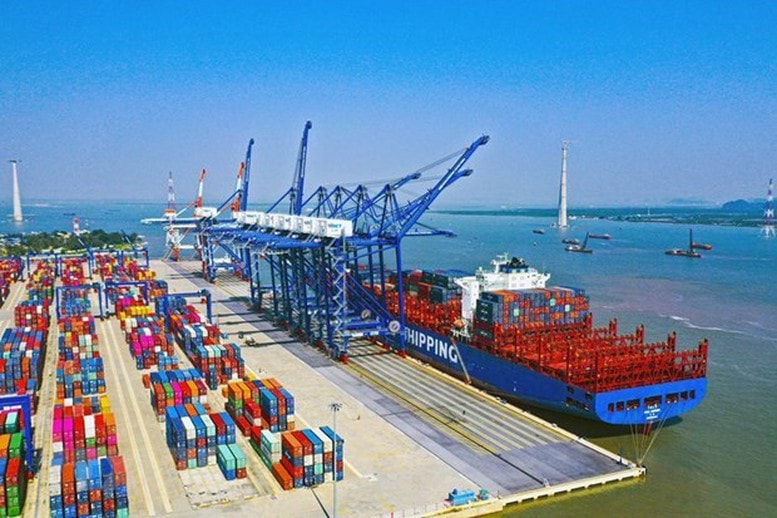
Every major development phase of the nation has been accompanied by a shift in mindset
The theme of “Autonomy, Self-Reliance" carries not only economic significance but also deep cultural meaning. Within this choice, the private sector is emerging as a force capable of leading a new growth model, generating “Vietnam’s momentum” from corporate internal strength, cultural resilience, and the aspiration to create long-term developmental value.
Repositioning the Cultural Foundations of Development
Every major development phase of the nation has been accompanied by a shift in mindset. In previous decades, priorities centered on stability, poverty reduction, and economic expansion. Today, as Vietnam reaches a new development threshold, the challenge is no longer merely speed but quality, depth, and the autonomy of growth.
The target of GDP growth exceeding 10% from 2026 is not simply an economic indicator; it reflects a strong aspiration to advance and affirm Vietnam’s position regionally and globally.
"The concept of “Autonomy – Self-Reliance” should be understood as a cultural choice. Autonomy refers to the ability to chart one’s own development path without passive dependence on external resources. Self-reliance represents endogenous strength nurtured by people, the business community, and the enduring cultural values of the nation," said Assoc. Prof. Dr. Bui Hoai Son.
Assoc. Prof. Dr. Bui Hoai Son forecasted that in this context, 2026—the pivotal year—is not only the starting point of a new growth cycle but also a moment to redefine the roles of key development actors. While the State plays the role of architect, policymaker, and guarantor of a stable environment, the private sector is where the spirit of autonomy and self-reliance is most vividly expressed in economic life.
Private enterprises are where policies are translated into concrete actions—into projects, products, services, and jobs. From large conglomerates to small and medium-sized enterprises, the private sector is increasingly demonstrating that it is not merely a participant but can become a leader in shaping the country’s new growth model.
The Private Sector as a Culturally Grounded Growth Driver
The rise of the private sector in recent years is reflected not only in capital scale or growth rates, but more importantly in how it contributes to shaping new development spaces for the country. Many major private conglomerates have moved beyond short-term profit-making sectors to invest in fields requiring long-term vision, cultural depth, and broad spillover effects.
For example, Vingroup has evolved from a real estate developer into a multi-sector conglomerate engaged in industry, technology, healthcare, education, and smart urban development. Its investments in high-tech manufacturing, electric vehicles, and innovation ecosystems represent not merely business decisions but a development strategy rooted in technological mastery and national ambition. In this context, digital transformation and green transition are not simply trends; they have become embedded in corporate culture, where innovation, discipline, and pioneering spirit are core values.
Similarly, Sun Group’s investment strategy in tourism, resorts, infrastructure, and large-scale cultural and entertainment complexes has contributed to reshaping the image of many localities. Its projects go beyond tourism products to create new cultural spaces, where landscapes, architecture, and local identity are integrated into a harmonious development framework. This illustrates how the private sector can become a creative cultural actor, generating sustainable economic value from national identity and cultural resources.
An Enabling Institution, Business Culture, and the Aspiration for Autonomy
"As 2026 marks a pivotal stage in development, further institutional reform is essential to reduce compliance costs, enhance transparency, and expand space for private-sector growth. Equally important is a shift in governance culture—from “management and control” to “facilitation and service,” from viewing enterprises as objects of regulation to recognizing them as development partners," stated Assoc. Prof. Dr. Bui Hoai Son.
At the same time, cultivating and promoting Vietnamese business culture carries special significance. A strong business community is measured not only by capital scale or revenue but by the quality of its business culture: respect for the law, commitment to integrity, fair competition, and alignment of corporate interests with those of society and the nation. In the context of deep international integration, business culture becomes a form of “soft power,” enabling Vietnamese enterprises to compete and expand globally.
The spirit of autonomy and self-reliance among Vietnamese enterprises cannot be sustained solely through policy incentives; it must also be nurtured by social trust and proper recognition. When businesses are acknowledged as value creators and partners of the State in development, the aspiration for long-term investment, innovation, and sustainable growth will be further strengthened.
In Assoc. Prof. Dr. Bui Hoai Son's view, the Lunar New Year of Binh Ngo 2026 marks not just a new year but a new stage of development. “Vietnam’s momentum” does not arise from miracles but from the convergence of enabling institutions, a dynamic business community, and a solid cultural foundation. Within that convergence, the private sector plays a central role—not only as an engine of growth, but also as the most tangible expression of the nation’s spirit of autonomy and self-reliance.
Author: TRUONG DANG
RELATED TOPICS
RECOMMENDED TOPICS