VN
VN
 EN
EN
23/07/2026, 02:00
Business economics
Vietnam’s real estate market approaches a new cycle
After a prolonged downturn from late 2022 through 2024, Vietnam’s real estate market staged a clear recovery in 2025.
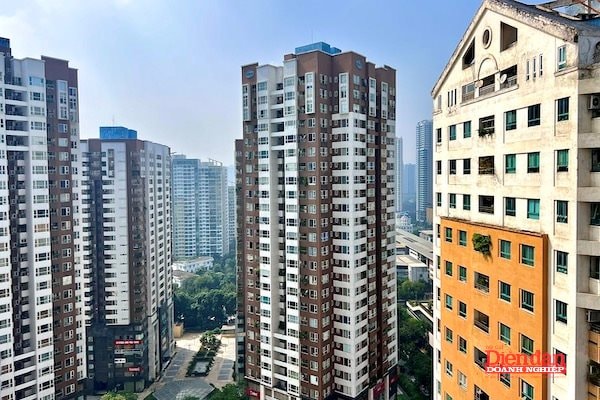
Yet this rebound is not merely a short-term cyclical upswing. Instead, it reflects deeper structural shifts that are laying the groundwork for a new phase of development—one that is more selective, disciplined, and sustainability-oriented.
According to Nguyen Van Dinh, Chairman of the Vietnam Association of Realtors, 2025 can be seen as a pivotal year. The market not only emerged from a period of stagnation but also entered a phase of profound restructuring. Macroeconomic stability, renewed economic growth, and accommodative monetary policy jointly provided strong momentum, supporting improvements in supply, liquidity, and price levels across multiple segments.
Credit flows played a central role in this recovery. By the end of August 2025, outstanding real estate credit exceeded VND 4 quadrillion, accounting for nearly 25% of total loans in the economy. This figure signals a notable shift in how banks perceive the sector—from a high-risk area to a key driver of economic growth. Persistently low interest rates further boosted market liquidity, easing financing constraints for both developers and homebuyers and helping to unlock transactions that had been frozen since 2022.
Alongside capital availability, regulatory reforms and government efforts to resolve legal bottlenecks were critical in reviving supply. Many long-stalled projects were reviewed, adjusted, and reactivated, enabling the market to regain a more natural operating rhythm. Nevertheless, supply growth has lagged behind demand, particularly in segments catering to genuine housing needs. This imbalance has kept prices elevated throughout 2025, placing mounting pressure on end-users and first-time homebuyers.
Market dynamics over the past year have also highlighted increasing segmentation. Apartments emerged as the strongest-performing segment, supported by clearer legal frameworks, strong end-user demand, rental potential, and relatively high liquidity. Amid continued urbanization, apartments are viewed not only as a primary housing solution but also as a comparatively safe long-term investment.
In contrast, the resort and hospitality real estate segment remains subdued. Despite strong long-term potential driven by Vietnam’s tourism advantages, unresolved legal issues and lingering caution following the prolonged impact of the Covid-19 shock have dampened investor sentiment. Many investors have yet to re-enter this segment, opting instead for assets with clearer regulatory certainty.
The recovery phase has also accelerated consolidation within the industry. Developers with solid financial capacity, transparent legal status, and long-term strategies are using the current environment to expand land banks and increase market share. Meanwhile, weaker players—those constrained by capital shortages, governance challenges, or legal complications—have been forced to scale back operations or exit the market altogether. This process of natural selection is widely viewed as an inevitable step in the maturation of Vietnam’s real estate sector.
Beyond internal restructuring, changes in spatial development patterns are creating new growth avenues. Administrative boundary adjustments and sustained investment in transport infrastructure are reshaping the market landscape. Urbanization is no longer confined to core metropolitan areas but is spreading toward satellite cities and twin urban zones. As infrastructure connectivity improves, physical distance becomes less of a constraint, opening up new opportunities in areas previously considered peripheral.
Looking ahead to 2026, market prospects are generally positive but tempered by caution. Economic growth is expected to remain robust, reinforcing investor confidence. However, the market is unlikely to witness sharp, speculative price surges seen in earlier cycles. Greater transparency and tighter regulatory oversight are expected to curb short-term speculation and quick-flip strategies, encouraging a shift toward medium- and long-term investment aligned with real housing demand and urban development trends.
Still, the most pressing challenge in the next cycle lies in affordable housing for low-income earners and industrial workers. The persistent shortage of social and affordable housing is not only an economic issue but also a broader social concern. Addressing this gap will require stronger government intervention, including clearer planning frameworks, streamlined legal procedures, and sufficiently attractive incentive mechanisms to encourage private-sector participation. Only when the majority of citizens can realistically achieve homeownership will the real estate market be able to claim truly sustainable and inclusive growth.
Overall, Vietnam’s real estate sector is standing at the threshold of a new cycle—one defined by selectivity, transparency, and real value creation. This transition will test not only developers and investors but also the broader economic model. Ultimately, the quality of this next phase will serve as a key indicator of Vietnam’s long-term growth trajectory and market maturity.
Author: TRUONG DANG
RELATED TOPICS
RECOMMENDED TOPICS