VN
VN
 EN
EN
22/07/2026, 02:00
Business economics
Vietnam seeks opportunities in the face of economic challenges
Economic challenges prevail, but opportunities for Vietnam also remain, if Vietnam plays its cards right.
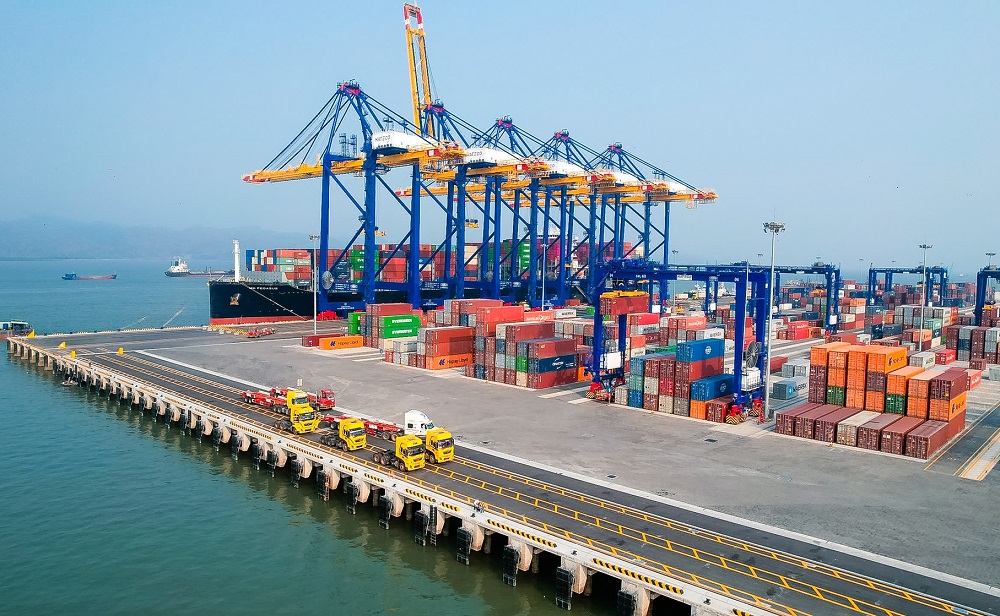
It’s not only the traditional export market that Vietnam is targeting: new trade opportunities are of crucial importance.
Uncertainty has become the new certainty in today’s world. This is not how the Year of the Horse was meant to begin: shipping through the Strait of Hormuz has been disrupted, markets are volatile, and oil prices are soaring. The Middle East conflict is an acute reminder of how sensitive fast-growing ASEAN, particularly Vietnam, is to high oil costs.
No doubt, the energy shock poses challenges to growth in many Asian economies. For Vietnam, the initial impact showed up in the inflation print, with both March and April data overshooting the central bank’s inflation ceiling.
But, as the saying goes, ‘you never want to let a serious crisis go to waste’: an opportunity is emerging to rethink energy strategies and economic policies in a fast-evolving world.
Alas, the market’s eyes are fixated on the near-term energy challenges. However, it is also important to zoom out and dive into the fundamentals. For Vietnam, many of the structural factors remain intact.
On many levels, Vietnam is singing its own song. 2025 can be characterised as a rollercoaster year for Vietnam, with back-and-forth tariff headwinds. However, Vietnam defied the tariff pressure and proved its economic resilience with remarkable GDP growth of 8%, placing it as Asia’s second fastest-growing economy, just after Taiwan.
Indeed, in a year with tariffs dominating the news headlines, Vietnam saw record-high trade. While it may be tempting to attribute this to front-loading effects when exporters rushed to ship goods, Vietnam’s cemented position in global electronics trade came to the rescue after the front-loading effect had faded. This did not come overnight: it is thanks to consistent efforts to attract quality foreign direct investment (FDI), improve the business environment, and move up the value chain.
The lower end of textiles and footwear used to dominate Vietnam’s trade landscape, but things have changed quickly. Now over a third of Vietnam’s exports are electronic products. It now plays a bigger role in final electronics assembly, specialising in finished consumer electronics, thanks to supply-chain diversification from tech multinationals. While mainland China remains in the dominant position for many of these exports, Vietnam’s share of consumer electronics, including smartphones, printers and computers, has seen a notable jump from almost none to 8-15% in 15 years. Besides consumer electronics, Vietnam is also striving to climb up the value chain further, targeting the integrated circuits segment. Indeed, Vietnam has actually captured more share in the US market in certain consumer electronics, defying the tariff risks.
But it’s not only the traditional export market that Vietnam is targeting: new trade opportunities are of crucial importance. Vietnam has a large portfolio of free trade agreements (FTAs), including the flagship EU-Vietnam FTA.
While many tariff barriers were removed, more can be done to update and deepen these agreements, such as addressing non-tariff barriers like import-licensing requirements and lengthy customs procedures. Meanwhile, Vietnam’s trade exposure to ASEAN peers is also one of the lowest in the region. While ASEAN almost achieved 100% tariff-free trade, the removal of non-tariff barriers could unlock the region’s potential to boost further intra-regional trade liberalisation. Elsewhere, albeit still small in scale, Vietnam could also look to regions such as South America and the Middle East.
In a highly volatile global trade environment, tariff uncertainty does put investors on a cautious footing, prompting them to adopt a “wait-and-see” approach in the near term. However, in the long term, Vietnam’s advantage remains, as FDI reflects international investors’ confidence in an economy’s medium- to long-term growth potential. Be it the openness to FDI, infrastructure connectivity, or labour cost effectiveness, talent build-up, or the existing manufacturing ecosystems, Vietnam is hugely competitive vis-à-vis many ASEAN peers.
In addition, consumption also matters. Most know about Vietnam’s booming trade sector, but few appreciate the strength of its domestic demand story. The confidence comes from long-term trends, such as an improving labour market, ongoing urbanisation and a growing middle class. With booming e-commerce and the rise of Generation Z, more potential can be unleashed.
Author: Dr. Frederic Neumann, Chief Asia Economist, HSBC and Yun Liu, Senior ASEAN Economist, HSBC
RECOMMENDED TOPICS