VN
VN
 EN
EN
26/07/2026, 02:38
Business economics
Vietnamese real estate market enters a new growth cycle
After a period of slowdown and intense market consolidation, Vietnam’s real estate sector now stands at a pivotal moment, as a wave of institutional reforms, governance adjustments, and infrastructure investments simultaneously take effect.
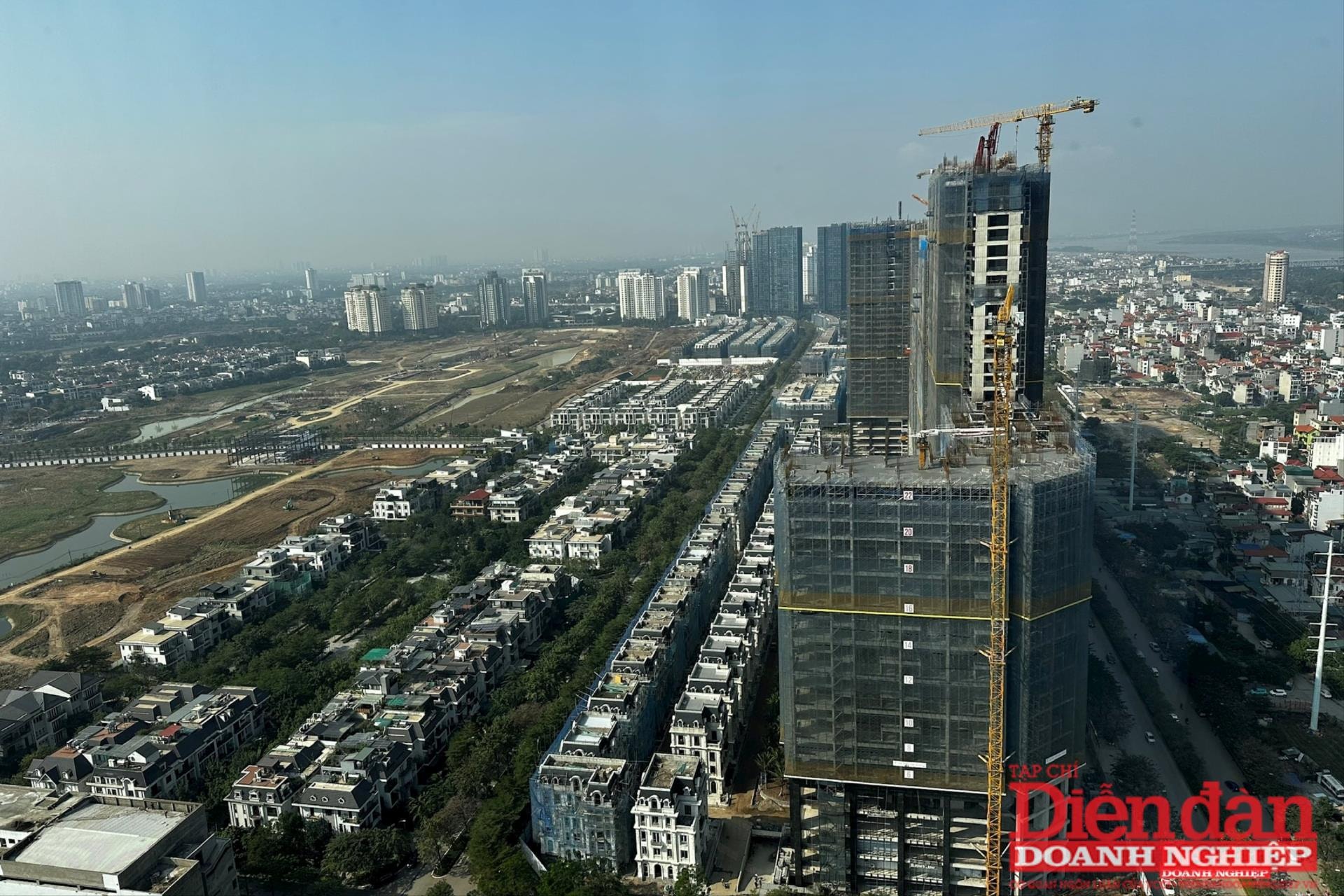
In an interview with Business Forum, Dr. Nguyen Van Khoi – Chairman of the Vietnam Real Estate Association and Member of the Prime Minister’s Advisory Council for Administrative Procedure Reform – stated that 2026 will mark the beginning of a new development cycle, in which real estate is no longer merely an investment vehicle but closely intertwined with spatial planning, infrastructure development, and social welfare.
– Looking back at 2025, how would you assess the overall performance of the real estate market?
The year 2025 was extremely challenging but also critically important for the real estate market. Amid global economic volatility and high capital costs, the domestic market faced clear pressures in terms of liquidity and sentiment. However, the positive aspect is that Vietnam maintained macroeconomic stability and gradually addressed major bottlenecks in the sector.
Resolutions of the Politburo—such as Resolution No. 57, No. 59, No. 66, and No. 68—along with resolutions of the National Assembly and the system of real estate-related laws enacted during 2023–2025, reflect a renewed policy mindset and a strong determination to unlock productive forces and mobilize social resources. The Government and the Prime Minister proactively directed various measures to promote social housing development to ensure social security, while restructuring supply and demand and stabilizing the real estate market.
The coordination, inspection, and guidance of the Ministry of Construction with other ministries and local authorities have helped remove obstacles in project implementation. As a result, business and investor confidence is gradually recovering, and the real estate market is showing positive signs of revival and growth.
– Within that broader picture, which segments are demonstrating the strongest momentum?
Industrial and logistics real estate remains a bright spot, with occupancy rates in industrial parks reaching approximately 83–85% in the North and 90–92% in the South. Tourism and resort real estate has also recorded about 218 projects with more than 10,800 units.
Across the market, there are currently around 2,385 commercial housing and urban-area projects, with a scale of approximately 5.2 million units. Total transactions average roughly 600,000 per year.
Notably, 658 social housing projects have been launched nationwide, providing around 657,000 units. However, despite being a positive development, the social housing and mid-range housing segments for genuine demand remain insufficient and have yet to meet public expectations.
– In your view, what policy priorities should be emphasized to ensure sustainable market development in the coming period?
The most important task now is to implement policies in a transparent, coordinated manner while avoiding vested interests. Regulatory tools must be used effectively, focusing on two main areas: managing land use in line with genuine demand segments and applying financial instruments—such as interest rates, lending conditions, repayment terms, taxes, and fees—appropriately across housing segments.
At the same time, the National Housing Fund should soon become operational, with a focus on developing rental social housing and with the State proactively allocating clean land. Substantive support mechanisms for homebuyers are also needed to improve access to housing.
At the central level, specific regulations should be issued to accelerate breakthrough investment models such as PPP, BT, and FDI. Enterprises, for their part, must modernize governance, strengthen financial capacity, and concentrate on projects that meet real societal demand. When institutions become more streamlined and confidence is reinforced, real estate will continue to serve as a key economic sector, contributing positively to the goal of achieving double-digit GDP growth from 2026 onward.
– What message would you like to send to businesses at this time?
A new spring is a time for renewed confidence and fresh beginnings. I hope real estate enterprises remain steadfast in their long-term strategies, comply with the law, and align corporate interests with societal interests.
For investors and homebuyers, a long-term perspective is essential—selecting transparent projects that meet genuine demand, avoiding artificial price inflation, speculative demand, and waste of social resources.
On the occasion of Lunar New Year Binh Ngo 2026, I would like to wish the business community and citizens “Health, Resilience, and Confidence,” as we join hands with the Government to build a healthy real estate market, contributing to rapid and sustainable national development and the goal of becoming a high-income country by 2045.
– Thank you very much.
Author: LUU VAN - TRUONG DANG
RELATED TOPICS
RECOMMENDED TOPICS