VN
VN
 EN
EN
26/07/2026, 02:00
Investment
Will the US dollar slide by year end?
Unless something material changes it looks as if the US dollar will slide to the end of this year. It would round off a thoroughly miserable 2025 for the greenback.
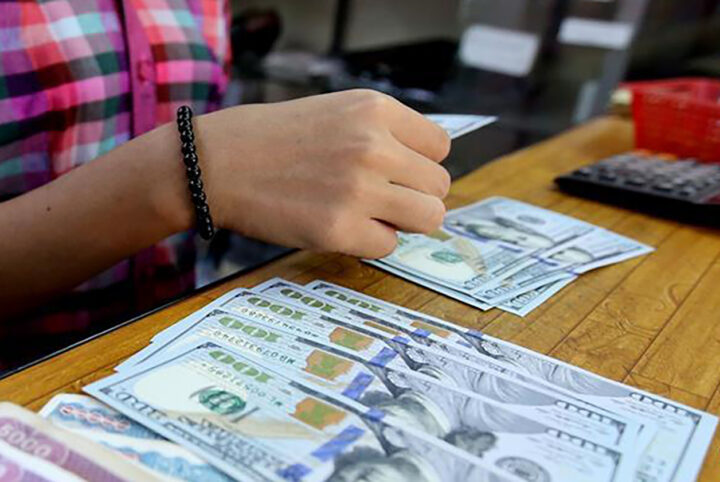
Unless something material changes, it looks as if the US dollar will slide to the end of this year.
This year has seen one huge US dollar meltdown in the early months of the year, followed by a long period of broad stability. The meltdown was caused by apprehension around tariffs. The subsequent stability reflected both an easing of tariff rates and the fact that the economic hit from the tariffs was not as bad as feared.
The question now is whether the early-year US dollar plunge was the start of a decline that could last some time, possibly years, or whether the US dollar’s stability in the second half of the year means that the panic is over and the US dollar can rebuild. Steven Barrow, Head of Standard Bank G10 Strategy, leans to the former view, and the fact that the US dollar has slipped in this ‘quiet’ period running through to the holiday season may hint that the natural bias for the US dollar is still one of weakness. One reason why Steven Barrow leans to the bear side for the US dollar relates to the prospect of tariff angst returning to the market early next year if, as he suspects, the US Supreme Court deems most of Trump’s tariffs illegal.
The betting markets suggest that this is the favored view, but Steven Barrow’s sense is that there could still be quite a fall in the US dollar if the tariff decision goes against the Trump Administration. More than this, he could even argue that the Supreme Court decision is a lose-lose for the US dollar bulls. For if the Supreme Court grants the president carte blanche to walk all over the US Constitution by permitting the tariffs, it could clearly embolden the president to undertake more actions that potentially undermine the US dollar in the same way that tariffs did earlier in the year.
The appeal of the US dollar as a safe asset is embedded in the reputation of its institutions. But this reputation appears to have been challenged by the president and potentially endorsed by the Supreme Court. That’s possibly why the US dollar did not rally early in the year when risk aversion soared. The outlook for the US dollar looks pretty bleak indeed if the US dollar has permanently lost this ability to strengthen in periods of extreme risk or, worse still, become vulnerable to such episodes.
“Our sense is that the dollar’s safe-asset allure has been waning for some time, long before Trump became president. In this sense what we are seeing now is a natural progression, although it might be a progression that could be significantly sped up should the Supreme Court rule that tariffs are legal,” said Steven Barrow.
An additional risk that we see is that the US Administration becomes increasingly desperate to see bond yields come down, or at the very least not rise, and chooses US dollar weakness in order to achieve it. Affordability is clearly an important political pressure point for the Administration. But while much of this is couched in terms of high goods and services prices, housing affordability, especially mortgages, seems critical as well. The stubbornness of longer-term treasury yields has meant that mortgage rates have not come down as the US Administration might have hoped.
Indeed, it is notable that the pressure put on the Fed to lower rates by the US President has not been because economic growth is particularly sluggish, but because he claims that the government is paying too much to service its debt. One way to make longer-term treasuries more attractive, at least to overseas investors, is to lower the cost of buying them via a weaker US dollar.
Of course, policymakers in the Administration can’t guarantee that they will be able to do this, but our sense is that if yields stay too high for the president’s liking, there will be an increased focus on trying to lower the US dollar, if only through jawboning rather than outright intervention. Clearly we have seen no sign of this as yet. Indeed, it is notable that the US President has mostly stayed quiet on the US dollar during his second term, as opposed to his first stint in office. But, as the midterm elections loom next November, and as Republican Party decimation beckons, the importance of a weaker US dollar may start to resonate a bit more with the president—and perhaps with the FX market as well.
Author: NGOC ANH
RECOMMENDED TOPICS