VN
VN
 EN
EN
25/07/2026, 10:00
Culture- travel
A head of state's day at APEC 2027 inside Phu Quoc’s integrated ecosystem
It will be a journey in which every movement of world leaders is carefully choreographed, with a sense of refinement and distinction embedded in every touchpoint, down to the smallest detail.
Over the past three decades, APEC summits have typically been organised around existing convention centres in host cities and supported by surrounding infrastructure. Heads of state have moved between airports, hotels and meeting venues across functionally separated zones.
At Phu Quoc, preparations for APEC 2027 reflect a fundamentally different approach by Viet Nam. The entire delegate journey, from arrival at a VIP terminal through dedicated transport corridors to conference venues, events and accommodation, is being designed as part of a single integrated master plan from the outset. Phu Quoc is, in effect, building an entirely new experience, creating a closed-loop ecosystem at a scale and level of coordination rarely seen among previous APEC hosts.
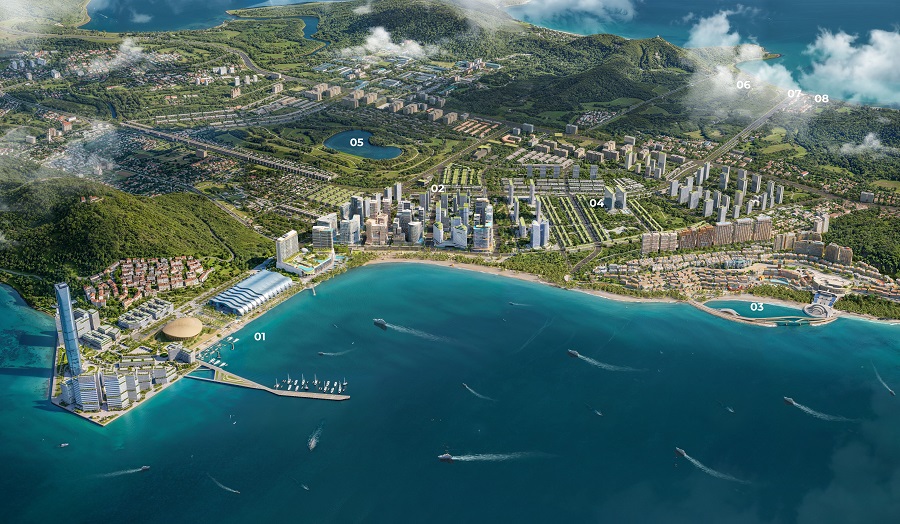
The APEC 2027 masterplan in Phu Quoc creates a closed-loop ecosystem linking all functional zones.
Imagine the journey of a head of state arriving in Phu Quoc during APEC week.
From the first point of contact at Phu Quoc International Airport, the experience is designed to the highest standards. Seen from above, the VIP terminal takes the form of an eagle ray, a marine species symbolic of the ocean, evoking freedom, strength and a global outlook.
The grand hall features a roof design inspired by traditional coastal communal houses. Inside the VIP terminal, private meeting rooms are arranged for working sessions and bilateral engagements directly at the airport. The state lounge is designed as a premium space for rest and work, with high levels of privacy, security and comfort.
Leaving the airport, the journey continues along the DT975 arterial route, a 10-lane corridor forming the backbone of the APEC zone. A light rail transit system runs in parallel, providing an additional transport option and easing traffic pressure. Transport is integrated into the overall design of the precinct, with each movement planned for efficiency and coordination.
After just 18 minutes, the motorcade arrives at APEC Boulevard, a 68-metre-wide ceremonial axis serving as the “honour gateway” to the event. From here, the journey no longer unfolds as a series of separate destinations but within a connected layout. On one side lies the Bai Dat Do urban area, planned as a cluster of five-star hospitality developments. On the other are the Convention and Exhibition Centre, the Multi-functional Complex and APEC Park, which form the core of the precinct.
The Convention and Exhibition Centre and the Multi-functional Complex express Vietnam’s identity and aspirations through contemporary architecture. The two structures are conceived as a dialogue between a circular form and a cubic volume, symbolising earth and sky in Eastern philosophy.
The Convention and Exhibition Centre draws inspiration from the waves of Phu Quoc, expressed through a sculpted roofline. The complex has a total floor area of 152,166 square metres and more than 30 conference rooms. Its main hall spans 11,050 square metres with an 81-metre column-free span, making it one of the largest integrated exhibition and conference spaces globally.
Notably, the centre also features a Dinner show Space with a capacity of 2,000 seats. extending the use of the convention centre beyond traditional conferencing into premium, immersive experiences not previously seen in Viet Nam.
The Multi-functional Complex is wrapped in a façade inspired by dragon-scale motifs, referencing the “Children of the Dragon and the Fairy” legend, a foundational myth in Vietnamese culture. The venue comprises six above-ground floors and one basement level, with a capacity of more than 4,030 seats. It stands well above most theatres in Asia,in Asia, which typically range from 1,500 to 2,500 seats, and is larger than the Dolby Theatre in the United States, the venue for the Awards with around 3,400 guests.
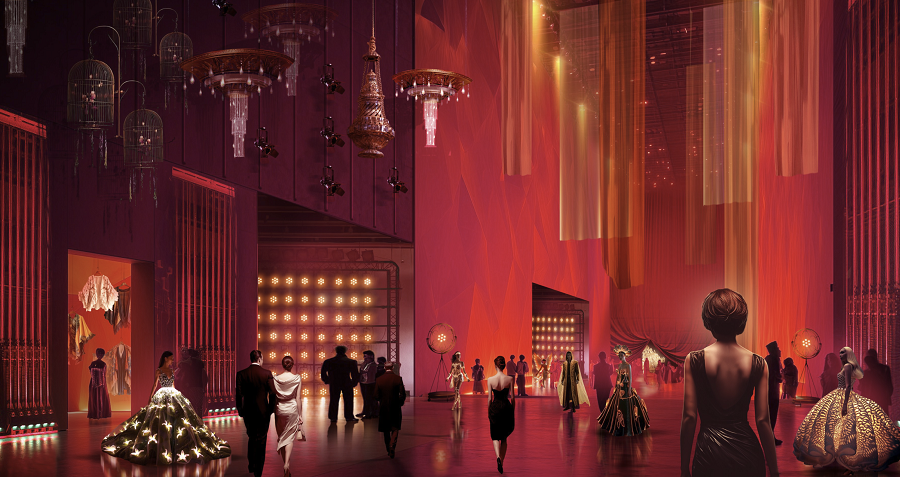
The Multi-functional Complex hosts a range of cultural and artistic programmes for APEC 2027.
At the end of a working day, dignitaries return to their accommodation in the Bai Dat Do area, where a complex of 15 five-star hotels is taking shape along the APEC corridor. With a total capacity of 6,500 rooms, the development is designed to accommodate heads of state, delegates, business leaders and international media at scale.
Beyond official sessions, delegates from 21 member economies will have the opportunity to experience Phu Quoc as an emerging global tourism destination. Some of the world’s most beautiful beaches lie just a five-minute drive from their accommodation, while two nightly fireworks displays over the sea add a distinctive highlight, offering an experience rarely found on any other island destination.
After APEC 2027, what remains for heads of state and delegates is expected to go beyond formal meetings and agreements, leaving a lasting impression of a Viet Nam in transition. The organisation of the summit, the integrated infrastructure and the experiences in Phu Quoc reflect a country entering a new stage of development, more proactive, confident and ready to take on a greater regional role. APEC 2027 is seen not only as an event, but as a milestone in Viet Nam’s international standing and the long-term development of the destination.
Author: DUONG NAM HOANG
RECOMMENDED TOPICS