VN
VN
 EN
EN
26/07/2026, 02:38
Business economics
AI may widen gap between countries
The United Nations Development Programme (UNDP) launched the Regional Human Development Report entitled “The next great polarisation: why artificial intelligence (AI) could widen inequality between countries” on December 2, in Ha Noi, warning that AI could increase global inequality; however Viet Nam is preparing to seize emerging opportunities.
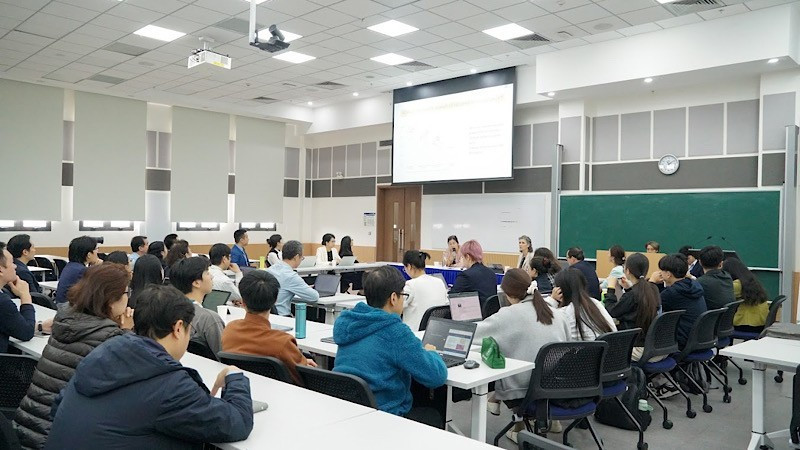
According to the new report by the UNDP, AI has the potential to transform economies, governance, and public services, but if left unmanaged, AI could also widen development gaps between countries.
Risk of widening gaps between countries
The report stresses that although AI opens up significant development opportunities, countries have very different starting points in their transition processes to seize the benefits and manage the risks. Without strong policies, these gaps may grow wider, reversing decades of progress in reducing development inequality.
At present, the Asia–Pacific region, home to more than 55% of the world’s population, is at the centre of the AI transition. The region now accounts for more than half of global AI users, with a rapidly expanding innovation footprint — from China’s growth contributing nearly 70% of global AI patents to more than 3,100 funded new AI companies across six economies.
AI could boost the region’s annual GDP growth by around two percentage points and raise productivity by up to 5% in sectors such as healthcare and finance. ASEAN economies alone could gain nearly 1 trillion USD in additional GDP over the next decade.
Viet Nam is also emerging as a notable performer in the region thanks to its ambitious national strategy to become a leading AI nation by 2030, aiming to rank among the top three in Southeast Asia and the top 50 globally in AI research and development.
Ramla Khalidi, UNDP Resident Representative in Viet Nam, stated that inclusive policies, targeted investments, and responsible AI governance are essential to ensure that AI becomes a driving force for promoting equitable development.
“Viet Nam has a good position to take advantage of AI for sustainable and inclusive development if it continues to address challenges such as differences in digital skills, data quality, and digital inclusion for women, rural communities, and vulnerable groups,” Ramla Khalidi emphasised.
Information from the report “AI Landscape Assessment” by UNDP Viet Nam shows that the government has demonstrated strong political will, implementing policies and investments to promote digital transformation and AI applications in key sectors.
The rapid development of digital infrastructure, including near-nationwide 4G coverage, ongoing 5G rollout, and significant improvement in Viet Nam’s global e-government ranking, is supporting this progress.
Turning risks into opportunities
At the same time, the report highlights potential risks caused by AI. There are millions of jobs, especially those of women and young people, facing automation risks, while gaps in skills, data, and AI governance may limit the benefits of AI. Across the Asia–Pacific region, countries investing in skills, computing ability, and effective governance systems will gain the most benefit from AI, while others face risks of falling behind.
Moreover, levels of digital transformation readiness vary significantly in the region. Countries such as Singapore, the Republic of Korea (RoK), and China are making major investments in AI infrastructure and skills, while other countries are still strengthening basic digital access and knowledge.
Limitations in infrastructure, skills, computing ability, and governance reduce the potential benefits of AI while increasing risks, including job losses, data exclusion, and indirect impacts such as increasing global demand for energy and water due to AI-intensive systems.
AI is also transforming governance and public service across the region. Accordingly, the Traffy Fondue platform in Bangkok has processed nearly 600,000 citizen reports, helping faster responses.
The Moments of Life service in Singapore has reduced paperwork processing time for new parents from about 120 minutes to 15 minutes. In Beijing, twin digital models support urban planning and flood management.
An AI-based assistance platform is being piloted in Viet Nam to help citizens use 15 essential online public administrative services. These examples show the potential of AI to improve governance and provide public services.
However, only a small number of countries have comprehensive regulations on AI, and by 2027, more than 40% of global AI-related data violations may stem from the misuse of generative AI, underscoring the need for robust governance frameworks.
Author: NDO
RECOMMENDED TOPICS