VN
VN
 EN
EN
16/07/2026, 02:00
Business economics
Aquaculture sector struggles to recover amid new challenges
Three consecutive storms in October and November 2025 caused exceptionally severe damage to aquaculture production in many localities, with total losses estimated at more than 5.2 trillion VND. Facing mounting challenges, the aquaculture sector is making concerted efforts to implement short-term recovery measures and long-term restructuring.
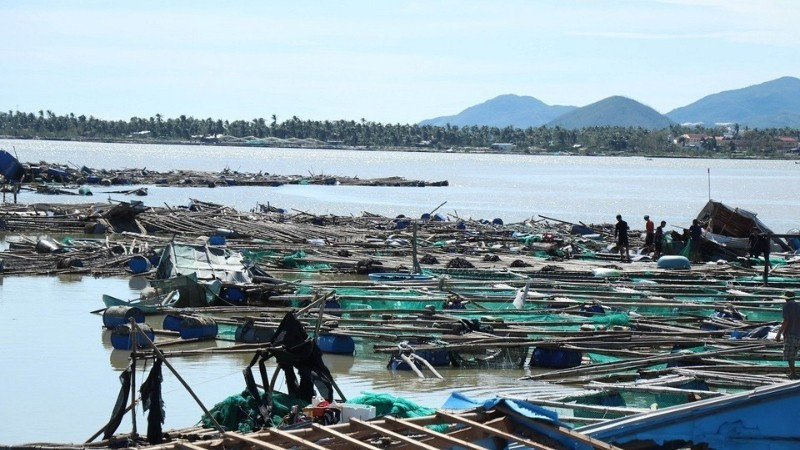
Exceptionally severe losses, many farming areas nearly wiped out
According to a consolidated report from the Directorate of Fisheries, three consecutive storms in October and November — No. 10, 11 and 13 — together with post-storm floods caused serious damage to aquaculture activities across many provinces, particularly Quang Ngai, Khanh Hoa, Gia Lai, Dak Lak, and Lam Dong.
Regarding the direct impact of storm No. 13 alone, the total damaged aquaculture area was around 1,848 ha, including 1,745 ha of brackish and marine farming and 110 ha of freshwater farming. The storm damaged or swept away 23,004 cage modules, 22,461 of which were sea cages. Estimated losses stood at roughly 1,258 billion VND.
Before recovery efforts could be completed, subsequent major floods continued to hit the Central Highlands and the south-central coastal region, causing further severe damage in the three provinces of Khanh Hoa, Dak Lak, and Gia Lai.
Statistics as of November 28 show that approximately 1,660 ha of farming area have been affected, with more than 101,000 cages damaged. Dak Lak alone accounted for over 99,000 cages. A total of 4,045 households were impacted, and 560 boats were damaged, of which Gia Lai accounted for 524. Losses in these three provinces were estimated at about 4.032 trillion VND.
Combined, the total damage to the fisheries sector is estimated at 5.290 trillion VND, a figure that illustrates the devastating impact on the livelihoods of thousands of households and on the sector’s overall growth.
Notably, losses were heaviest among key cultured species. Lobster and sturgeon were the most severely affected. Losses for lobster farming alone were estimated at 2.55 trillion VND, with Dak Lak accounting for 2.195 trillion VND, equivalent to 94,000 cages, representing 86.1% of total losses in this category.
Commercial marine fish farming suffered losses of around 276 billion VND; approximately 150 tonnes of Babylon snails were lost; and other species such as white-leg shrimp, giant tiger prawn, and freshwater fish suffered mass mortality due to sudden environmental fluctuations, floodwaters, and pollution after the storms.
Speaking at the Ministry of Agriculture and Environment’s regular November press briefing, Nhu Van Can, Deputy Head of the Directorate of Fisheries, affirmed that the damage caused by recent natural disasters has resulted in extremely serious consequences for the fisheries sector. Many farming areas have almost completely lost their infrastructure, broodstock, and production materials.
“Natural disasters struck at the end of the year, meaning recovery efforts will not only affect the current production cycle but also directly impact production targets for the early months of 2026, especially for species with long farming cycles such as lobster and high-value marine fish,” Can emphasised.
Urgent recovery of production and restructuring towards sustainability
According to leaders of the fisheries and surveillance sector, before the storms even made landfall, in addition to during and after the storms, the Directorate of Fisheries had already implemented a series of coordinated response measures. An around-the-clock duty system was maintained; vessel warnings were issued through the Vessel Monitoring System (VMS); and multiple documents were released guiding localities on disaster preparedness and post-disaster recovery.
“After the storms, the directorate coordinated with the Department of Livestock Production and Animal Health to organise a conference on recovery following storms No. 10 and 11 in Hai Phong on October 23, calling for enterprises to support farmers with preferential prices for broodstock, feed, and supplies.
At the same time, from November 17 to November 19, working groups were deployed directly to Khanh Hoa, Dak Lak, and Gia Lai to provide technical guidance, conduct environmental inspections and direct production recovery,” Can shared.
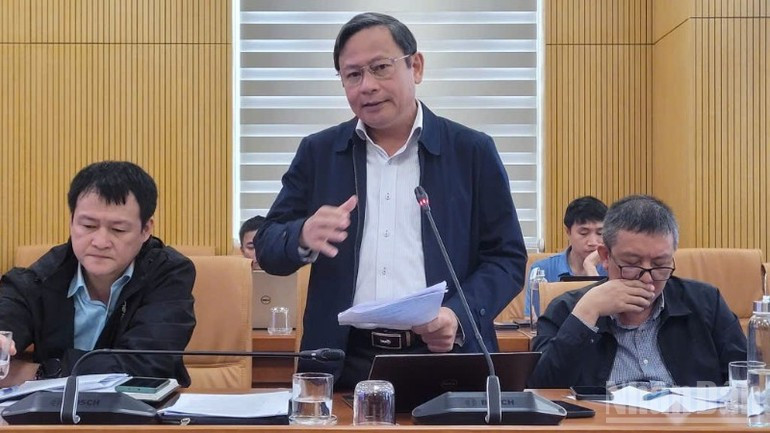
Leaders of the Directorate of Fisheries stated that one of the core tasks is post-disaster environmental treatment, including collecting dead aquatic animals, disinfecting ponds, and assessing water quality to prevent disease outbreaks. In parallel, damage assessments, repairs of cages, and identification of local needs for broodstock, supplies, and feed are carried out to coordinate appropriate supply sources.
Based on consolidated requests from Khanh Hoa, Dak Lak, and Gia Lai, the total demand for broodstock recovery is estimated at 1.23–1.28 billion units, including over 50 million lobster seed, more than 1 billion shrimp seed (white-leg shrimp and giant tiger prawn), over 60 million Babylon snail seed, and various marine and freshwater fish.
Aquafeed demand is estimated at 25,000–30,000 tonnes, of which Khanh Hoa alone requires more than 22,500 tonnes. The demand for chlorine-based chemicals for environmental treatment is 70–80 tonnes, with Dak Lak requiring around 50 tonnes and Gia Lai 20–30 tonnes. Localities also propose support for cages, floating buoys, anchors, nets, pond liners, and aeration systems to quickly restore farming infrastructure.
Regarding immediate solutions, Can said the Directorate of Fisheries is requesting localities to promptly complete damage verification procedures under Decree No. 09/2025/ND-CP to ensure timely financial support for affected farmers; and is working with banks to implement debt freezing, rescheduling, deferral, and credit support for heavily impacted households.
Localities are also required to conduct frequent environmental monitoring, determine safe stocking periods, prioritise restoration of local broodstock production facilities to reduce reliance on distant suppliers, and focus on farming species with short growth cycles to generate quicker cash flow for farmers.
In the long term, the fisheries sector must restructure its production space to adapt to climate change. Key tasks include reviewing farming area planning, particularly for sea cages and reservoir-based farming; adjusting stocking density appropriately; restricting spontaneous expansion; reducing pollution pressure; and lowering risks during natural disasters.
In addition, priority should be given to investing in essential farming infrastructure such as embankments, water supply and drainage systems and automatic monitoring stations; and promoting the use of digital technologies and automation in environmental monitoring and early risk warning. Replacing traditional materials used for sea cage farming with more durable and climate-resilient materials is also encouraged.
The sector particularly emphasises the development of value-chain production models, strengthening linkages between enterprises, cooperatives, and farmers to balance supply and demand, share risks, and enhance the resilience of the entire chain. At the same time, it proposes the development of an insurance mechanism for marine farming to provide a financial “buffer” for farmers amid increasingly complex natural disasters.
At the November press briefing, Phung Duc Tien, Deputy Minister of Agriculture and Environment, stressed that from now until the end of December, the sector must maintain its growth momentum while thoroughly preparing for the first quarter of 2026 — the period that is “both the beginning and the finish line” of the year. In the context of increasingly unpredictable extreme weather, failure to take early proactive measures will leave production constantly in a passive and dependent state, reliant on support and relief.
“Severe natural disasters have exposed clear weaknesses in today’s aquaculture production systems. But through these difficulties, fundamental and long-term solutions are gradually taking shape. Recovery is not merely about ‘rebuilding what has been lost’, but about reconstructing a safer, more adaptive, and more sustainable aquaculture sector capable of withstanding increasingly harsh environmental challenges,” Deputy Minister Phung Duc Tien emphasised.
Author: NDO
RECOMMENDED TOPICS