VN
VN
 EN
EN
09/07/2026, 11:15
Investment
Bac Ninh aims to become Vietnam’s hub for the semiconductor and high-tech by 2030
With a strategic vision toward 2030, Bac Ninh is committed to becoming Vietnam’s leading center for the semiconductor and high-tech industries.
In the flow of the digital era, where each semiconductor chip is likened to the “brain” of every smart device, this is not merely a conventional economic development plan, but a declaration of ambition to master technology and elevate Vietnam’s value in the global supply chain.
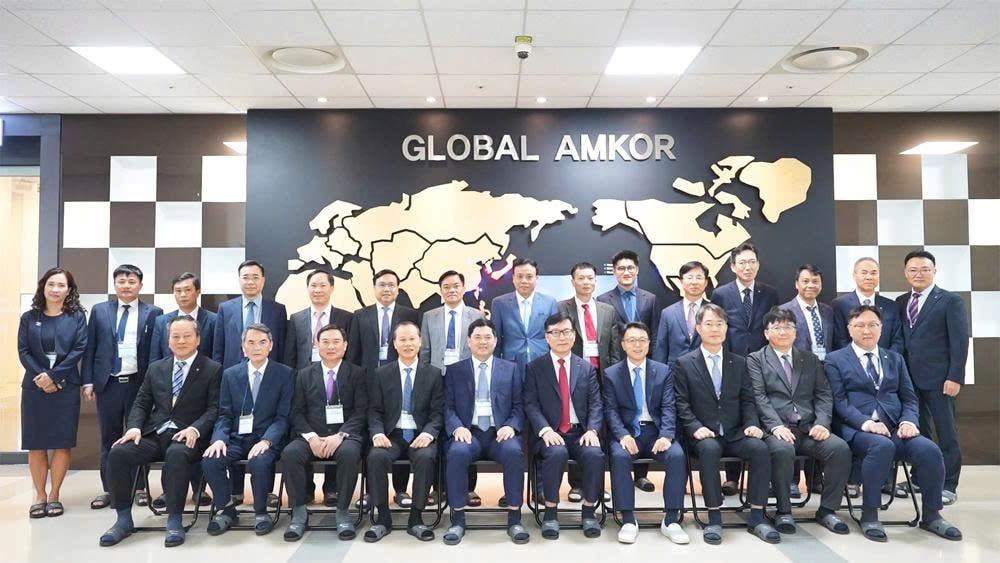 A delegation from Bac Ninh Province, led by Mr. Nguyen Hong Thai, Secretary of the Bac Ninh Provincial Party Committee, visited and worked with Amkor Group.
Expectations from the “brain” of the digital economy
According to the leadership of the Bac Ninh Industrial Zones Authority, the world is witnessing an intense race in the semiconductor industry, projected to reach USD 1 trillion in revenue by 2030. In this context, the People’s Committee of Bac Ninh Province has issued Plan No. 172/KH-UBND on the development of the semiconductor industry to 2030, with a vision toward 2050. Bac Ninh clearly identifies semiconductor development as a strategic choice and a top priority in the process of industrialization and modernization associated with digital transformation.
Why semiconductors? And why Bac Ninh? The answer lies in strategic vision. Semiconductors are not merely an industry; they form the foundation of artificial intelligence (AI), electric vehicles, medical devices, and national security.
For Bac Ninh, where electronics manufacturing accounts for up to 74% of the province’s industrial output, entering the semiconductor sector is a critical step to break through the limits of a “low-value assembly” model. From an “electronics manufacturing hub” to a “semiconductor valley”, this is a rehearsal for a future built on core technologies.
Institutional impetus: a lever to break old inertia
The history of economic development has shown that when technology reaches its limits, institutions pave the way forward. Bac Ninh understands that to attract “eagles” in the semiconductor industry, issuing a dedicated development plan for the sector serves as a decisive “impetus”- a strong enough force to break old development inertia and open up new growth space. What stands out in this plan lies not only in its ambitious targets, but also in its approach: using institutions as the lever and policies as the driving force to guide the market.
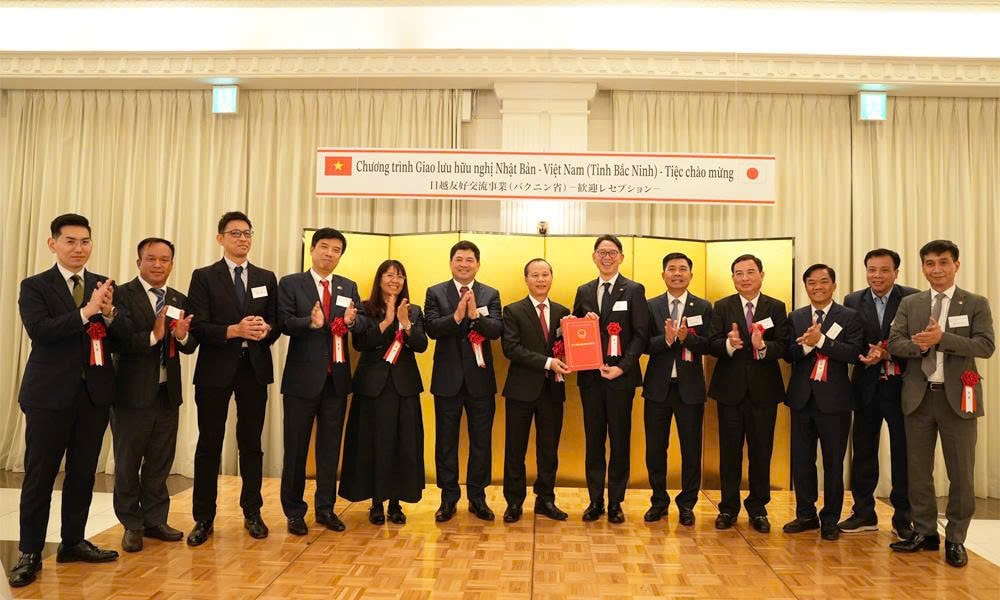 Within the framework of the Vietnam - Japan Friendship Exchange Program and investment promotion activities in Mie Prefecture (Japan), Bac Ninh Province organized a ceremony to present investment registration certificates to two projects of Japanese enterprises.
A highlight of this plan is its system of breakthrough incentive policies. From corporate income tax exemptions and reductions, preferential import duties for high-tech equipment, to credit support for semiconductor startups, the province is creating a true “green zone” for innovation. Notably, the application of a “60% green lane” mechanism for administrative procedures related to high technology has significantly shortened processing time.
However, Bac Ninh is not stopping at rolling out the red carpet for FDI. The province is aiming for a more sustainable goal: establishing an innovation support fund and encouraging domestic enterprises to participate in the supply chain. This step is intended to build a self-reliant semiconductor ecosystem, where local companies are no longer left out of the game dominated by global giants.
From technical infrastructure to an “innovation valley”
The semiconductor industry is known for its exceptionally stringent, almost “extreme” infrastructure requirements: power supply must not fluctuate even for a millisecond, water must reach ultra-high purity standards, and the production environment must be cleaner than an operating room.
Recognizing the gaps in specialized infrastructure, Bac Ninh has decisively approved a nearly 259-hectare concentrated IT park project. This is not merely a conventional industrial zone, but an “innovation valley” integrating Industry - Urban - Services and Research (R&D).
Bac Ninh is accelerating its strategy to attract foreign investment and expand international cooperation. The province aims to draw 3 to 5 major technology corporations to invest in manufacturing plants and R&D centers, gradually building a complete semiconductor value chain from design and fabrication to packaging and testing.
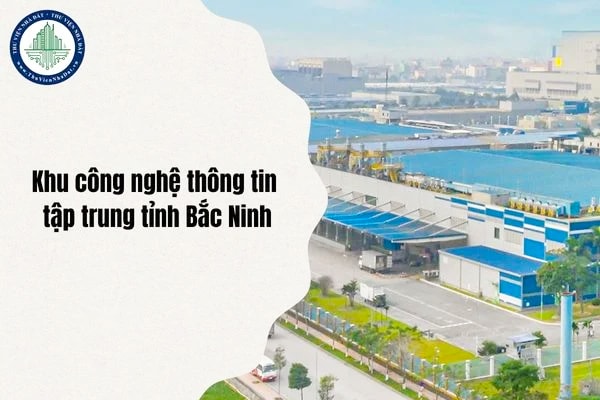
Moreover, Bac Ninh is shaping a green technology infrastructure. The use of renewable energy in chip production is not only about environmental protection, but also serves as a “passport” for “Made in Bac Ninh” chips to enter the most demanding global markets.
Human resources: the decisive link for success or failure
If institutions are the “impetus” and infrastructure the “foundation,” then human resources are the “lifeblood” sustaining the semiconductor industry. In reality, massive projects such as those by Amkor require thousands of highly skilled engineers - a figure that poses a significant challenge for any locality.
To address this challenge, Resolution No. 113/2025/NQ-HĐND of the province has emerged as a crucial solution. With the goal of training 30,000 semiconductor workers by 2030, Bac Ninh is rolling out a large-scale training campaign. Policies supporting tuition fees, reskilling costs, and even overseas study programs demonstrate that the province is not only meeting immediate needs but also building a knowledge foundation for decades to come.
The model linking Government - Academia - Industry is being strongly promoted to ensure that graduates can step directly into the labs of multinational corporations. This marks the most significant labor transformation in the province’s development history: from manual labor to knowledge-based work.
Vision to 2050: a position on the global technology map
The path to becoming a semiconductor hub is far from easy. Bac Ninh will face intense competition from Singapore, Malaysia, and Taiwan. However, its advantages lie in a young and dynamic workforce, decisive governance, and a solid foundation of supporting electronics industries built over more than a decade.
By 2050, with a target of generating over USD 25 billion annually from the semiconductor industry, Bac Ninh aims to become a leading regional hub for chip training and manufacturing, mastering key core technologies and deeply participating in all stages of the value chain from design and fabrication to packaging and testing within the global supply chain. This is not merely an economic goal, but a significant step toward enhancing national competitiveness in high-tech industries.
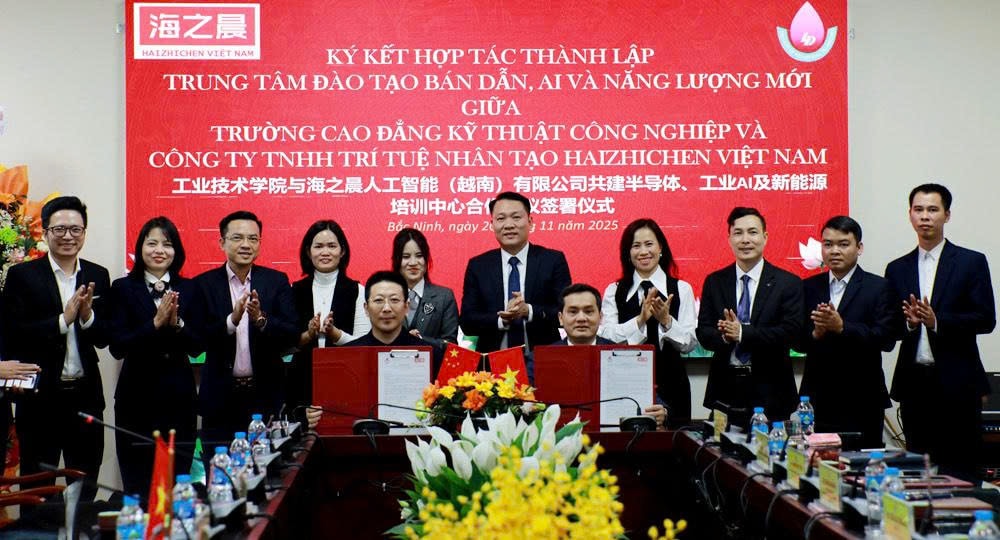 Bac Giang Industrial Technical College and Haizhichen Vietnam Artificial Intelligence Co., Ltd. have collaborated to establish a Training Center for Semiconductors, AI, and New Energy.
For Bac Ninh to become a “core technology hub” is a challenging yet deeply inspiring journey. Its semiconductor industry development plan carries significance beyond a single locality, it serves as a signal that Vietnam is ready to move into the highest segments of the global value chain. Bac Ninh will have to compete directly with well-established hubs such as Singapore, Malaysia, and Taiwan - places that have built comprehensive ecosystems over decades.
With forward-looking institutional thinking and thorough preparation in infrastructure and human resources, Bac Ninh is demonstrating that a regional “semiconductor valley” is gradually taking shape, affirming the resilience and vision of an innovative, dynamic, and globally integrated province.
Author: KIM DUNG – VU PHUONG (THANH TRA translates)
RECOMMENDED TOPICS