VN
VN
 EN
EN
09/07/2026, 11:15
Investment
Will Japanese policymakers strive for a rally in the yen?
Anyone looking at the precarious position of the yen could be forgiven for thinking that Japanese policymakers must want to try to force a major rally in the yen via FX intervention to rebuff the yen bears. But that's not what many analysts think they want to see.
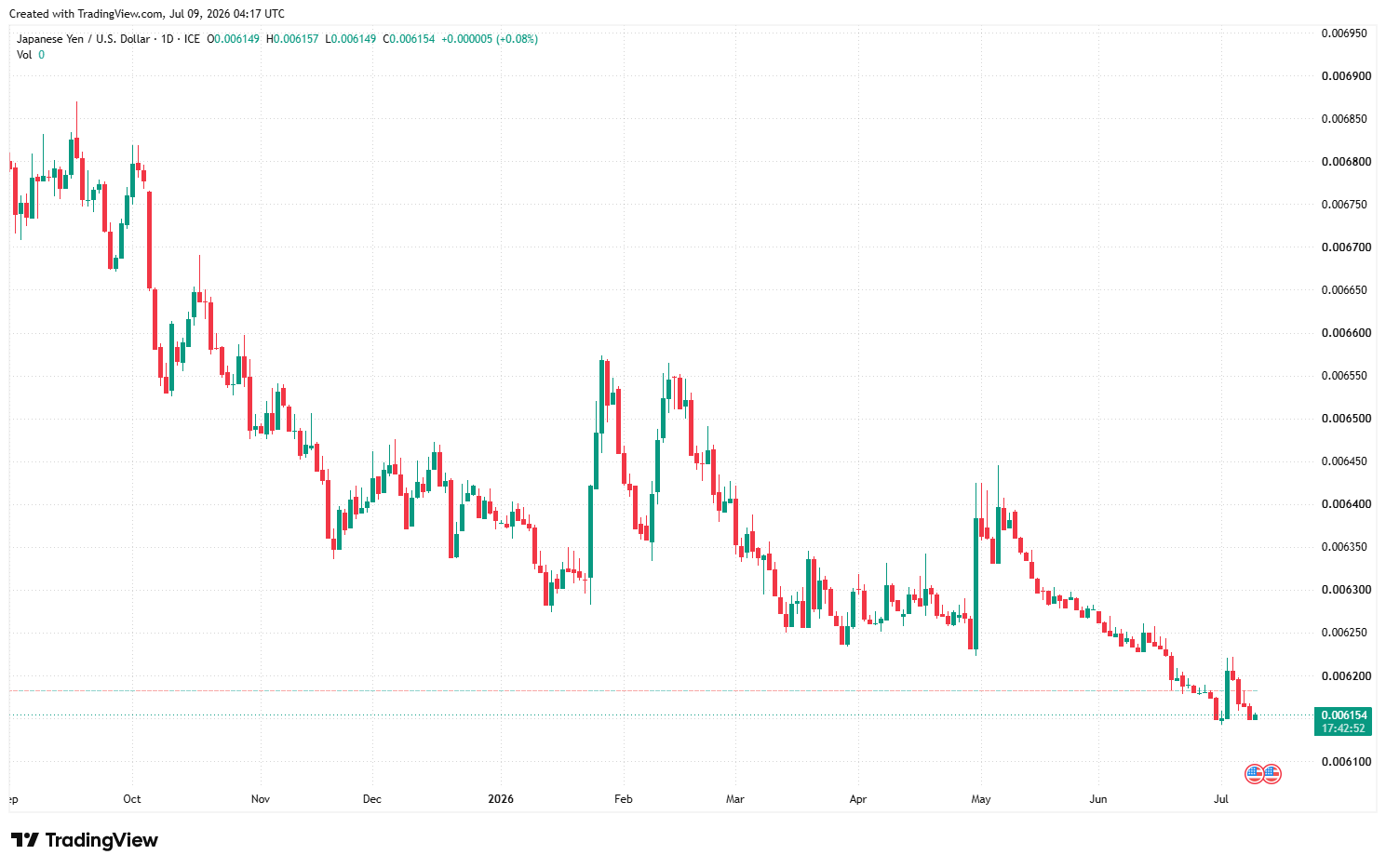
The JPY/USD is in a downtrend. Photo: TradingView
Japanese policymakers are clearly in a bind. The yen is very weak; speculators are seemingly positioned for more currency depreciation, and the most recent bout of intervention, which totalled over USD73bn, did nothing to lift the yen. Amongst the headwinds to intervention are the lack of clear US support for such action and low policy rates compared to peers. Fixing either of these seems a long way off, if not impossible.
However, Steven Barrow, head strategist of the Standard Bank, thinks that it is reasonable to take a step back here and consider exactly what it is the Ministry of Finance and Bank of Japan might be hoping to achieve. It might seem reasonable to think that the authorities want to see a big rise in the yen that turns things around once and for all, or at least buys a considerable amount of time before any further intervention is needed. If intervention can produce a very sharp rally in the yen, it might scare off the yen bears for some time, if not for good. But what would be the consequences if the authorities were able to produce a rapid 10-yen-plus fall in dollar/yen as they did back in the summer of 2024?
The answer could be the same: an implosion of risk assets both domestically and internationally, and that's not what the Japanese authorities would want. For a start, any negative spillover to the US stock market, as we saw in 2024, would probably make the US Treasury even more reticent to endorse any support for Japan's actions. The surging US stock market is one of the few trump cards that the president has to play ahead of this November's midterm elections. He won't be happy if this is tossed away because of a Japanese-induced slump in US stocks.
By the same token, Japanese policymakers might also want to consider the inflated position of some stock markets in the region, notably South Korea. If effective Japanese intervention to lift the yen and crush the carry trade results in a meltdown of Asian stock markets, Steven Barrow doubts it could be considered a success.
Another point is that, if USD70bn-plus of Japanese intervention failed to lift the yen back in late April, what might it take to effect a really substantial rise in the yen? Of course, intervention success is not just down to the amount of reserves used, but as many of these reserves will be sitting in treasuries, the market will likely make a connection between intervention success and treasury market vulnerability. Again, it needs to be pointed out that the BoJ need not ditch treasuries to fund intervention; this can be done in other ways, such as by drawing down deposits with banks, and, indeed, the BoJ may feel the need to do this to avoid any political spat with the US.
Nonetheless, as long as the market assumes a connection between dramatic intervention success and large-scale treasury sales, the US bond market will be vulnerable. All told it could mean that super-successful yen intervention by the BoJ could crush US stocks and bonds and provide significant collateral damage to other asset prices as well. It would not be a good look, and that's why Steven Barrow doubts it is the BoJ's aim. Indeed, its recent tactics, which have included forewarnings about imminent intervention, seem designed to avoid a really sharp rise in the yen and it may be for the reasons he has just suggested. “If we are right about all this, just what is the aim of the Japanese authorities?”, Steven Barrow asked.
“One answer is that its aims are as limited as recent intervention would seem to suggest, which are merely to slow the fall in the yen, rather than producing a dramatic rally. But is this a workable tactic? Speculators might feel so emboldened that the BoJ is not trying to inflict huge losses on them that they redouble their efforts to weaken the currency. In the end the yen is still likely to fall," Steven Barrow said.
Author: NGOC ANH
RECOMMENDED TOPICS