VN
VN
 EN
EN
26/07/2026, 02:38
Business economics
Businesses have to adapt to the end of cheap money
Monetary policy headroom remains in place in the early months of 2026. However, growing divergence in liquidity conditions and capital costs is forcing businesses and investors to adapt sooner rather than later.
Monetary policy is not yet “handcuffed” by inflation

Overall inflation remains sufficiently “comfortable” to allow policymakers to inject liquidity aggressively, despite short-term concerns over financial risks.
January 2026 is not merely the start of a new fiscal year; it also marks a critical juncture between the previous economic cycle and the strategic cycle for 2026–2030. Historically, January indicators tend to exhibit strong “inertia,” often providing early signals of policy direction and capital flows for the year ahead.
Overall inflation remains sufficiently “comfortable” to allow policymakers to inject liquidity aggressively, despite short-term concerns over financial risks. That said, focusing solely on headline data risks obscuring deeper market dynamics, as liquidity, interest rates, and exchange rates are quietly reshaping the business environment.
According to Nguyen Minh Tuan, CEO of AFA Capital, Resolution No. 244/2025/QH15 on the 2026 socio-economic development plan has set an ambitious growth target for both this year and the following period, with GDP growth aimed at 10% or higher, while average CPI is to be kept around 4.5%. These are not merely indicative targets, but guiding principles for both monetary and fiscal policy.
Against this backdrop, January 2026 CPI rising only 2.53% year-on-year is highly significant. The substantial gap from the 4.5% ceiling provides the State Bank of Vietnam with considerable policy room. Put simply, as long as consumer inflation remains subdued, monetary policy is not yet “handcuffed” by inflationary pressures.
Notably, CPI components show clear divergence. Transport prices declined sharply thanks to global oil prices remaining stable in the USD 60–65 per barrel range, while housing and construction materials continue to be major sources of cost pressure. Even so, overall inflation remains sufficiently benign to justify large-scale liquidity injections, despite short-term financial risk concerns.
“This explains why the State Bank of Vietnam has been able to inject nearly VND 480 trillion net via open market operations (OMO) without immediately facing the risk of a surge in consumer inflation. In the current context, low CPI is effectively a ‘lifeline’ for addressing liquidity shocks in the banking system,” Mr. Tuan said.
However, he cautioned that CPI does not fully capture currency depreciation within the economy. While consumer prices remain under control, asset prices such as gold, foreign currencies, and real estate are moving in a very different direction. This highlights a critical distinction between statistical inflation and asset-price inflation.
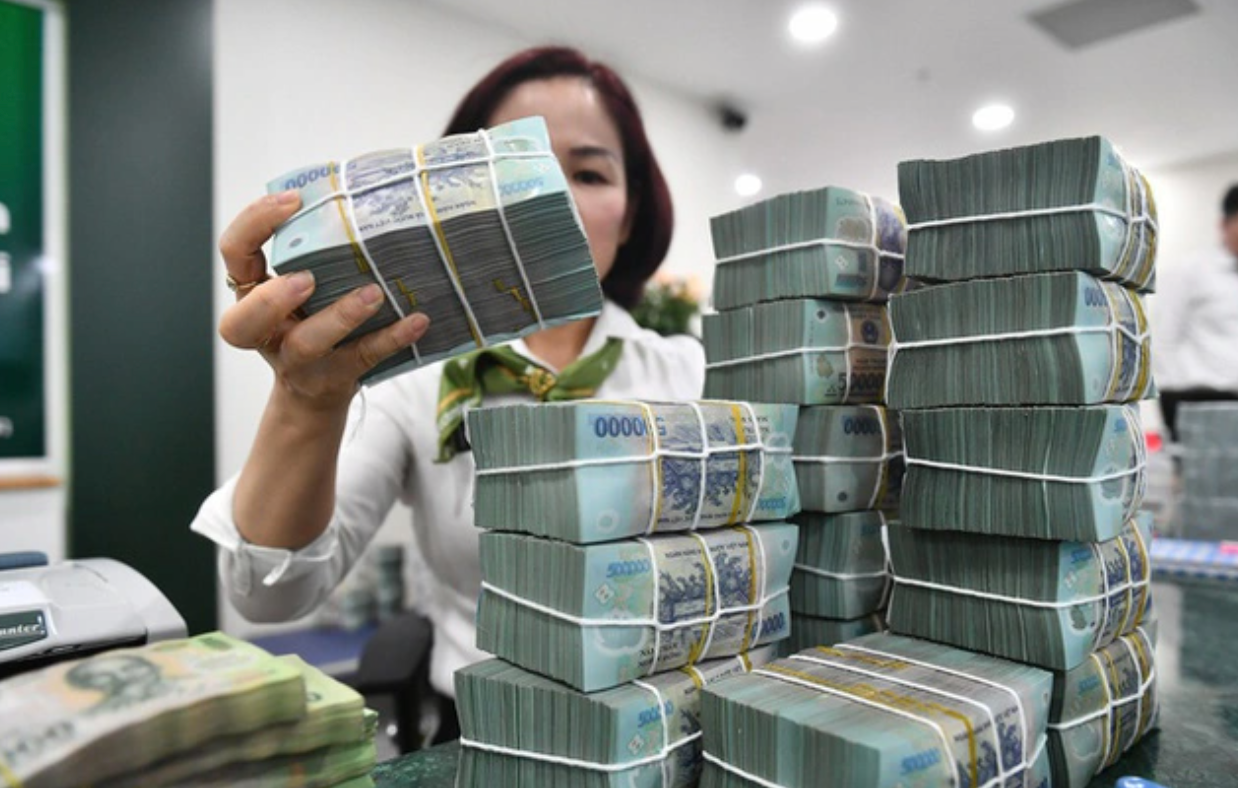
With the US dollar maintaining strength globally, a prolonged trade deficit will intensify pressure on the Vietnamese dong.
Businesses and Investors Must Remain Cautious
One notable macroeconomic development is the trade balance. January 2026 saw imports surge far beyond exports, pushing Vietnam into a trade deficit of more than USD 3 billion. This marked the third consecutive month of a trade deficit, suggesting the trend is no longer purely seasonal.
Rising imports reflect strong demand for production inputs, but they also place significant pressure on the foreign exchange balance. With the US dollar maintaining strength globally, a prolonged trade deficit will intensify pressure on the Vietnamese dong.
AFA Capital’s CEO forecasts that, given current conditions, a 2–3% depreciation of the VND in 2026 is entirely plausible. This pressure is likely to persist in the short term, constraining the scope for domestic monetary easing.
In recent days, the money market has witnessed an unusual development, with interbank interest rates spiking into double digits—the highest levels since the post-2011 period of financial stress. This was driven not only by seasonal funding demand ahead of the Lunar New Year, but also by liquidity bottlenecks caused by capital outflows from the banking system.
To prevent risks from spreading during the extended holiday period, the State Bank of Vietnam deployed multiple tools simultaneously, ranging from large-scale net injections via OMO to foreign-exchange swaps designed to provide immediate VND liquidity to the system.
Nevertheless, the credit growth target for 2026—set at around 15%, significantly lower than the previous year—signals a more cautious policy stance. As a result, monetary policy headroom is gradually narrowing.
Globally, the US Federal Reserve’s policy stance has become more hawkish, with priority given to controlling core inflation and shrinking its balance sheet. This has helped keep the US dollar relatively strong, exerting sustained pressure on emerging-market currencies, including the VND.
“As long as exchange-rate pressures persist, the scope for cutting domestic policy rates will remain limited, despite the need to support growth. Rising capital costs are driving a clear shakeout in asset markets. Lending rates are edging higher across both joint-stock and state-owned commercial banks, particularly in the real estate sector. This is a clear signal that the era of prolonged cheap money has truly come to an end.
In an environment of tight credit controls and less abundant liquidity, a cautious strategy—reducing leverage and prioritizing assets with real cash flows and sound financial fundamentals—will be critical for both businesses and investors,” Nguyen Minh Tuan advised.
Author: DIEM NGOC - TRUONG DANG
RELATED TOPICS
RECOMMENDED TOPICS