VN
VN
 EN
EN
10/07/2026, 10:58
VCCI
Connecting Vietnamese and Indian businesses toward new value chains
The Viet Nam–India Business Forum is expected to open up broad new opportunities for cooperation between the business communities of the two countries.
On May 7 in Mumbai, India, General Secretary of the Communist Party and President of Viet Nam Tô Lâm and Maharashtra Chief Minister Devendra Fadnavis co-chaired the Viet Nam–India Forum, organized by the Vietnam Chamber of Commerce and Industry (VCCI) in coordination with the Confederation of Indian Industry (CII).
The event was an official activity within the framework of Party General Secretary and State President Tô Lâm’s state visit to India from May 5–7, 2026. The forum attracted more than 360 delegates representing government agencies, ministries, and business communities from both countries. VCCI President Hồ Sỹ Hùng and VCCI Vice President Nguyễn Quang Vinh directly attended and delivered remarks at the forum.
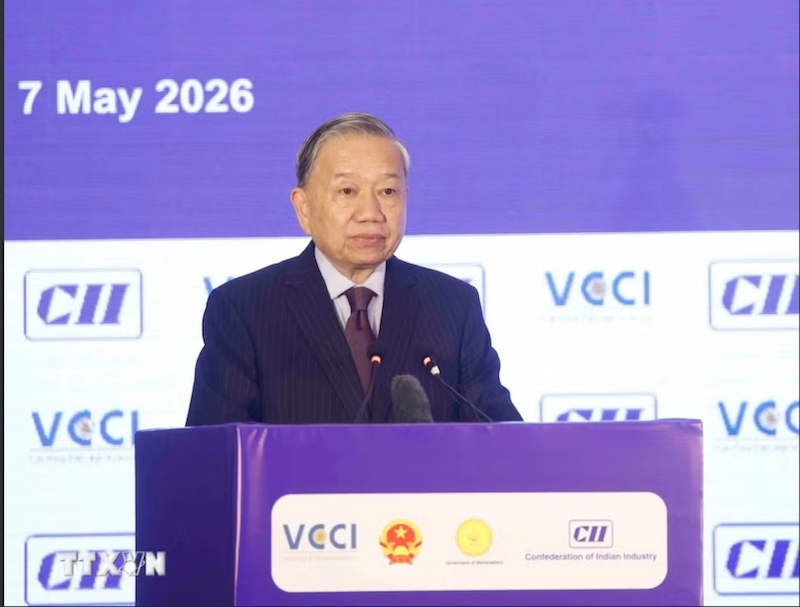
Party General Secretary and State President Tô Lâm delivers remarks at the forum. Photo: Thống Nhất/TTXVN
Toward “strategic connectivity”
More than a conventional trade-promotion event, this year’s forum reflected a shift in the cooperative mindset between two emerging Asian economies — from “transactions” to “strategic connectivity” — as global value chains are being fundamentally reshaped by digital transformation, artificial intelligence, semiconductors, and the green transition.
In his keynote remarks, Party General Secretary and State President Tô Lâm emphasized that Viet Nam–India relations are not only built on the deep historical foundations established by President Hồ Chí Minh and Prime Minister Jawaharlal Nehru, but are also standing before a historic opportunity to upgrade into strategic connectivity within the world’s new value chains.
Party General Secretary and State President Tô Lâm stressed that cooperation between the two countries should be positioned within the flow of the world’s most dynamic growth centers and pioneering trends, including digital technology, AI, semiconductors, and green transformation.
This direction is also aligned with Viet Nam’s long-term development goal of becoming a developed country by 2045.
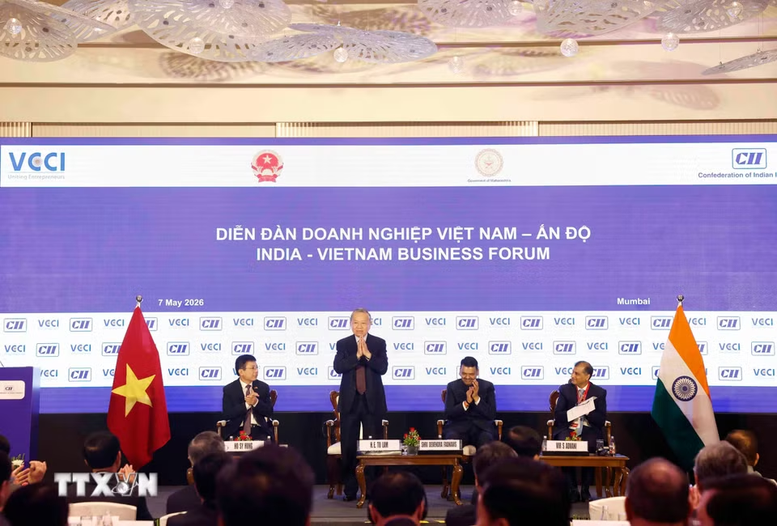
General Secretary and President Tô Lâm and Maharashtra Chief Minister Devendra Fadnavis (center), VCCI President Hồ Sỹ Hùng (left), and CII Western Region Chairman Vir S. Advani (right) at the Viet Nam–India Business Forum. Photo: TTXVN
On this occasion, Party General Secretary and State President Tô Lâm shared three major pillars that Viet Nam is prioritizing to achieve its 2045 development vision: building modern and transparent institutions; developing synchronized strategic infrastructure in digitalization, energy, and logistics; and promoting science and technology, innovation, and high-quality human resources.
To create strategic breakthroughs in the next phase, Party General Secretary and State President Tô Lâm urged the business communities of both countries to focus on four key priorities: expanding balanced and sustainable trade; investing in future-oriented sectors such as AI, semiconductors, pharmaceuticals, clean energy, and data centers; strengthening logistics, aviation, and tourism connectivity; and enhancing high-quality workforce training and knowledge transfer.
On behalf of the Vietnamese Party and State leadership, Party General Secretary and State President Tô Lâm affirmed that Viet Nam would continue institutional reforms, simplify administrative procedures, and shift from a “management” mindset to a “service-oriented” approach, accompanying businesses in transforming today’s memorandums of understanding into “new success stories” in Viet Nam–India relations.
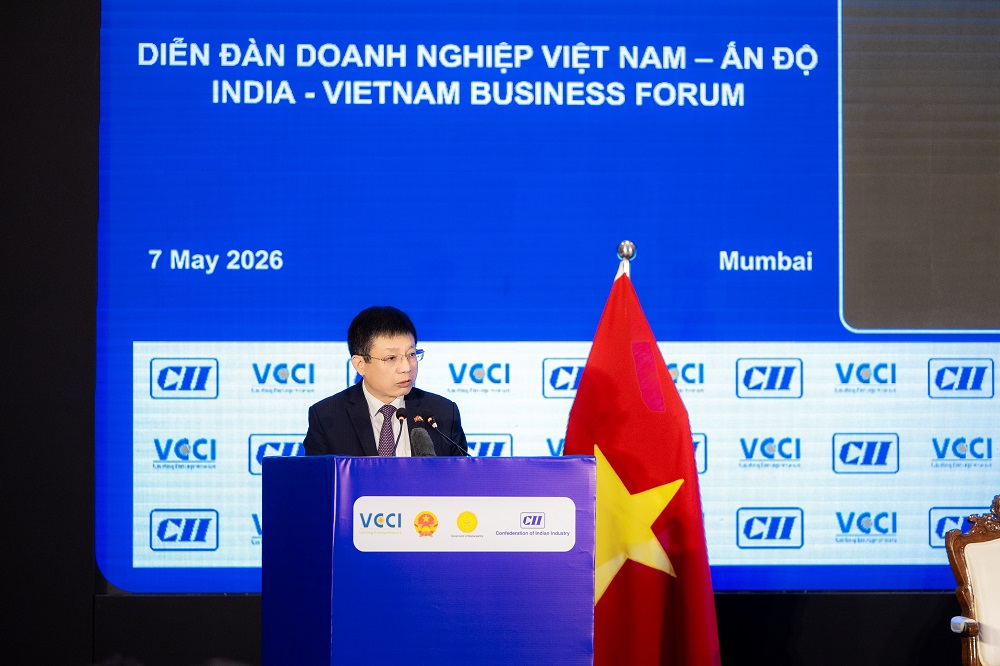
VCCI President Hồ Sỹ Hùng speaks at the Viet Nam–India Business Forum.
A proactive step from the business community
Responding to the direction outlined by Party General Secretary and State President Tô Lâm, VCCI President Hồ Sỹ Hùng stated that Viet Nam and India possess highly complementary economic strengths, particularly in information technology, digital transformation, innovation, biopharmaceuticals, agriculture, logistics, cultural industries, and tourism.
According to the VCCI President, India is currently one of Viet Nam’s key economic partners in South Asia, while Viet Nam is India’s leading trade partner within ASEAN. Bilateral trade has maintained steady growth momentum and is moving toward the target of USD 30 billion by 2030.
According to the latest data announced at the forum, bilateral trade reached a record USD 16.46 billion in 2025. Notably, trade turnover in the first three months of 2026 alone amounted to USD 4.8 billion, reflecting strong growth momentum toward the USD 20 billion target and beyond.
The VCCI President noted that hosting the forum in Mumbai — India’s leading economic, financial, and industrial hub — carried particular significance in strengthening connectivity between the business communities of both countries.
In this context, Viet Nam, with its strategic position in Southeast Asia, serves as a gateway for Indian businesses seeking access to the ASEAN market, while also offering an attractive investment destination thanks to its stable political environment, dynamic economy, and deep integration policies.
VCCI President Hồ Sỹ Hùng emphasized that, as the national organization representing the Vietnamese business community, VCCI has taken the lead in participating in legal and policy development to facilitate business and investment activities for both Vietnamese and foreign enterprises operating in Viet Nam.
In parallel, VCCI is also intensifying efforts to promote business connectivity, identify new markets, products, and value chains, and support trade and investment cooperation among enterprises. Through these efforts, the organization aims to contribute meaningfully to national growth and development toward the 2045 vision outlined by Party General Secretary and State President Tô Lâm.
“VCCI will continue accompanying and closely following the agreements and commitments made by businesses from both countries today, helping translate them into concrete economic contracts and investment projects so that the outcomes of today’s forum become practical and effective,” the VCCI President affirmed.
At the same time, VCCI President Hồ Sỹ Hùng expressed confidence that, with the attention and direction of General Secretary and President Tô Lâm, Chief Minister Devendra Fadnavis, and senior leaders of both countries, together with the efforts of the business communities, Viet Nam–India economic relations would continue advancing to a new strategic level commensurate with their potential and deep political ties.
Reaffirming Maharashtra’s commitment to providing maximum support for Vietnamese investors, Chief Minister Devendra Fadnavis stated that the state is aiming to become a USD 1 trillion economy.
The Viet Nam–India Business Forum in Mumbai therefore not only marked a series of cooperation commitments and positive trade figures, but also reflected increasingly deep strategic ties between two young and dynamic economies striving toward sustainable development and resilience in a new era.
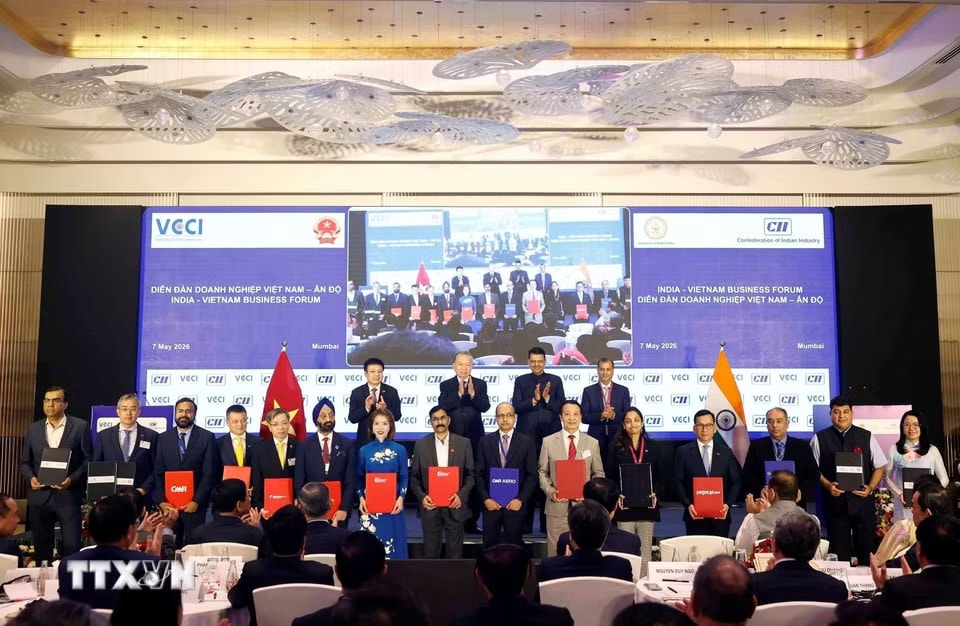
Party General Secretary and State President Tô Lâm and Maharashtra Chief Minister Devendra Fadnavis witness the exchange of cooperation agreements between the two countries. Photo: Thống Nhất/TTXVN
At the forum, under the witness of Party General Secretary and State President Tô Lâm, Maharashtra Chief Minister Devendra Fadnavis, and senior leaders from both countries, numerous memorandums of understanding were exchanged across key sectors including aviation and infrastructure, logistics and transportation, industry, technology and pharmaceuticals, tourism, culture, AI, and electric vehicles.
By the time the forum took place, 27 cooperation agreements had already been signed between businesses from the two countries. These agreements focused on trade and investment promotion, cultural industries linked with tourism, aviation and airport infrastructure, maritime logistics, digital transformation and high technology linked with training, agriculture, and financial services.
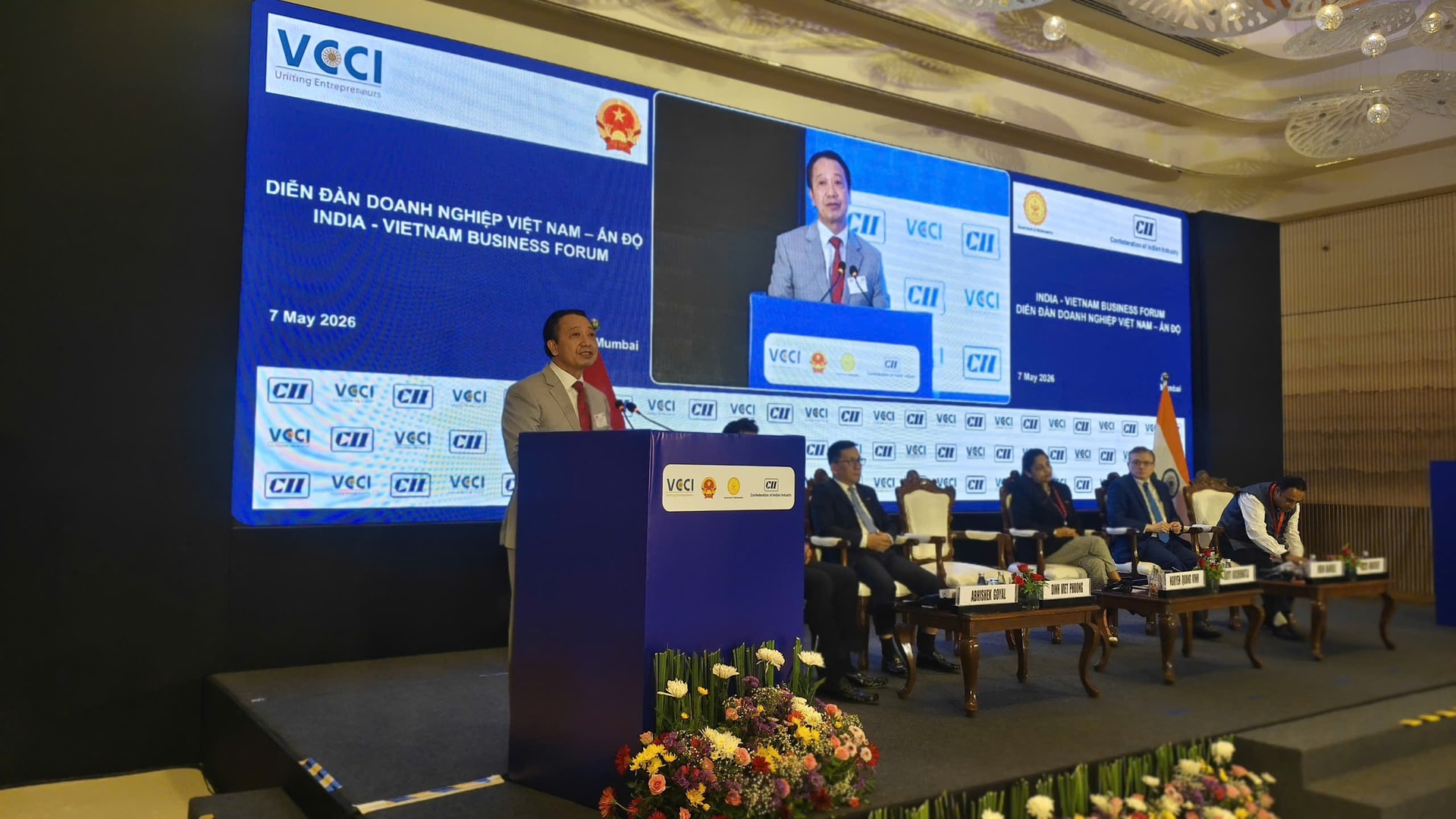
VCCI Vice President Nguyễn Quang Vinh speaks during the business discussion session within the framework of the Viet Nam–India Business Forum.
Assessing the cooperation potential between the business communities of the two countries, VCCI Vice President Nguyễn Quang Vinh noted that businesses from both sides had exchanged valuable insights regarding the investment and business environments in Viet Nam and India, as well as practical experiences.
These discussions clearly demonstrated the enormous potential and complementary nature of the two economies. According to the VCCI Vice President, Viet Nam and India are both dynamic markets with increasingly expanding trade and investment relations. However, there remains significant room for cooperation, particularly in manufacturing, pharmaceuticals, agriculture, logistics, and tourism.
“Through the discussions at the forum, the business communities of both countries will better understand each other’s markets, thereby identifying and advancing concrete cooperation opportunities,” the Vice President stated. He also affirmed that VCCI would continue coordinating closely with Indian partners, particularly the Confederation of Indian Industry, to strengthen business connectivity and provide more effective support for enterprises from both countries.
The forum also featured direct business-to-business (B2B) networking sessions involving hundreds of Vietnamese and Indian enterprises across sectors ranging from information technology, automobile manufacturing, and pharmaceuticals to tourism, agriculture, medical equipment, food processing, aviation, logistics, and electronics manufacturing.
Notably, agreements in digital transformation and high technology extended across sectors such as biopharmaceuticals, steel, automobile components, polymers, and diamonds, highlighting a growing trend toward deeper cooperation in high value-added industries rather than traditional trade alone.
The business delegation accompanying the Party General Secretary and State President included major Vietnamese enterprises operating in key sectors such as aviation, maritime transport, logistics, chemicals, agriculture and food processing, biopharmaceuticals, healthcare, tourism, renewable energy, education, information technology, and innovation.
On the Indian side, participating companies also included globally influential corporations aligned with the cooperation needs of Vietnamese enterprises.
Author: CAM ANH - TRUONG DANG translate
RELATED TOPICS
RECOMMENDED TOPICS