 VN
VN
 EN
EN
14/02/2026, 02:38
Decongesting inner Hanoi: A catalyst for real estate market reconfiguration
Pham Thi Mien, Deputy Director, VARS IRE, said that the restructuring of Hanoi’s urban space is set to trigger profound shifts in the real estate market, compelling homebuyers and investors to recalibrate their medium- and long-term strategies.
Under the Capital Master Plan with a 100-year vision, Hanoi has outlined a roadmap to ease population pressure in its historic inner districts. During the 2026–2035 period, the city plans to relocate approximately 200,000 residents from the Red River area, another 200,000 from the West Lake area and surrounding neighborhoods, and about 42,000 residents from selected streets within Ring Road 3.
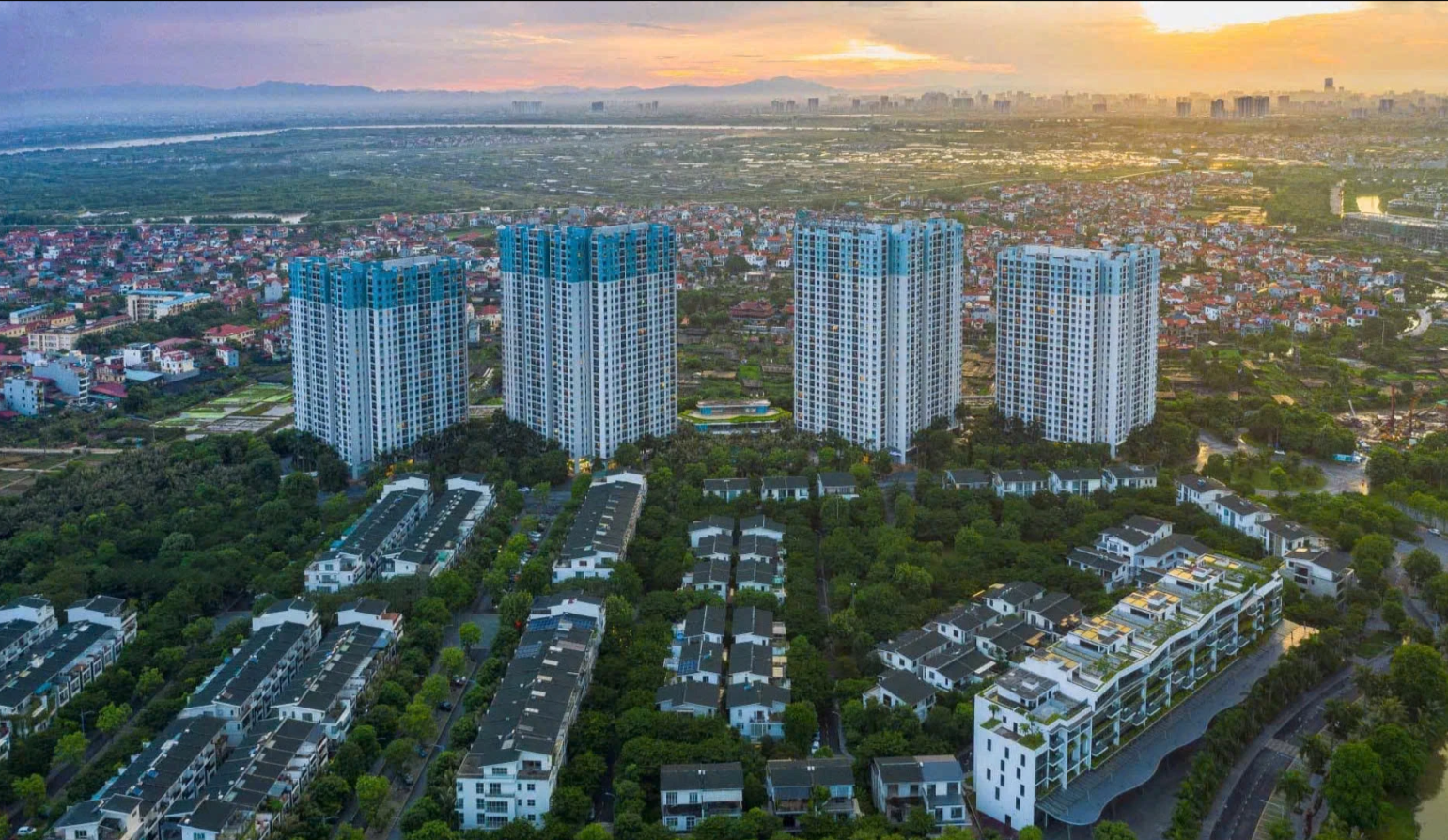
The challenge of decongestion lies not in planning, but in implementation. With high population density and overburdened infrastructure, Hanoi’s inner core is slated for population redistribution throughout 2026–2045.
Decongestion Must Go Hand in Hand with Functional Relocation
From 2036 to 2045, the relocation plan will expand further, affecting around 26,730 residents in the Old Quarter, 23,000 in the French Quarter, and roughly 370,000 people in other areas within Ring Road 3 to facilitate comprehensive urban restructuring. In total, Hanoi aims to relocate more than 860,000 residents over the next two decades.
The scale of this plan reflects strong political commitment to addressing long-standing challenges: overcrowding, overstretched infrastructure, insufficient public space, and declining environmental quality in the urban core.
However, experience suggests that population relocation is effective only when accompanied by livelihood relocation. Moving residents without simultaneously shifting employment opportunities and essential services reduces the incentive to leave central districts. New housing must be tied to access to jobs, healthcare, education, and improved living conditions to ensure sustainable migration.
Beyond transport infrastructure investment, Hanoi needs to accelerate the relocation of urban functions—administrative agencies, offices, universities, hospitals, and research centers—to suburban areas. This approach not only creates local employment but also establishes new growth poles, enabling residents to relocate in line with economic opportunities rather than through administrative mandates alone.
Beijing offers a notable example. When its population exceeded 22 million, Chinese authorities relocated not only residents but also non-capital functions—including universities, hospitals, and state-owned enterprise headquarters—to the Xiong’an New Area, roughly 100 kilometers from the city center.
This strategy helped ease pressure on the urban core while fostering new, fully functional economic and social growth centers. The lesson is clear: sustainable decongestion requires both functional and livelihood decentralization.
A More Polarized Real Estate Market
Over the medium to long term, Hanoi’s central real estate market is expected to become increasingly segmented. Luxury and ultra-luxury properties in prime locations are likely to maintain high price levels and steady appreciation, serving affluent residents, senior professionals, and high-quality human capital aligned with the capital’s international integration strategy.
Under the master plan, redeveloped central land will prioritize high-value commercial and service functions, such as financial centers and Grade A office buildings. This will create a foundation for ultra-luxury residential developments integrated with these functions and existing housing demand.
Meanwhile, older apartment complexes may maintain prices or see modest gains in the short term. However, they could face adjustment pressure once suburban transport infrastructure improves and employment opportunities gradually shift outward.
Conversely, suburban Hanoi is expected to absorb most of the relocated population. The area is likely to see the emergence of large-scale integrated urban developments, with abundant and increasingly higher-quality supply.
Diversified product offerings—from mid-range to high-end—will provide more options for relocated households and facilitate smoother compensation negotiations. Compensation in the form of land or housing within newly planned growth poles is viewed as more appropriate, particularly in areas developing university clusters, hospitals, research hubs, and technology parks.
Despite rising supply, a significant price correction in suburban apartments appears unlikely. Land, construction, and financing costs continue to increase, suggesting typical price levels may hover around VND 50 million per square meter, excluding social housing. End-user demand from relocated residents will provide a critical support base for the market.
Strategic Repositioning for Investors
As multiple mega-urban projects advance alongside an increasingly assertive urban restructuring agenda, investment strategies should shift toward prudence and longer-term positioning.
In suburban areas, financially resilient investors may continue holding assets aligned with genuine housing demand and new infrastructure corridors, where growth potential remains. Conversely, speculative decisions based on short-term expectations in overheated areas should be approached with caution.
In the city center, luxury real estate is expected to continue attracting capital from financially strong investors seeking long-term asset preservation. Limited supply and robust rental demand in prime locations support stable upward trends in both sales prices and rents.
Beyond Hanoi, neighboring provinces with solid economic fundamentals—benefiting from FDI inflows and expanding industrial and logistics sectors—also merit consideration in the medium to long term. As Hanoi’s urban restructuring accelerates, it is likely to usher in a new cycle of spatial and capital reallocation across the broader capital region’s real estate market.
RELATED TOPICS
RECOMMENDED TOPICS