VN
VN
 EN
EN
28/12/2025, 02:38
Fueling Vietnam’s Economic Growth
As Viet Nam enters a new era of growth, digital transformation, the green transition, and private sector development are identified as crucial accelerants. These key growth drivers demand extensive capital.
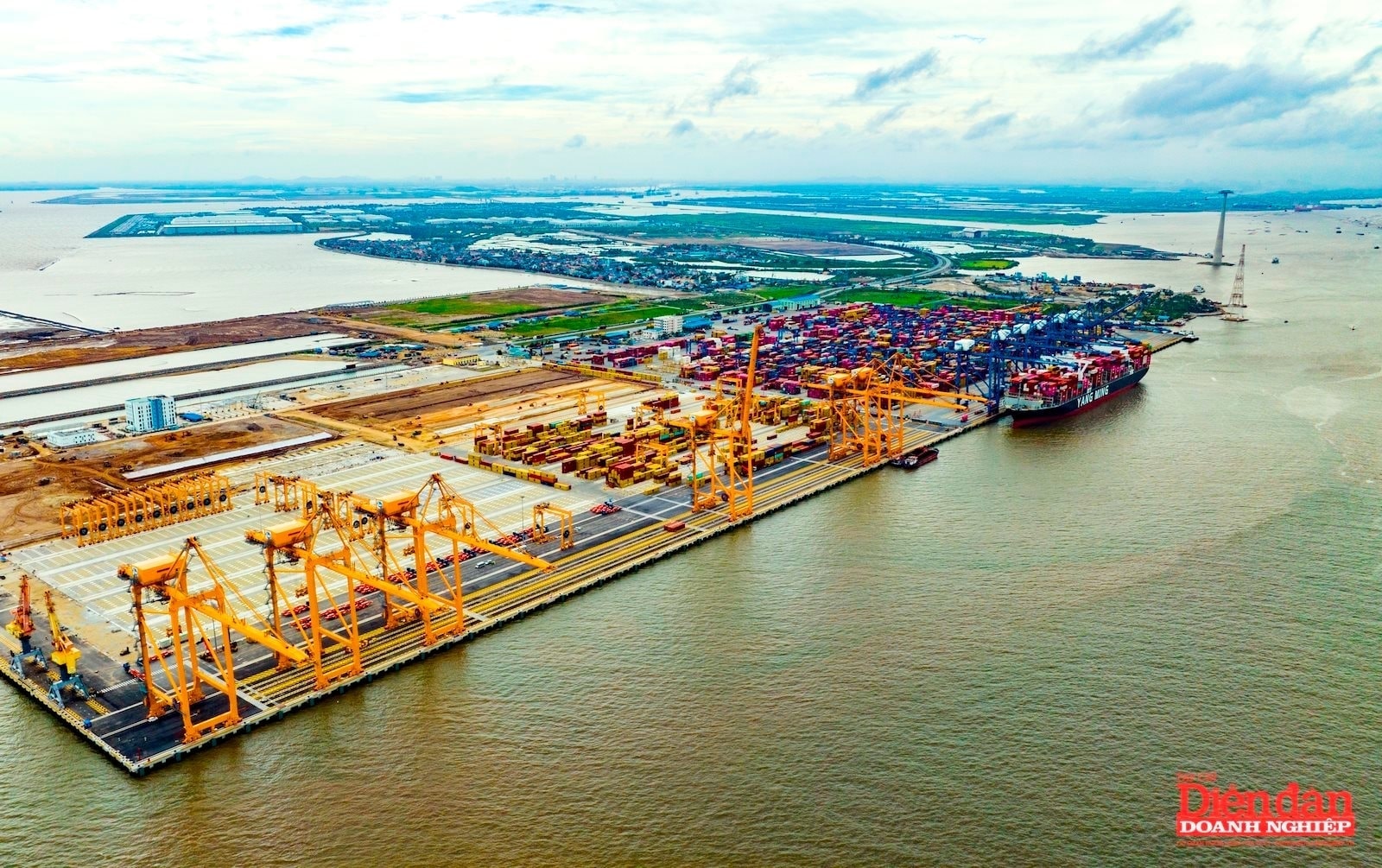
As Viet Nam enters a new era of growth, digital transformation, the green transition, and private sector development are identified as crucial accelerants.
For years, bank funding has been the primary source to finance Vietnam’s growth. As the country is entering the new era, the growing scale of needs will soon require mobilising capital from a far more diverse range of sources.
As a bank establishing in Viet Nam for 155 years and operating in 57 markets in the world, we see the potential of and the need for Viet Nam accessing to international funding source to finance our growth in coming future. Working with Vietnamese corporates in recent years, we have seen them reaching out, leveraging this effective funding source. However, much more could be done.
Strategic advantages
In 2014, Vietnam successfully came back to the international capital market with its offering of USD 1 billion of 10-year USD Global Bonds. This marked the first international USD offering from the Government since January 2010. The deal established a key benchmark pricing reference for the nation, demonstrating the government’s efforts to proactively manage outstanding debt profile and to channel more resources into productive endeavours. HSBC was proud to be the joint bookrunners and dealer managers for the transaction, also billing and delivery bank on the tender offer and the issuance.
Indeed, international capital markets may act as a source to offer lower borrowing costs, diversified capital and broader global investor reach with different channels and financial instruments. By tapping into international markets, the government and corporates can raise capital from many different regions, currencies, and types of investors, making their funding base more stable and resilient to local economic shocks.
Borrowing money from foreign lenders or in foreign markets (offshore) also offers significant non-cost advantages which become critical when dealing with large-scale financing for a major project, acquisition, or expansion which may exceeds the lending capacity of domestic banking sector. First, offshore loans offer a greater flexibility in the use of proceeds, which allows a large company to use the funds for a broader range of purposes, such as working capital, acquisitions of other companies, lending the money to subsidiaries, refinancing multiple domestic or foreign debts simultaneously, etc. Second, foreign lenders are generally less demanding in terms of complex documentation which can help streamline the entire borrowing process. For a large, complex, and urgent financing deal, less procedures means quicker access to capital.
Global capital, local growth
In 2022, HSBC supported Masan Group and its direct subsidiary – The Sherpa Company Limited to raise the landmark US$600 million syndicated term loan, contributing to the development of Viet Nam’s consumer market. The transaction drew an overwhelming response from the market, attracting 37 lenders during syndication. The amount was upsized to USD600 million from the initial target of USD375 million.
In 2025, together with the Italian Export Credit Agency (SACE), we finalised two medium-long term loans totaling US$139million, guaranteed by SACE, in favor of GELEX Group and THACO AGRI, two of Vietnam’s leading industrial players. Such transactions not only enable them to diversify their capital sources at competitive costs but also expands their access to world-leading financial institutions.
Those examples show that local corporations are strategically entering global capital markets as a means to diversify their funding base and decrease their dependency on domestic bank lending and local bond markets. This access is particularly crucial for securing larger-scale, longer-term, and more sophisticated financing structures, including instruments like green and social loans and bonds.
More than 20% of our clients are well-positioned and qualified to tap into these markets. This includes a mix of local large corporates and increasingly agile Mid-market enterprises as well as innovative New Economy names that demonstrate strong financial health, transparent governance, and scalable operations. This figure is rising rapidly as Vietnam's businesses embrace global standards, fueled by the country's export boom and FDI inflows.
There is a lot of room for Vietnamese companies to participate in global finance, but some barriers remain. First, international investors and banks heavily rely on independent assessment of a borrower's creditworthiness by agencies like S&P, Moody's, Fitch. We need to have a strong rating to be included in global debt and equity markets without having to pay a significantly higher interest rate (risk premium).
Second, Vietnamese accounting and reporting standards (VAS) differ significantly from international standards (IFRS). Global investors may struggle to compare the financial performance of a Vietnamese company using VAS with a company from another country using IFRS due to fundamental differences in accounting principles. Besides, they require detailed, standardised, and timely information to make investment decisions. If disclosure is less comprehensive, less frequent, or not aligned with international norms, it creates uncertainty and distrust, making investors hesitant to commit capital.
Third, international investors, especially institutional ones, demand corporate governance standards and practices that goes beyond just financial numbers. It includes things like ESG factors, regular and professional investor relations outreach, etc. Many Vietnamese companies may lack experience in communicating with and managing the expectations of a sophisticated global investment base, resulting in missed opportunities for attracting foreign capital.
Currently, Vietnam is heavily investing in large-scale, long-term projects in energy and infrastructure sectors which require billions of dollars far more than can be easily raised through internal business profits or tight domestic loans. With single borrowing limit/group borrowing limit reducing over the next few years, we expect to see more Vietnamese companies, in both private and public sector, to go abroad to find the necessary funding. This signifies a maturing and opening of Vietnam's corporate finance landscape.
How to win on the world stage
Vietnamese businesses need to prioritise elevating corporate governance, adopting best international practices for board independence, shareholder rights, and internal controls. This helps build investor trust and signals a commitment to responsible management.
They can also improve financial and ESG reporting by providing timely, accurate, and comprehensive financial reports that adhere to IFRS. Furthermore, integrating ESG metrics and reporting into financial and sustainability reports offers a holistic view of performance and impact, which is increasingly a requirement for global capital.
At present, ESG compliance is rapidly becoming a mandatory requirement for a large percentage of global financial capital. Adopting a long-term, sustainable mindset that integrates ESG principles into the core corporate strategy enhances competitiveness and automatically attracts qualifying foreign financing. Local businesses can start with a structured approach: defining priorities, aligning strategy with international standards, setting measurable targets, and ensuring senior management oversight.
Besides, the objective assessment of credit rating agencies like Moody's, S&P, and Fitch is critically important for Vietnamese businesses seeking to raise funds in the international capital market. Objective ratings from globally recognised credit rating agencies provide a standardised, third-party assessment that is trusted worldwide and help international investors have better insight into a Vietnamese company's financial health, management, and operational risks as domestic investors or the company itself.
Furthermore, to be attractive on the world stage, Vietnamese corporates must further boost their fundamental business capacities. That can be done through accelerating digital adoption, particularly for SMEs. This improves operational efficiency, supply chain visibility, and overall resilience, which are key priorities for international trade. Local firms should also focus on higher value-added products and services which involves investing in advanced technology, R&D, and innovation. At the same time, they need to build stronger, more competitive domestic supply chains and establish better linkages between domestic firms, especially SMEs, and FDI enterprises. This helps domestic firms meet the strict quality and delivery requirements of the global production network.
Last but not least, Vietnamese companies should take steps to restructure its finances to appear stronger, more stable, and more profitable in the eyes of the global financial community. Improving capital structure helps them find the "optimal" balance between debt and equity to achieve a better risk profile and meet the rigorous, globally ecognised standards required by international investors and credit rating agencies. Developing eligible project pipelines for different debt types i.e. ECA, project finance, bond, or corporate loans, etc. is also a strategic approach. Well-prepared, eligible projects signal sophistication and reduced risk to foreign commercial banks, ECAs, and institutional investors. Vietnamese firms can also prove their creditworthiness and financial discipline to global investors by building track records with small, manageable debt transactions and then gradually increases the size in subsequent phases.
The role of international financial institutions
Global banks like HSBC can serve as the essential bridge that connects Vietnamese enterprises to the vast, complex, and risk-averse pools of global capital. Our function extends far beyond financing to include provide specialised knowledge required to navigate international standards and structure deals for foreign investors. We also conduct rigorous financial, legal, operational due diligence on the Vietnamese businesses, preparing them to meet the transparency and disclosure requirements of the global market and "package" these corporates’ stories for international consumption. In particular, we work closely with the company to prepare for and present to credit rating agencies, helping the firm highlight its strengths in the metrics that matter most to international analysts.
HSBC is considered the world's local bank for being a global player but do not underestimate the “importance of local knowledge”. With a heritage of 155 years in Vietnam, we understand the market context, regulatory landscape and business’ needs. By leveraging our global expertise and network connection, we can help facilitate cross-border transactions in compliance with both local regulations and international standards.
The transaction pipeline we are working with clients to access international capital market is robust. It makes us excited, not only because of the business opportunity but the growing sophistication of the Vietnamese corporates and Vietnam as a country in general, a market that we were established to serve 155 years ago. And our journey with Viet Nam continues as we will continue moving forward with the country.
RECOMMENDED TOPICS