VN
VN
 EN
EN
09/07/2026, 11:15
Investment
Ho Chi Minh City urged to ease apartment rules
According to Le Hoang Chau, Chairman of HoREA, Ho Chi Minh City should count apartments with an area of 25-45 square metres as equivalent to one resident when determining the population of apartment buildings.
This would allow for a more flexible approach that better reflects current housing trends and actual demand.
Ho Chi Minh City is seeking feedback on options to adjust the method for determining the population of apartment buildings and mixed-use apartment buildings, with the aim of better aligning regulations with the realities of urban development today.
Bond capital continues to flow strongly into large-scale urban development projects in Hanoi and Ho Chi Minh City, but many businesses still face significant liquidity pressure.

Relaxing the Calculation Method
The Association agrees with Option 2 in the draft regulation on the method for determining the population of apartment buildings, under which apartments with an area of 25-45 square metres would be counted as equivalent to one resident.
This is the group of small one-bedroom apartments that is seeing very strong market demand, especially in major cities. The main users are young people, single people, professionals, knowledge workers with stable incomes, and tenants with moderate affordability.
Under current regulations, Ho Chi Minh City only allows apartments with an area of 25-32 square metres to be counted as one resident, a threshold that has not kept pace with the trend of modern urban development. In reality, apartments of 35-45 square metres are being strongly absorbed by the market because they respond well to actual housing needs.
Adjusting the population calculation method is not merely a technical issue. It is directly related to the ability to develop a supply of affordable housing in major cities. If the population calculation method is applied too rigidly, it may unintentionally restrict the development of small apartments, even though this segment is well suited to the real needs of most urban residents today.
For example, Hanoi has issued regulations allowing one-bedroom apartments with an area of 25-45 square metres to be counted as one resident. Da Nang also applies a similar method. These are practical experiences from major cities that Ho Chi Minh City can fully consider and adapt to its current development conditions.
In addition to small apartments, HoREA also agrees with the proposal to calculate population based on an average floor area of 32 square metres per person for apartments of over 45-160 square metres. This method both aligns with the national average housing floor area target and gives businesses greater flexibility in structuring their product mix.
Changing The Approach
For apartments larger than 160 square metres, the proposal is to count five residents per apartment. The current trend is that young families live independently in apartment buildings, usually with three to five members, while the model of multiple generations living together in one apartment is becoming less common.
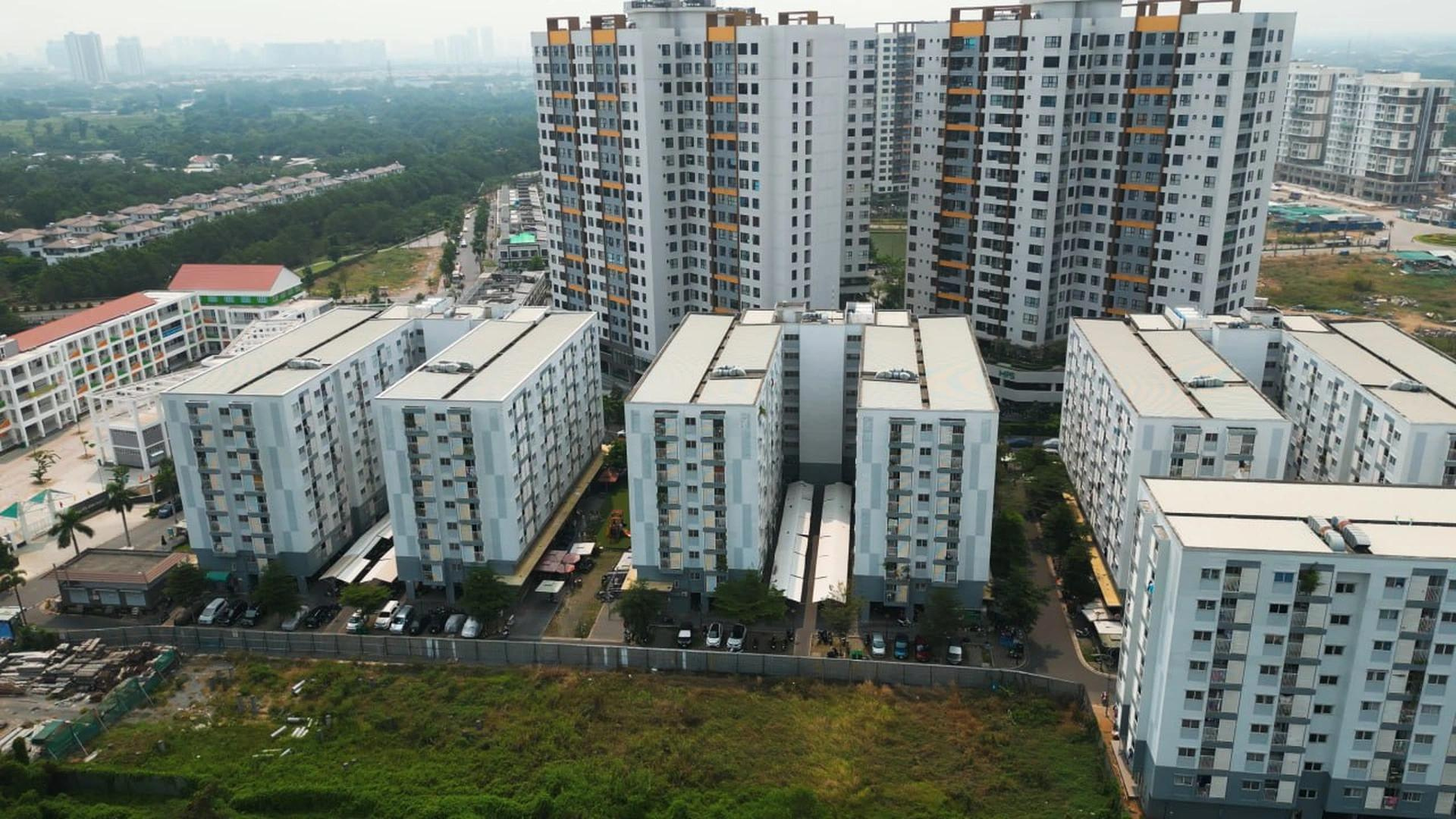
Housing demand remains very high, but mortgage interest rates are still elevated.
HoREA has proposed changing the population determination method to create more room for the development of affordable apartments.
The method for determining population should be revised based on actual changes in population structure and urban housing trends, rather than continuing to follow the previous mechanical approach to population management.
Small apartments are no longer temporary products. They are becoming a common trend in major cities because they are compatible with the financial capacity of most residents. The national technical regulation on apartment buildings, QCVN 04:2021/BXD, also allows apartment units to have a minimum area of 25 square metres and permits apartments under 45 square metres to account for up to 25% of the total number of units in a commercial housing project.
Adjusting the population calculation method by expanding the threshold so that apartments of 25-45 square metres are counted as one resident would help remove another bottleneck in the development of reasonably priced commercial housing and social housing in Ho Chi Minh City.
As housing prices remain high and the supply of affordable apartments becomes increasingly scarce, Ho Chi Minh City needs a management mechanism that is consistent with actual market demand while still ensuring control over urban infrastructure and reasonable population density.
Author: TRUONG DANG
RECOMMENDED TOPICS