VN
VN
 EN
EN
09/07/2026, 11:15
Investment
How US-Iran de-escalation impacts VN-Index
Concessions at the negotiating table marked a turning point in the de-escalation of US–Iran tensions. How this de-escalation affects VN-Index.
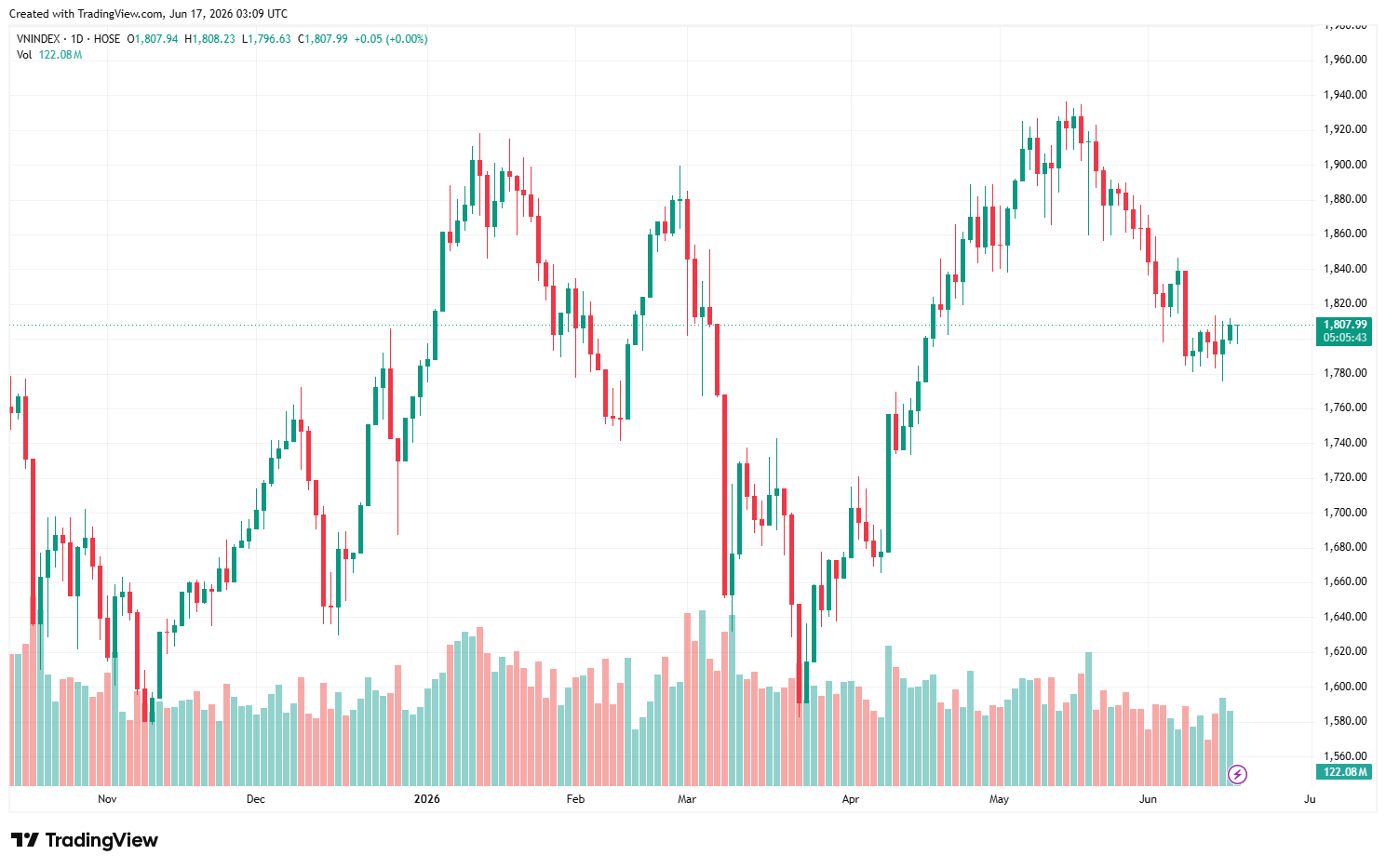
The VN-Index is in recovery. Source: Tradingview
The US and Iran have signed a memorandum of understanding (MoU) establishing a 60-day ceasefire and a framework for the reopening of the Strait of Hormuz, marking a significant step toward stabilizing global energy flows. The agreement hinges on strategic, phased concessions from both sides.
According to Axios reporter Barak Ravid, the electronically signed MOU is expected to be formally concluded in Switzerland on 19 June 2026. The nuclear issue has been deliberately separated from the current agreement, forming the basis for a subsequent 60-day negotiation track.
The said announcement triggered a sharp market reaction, with Brent and WTI falling more than 5% to around USD80/barrel and USD83/barrel, respectively, while global equities rallied, led by Nasdaq (3.06%), S&P 500 (1.65%), Nikkei 225 (5.33%), and KOSPI (5.23%).
Progress in the US-Iran negotiations was driven by strong incentives on both sides. For the US, elevated oil prices have pushed the Fed into inflationary pressures and heightened energy security concerns, while the strategic petroleum reserve has fallen to a historically low level of 349 million barrels. Meanwhile, Iran faces urgent pressure to restore economic stability following extensive damage from airstrikes and sanctions.
However, as the resolution of disputes is closely tied to nuclear negotiations, Nguyen Viet Anh, analyst at KB Securities Vietnam, expects the bargaining process to remain protracted, suggesting that energy supply constraints are unlikely to ease in the near term due to (i) the risk of renewed escalation at critical junctures and a wide divergence in negotiating positions, with no meaningful progress observed since the conflict erupted in late February 2026.
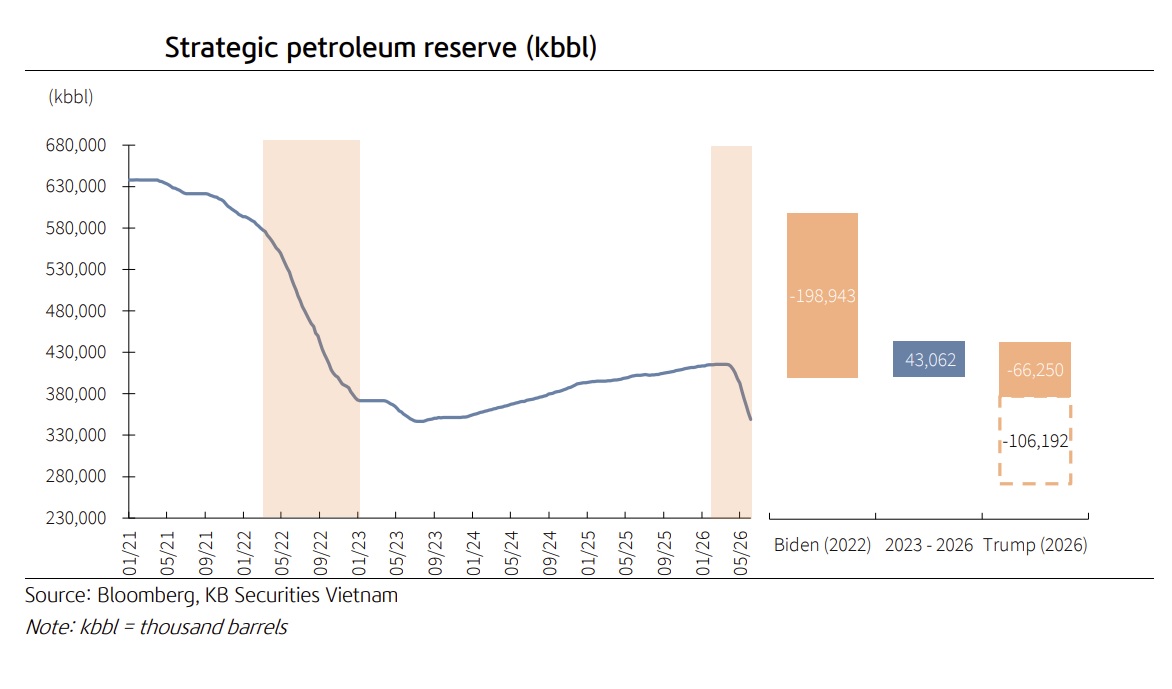
Accordingly, Nguyen Viet Anh outlined three oil price scenarios:
First, base case (55% probability): An agreement is reached this week, but nuclear negotiations see limited progress. The Strait of Hormuz reopens gradually, with shipping traffic recovering slowly and remaining below normal levels. Average oil prices are projected at USD85–95/barrel.
Second, bull case (30% probability): A deal is signed this week, and nuclear talks make meaningful progress over the 60-day period. The Strait of Hormuz reopens progressively, with vessel traffic normalizing within four weeks alongside mine-clearing efforts. This leads to a sharp decline in oil prices to USD70–80/barrel.
Third, bear case (15% probability): A deal is signed, but nuclear negotiations collapse during the 60-day ceasefire period. The Strait of Hormuz is effectively re-blocked amid renewed escalation, pushing oil prices above USD120/barrel and keeping the annual average above USD100/barrel.
Expectations of an early US–Iran MoU establishing a 60-day ceasefire are a key driver supporting a recovery in the Vietnamese equity market from currently attractive valuation levels. In the base and bull cases, Nguyen Viet Anh expects the VN-Index’s recovery momentum to be supported by lower oil prices, stable inflation, and greater room for the State Bank of Vietnam (SBV) to ease monetary policy and cut interest rates. Conversely, if the bear case scenario materializes, any market rebound is likely to be short-lived, with the VN-Index potentially resuming a medium-term downtrend toward lower support levels.
Author: NGOC ANH
RECOMMENDED TOPICS