VN
VN
 EN
EN
26/07/2026, 11:20
Investment
HPG strengthens its domestic market position
In addition to expanding into new sectors to sustain long-term growth momentum, Hoa Phat Group (HoSE: HPG) continues to define steel production as the core of its business strategy.
HPG has proactively adopted a strategy of maintaining exports at a reasonable level in order to focus resources on the domestic market.
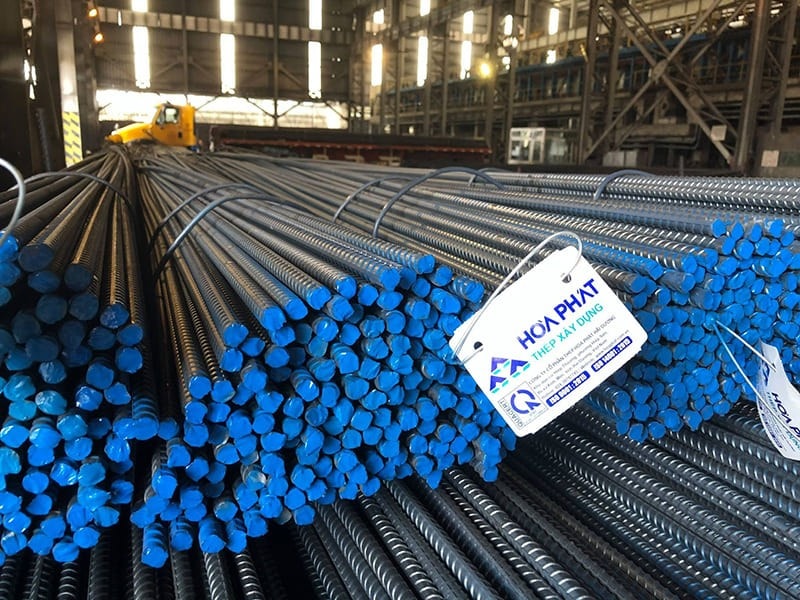
A cautious strategy focused on core business projects has enabled HPG to maintain steady growth despite global volatility.
Sustaining Positive Growth
At its Annual General Meeting of Shareholders, the Group’s leadership announced that after-tax profit for Q1 2026 exceeded VND 9.056 trillion, fulfilling 41% of the full-year profit target. Of this, VND 5.2 trillion came from core business operations, while VND 3.8 trillion was generated from an extraordinary gain related to the transfer of a real estate project in Hung Yen.
This serves as a financial foundation for HPG to achieve its 2026 profit target of VND 22 trillion, while continuing to prioritize investment in its core steel production business. Chairman Tran Dinh Long stated that projects such as rail steel and special steel production, real estate developments, and plans to expand into agriculture following listing will continue to be maintained. These are key drivers supporting the Group’s goal of achieving an average annual growth rate of 15% during the 2026–2031 period.
Notably, the Hoa Phat Dung Quat rail and special steel manufacturing plant, with a capacity of 700,000 tons per year, is being prioritized. After three months since groundbreaking, the project has reached 35% completion. Installation of production lines is expected to begin in June, with the first rail steel products scheduled for Q1 2027. This is expected to become a core business segment reinforcing HPG’s brand and credibility.
At the same time, to maintain growth momentum, the Group is expanding into agriculture, targeting an annual output of 900,000 commercial pigs and a feed production capacity of 1 million tons per year.
Overall, a cautious strategy focused on core business projects has enabled HPG to maintain steady growth despite global volatility.
Steel Production as the Core Focus
According to HPG’s annual report, steel and related products continue to play a dominant role, contributing 93% of total revenue and approximately 83% of total after-tax profit.
For its core steel segment, total annual sales volume reached 10.6 million tons. Hot-rolled coil (HRC) exceeded 5 million tons, accounting for roughly 60% of Vietnam’s market share. Construction steel and high-quality steel reached 5.52 million tons, equivalent to a 37% domestic market share.
Despite large-scale production, profit margins in the steel segment are directly affected by fluctuations in iron ore and coking coal prices, which account for 75% of production costs. Nevertheless, this segment remains a strategic priority in HPG’s sustainable development plan.
CEO Nguyen Viet Thang added that the stability of the Group’s core steel business is largely supported by the domestic market. Over the next five years, Vietnam’s steel demand is projected to grow by 10% annually, and from 2027, HPG’s total capacity is expected to increase to 16 million tons.
For rail steel products, HPG is currently offering supply for the newly initiated Hanoi–Quang Ninh railway project. The entire rail steel plant aims to deliver its first products by Q2 2027. In addition to rail steel, the plant will also produce 500,000 tons of structural steel products such as beams and angles. This strategy shows that while diversifying, HPG continues to prioritize its core business.
Maintaining Domestic Market Development
In 2026, HPG’s shareholders approved a business plan targeting revenue of VND 210 trillion, up 32.6% year-on-year, and after-tax profit of VND 22 trillion, up 41.8%.
However, as the core business faces pressures from both domestic and export markets, questions remain over whether HPG can meet these targets.
From analysts’ perspectives, the Group is facing increasing pressure in its core segment. Domestically, the entry of Vingroup into the steel sector through Vin Metal introduces direct competition even within the home market.
Globally, competitive pressure is also intensifying. According to Shinhan Securities, global steel production capacity is currently oversupplied by approximately 640 million tons, equivalent to about 26% of total crude steel capacity. This surplus is largely concentrated in China (around 400 million tons), followed by India (50 million tons), Europe (40 million tons), and the CIS region (30 million tons). This oversupply is expected to exert pressure on HPG in both domestic and export markets.
However, Vietnam has implemented comprehensive anti-dumping tariffs on HRC steel, with rates up to 27.83% applied from April 2026. This serves as a strategic barrier, helping HPG mitigate the impact of low-cost imports and optimize utilization of its new steel production capacity.
In parallel, HPG has proactively scaled back exports to focus on the domestic market. In 2025, export revenue accounted for only 16% of total revenue, with major markets such as Europe and the Americas declining by 57% and 34%, respectively.
“Regarding our export strategy, management’s view is to maintain exports at a reasonable proportion (currently around 15–30% depending on the period) while prioritizing the domestic market. We also diversify our export customer base across 30–40 countries to avoid overdependence on any single market,” Chairman Tran Dinh Long stated.
Author: HA PHUONG - TRUONG DANG
RELATED TOPICS
RECOMMENDED TOPICS