VN
VN
 EN
EN
20/07/2026, 14:32
Legal environment
Hung Yen: Tax Incentives for Businesses, Especially SMEs
New tax incentives, coupled with administrative reforms, are creating greater room for small and medium-sized enterprises (SMEs) and investors in Hung Yen to expand their production and business activities.
At a time when businesses are grappling with rising costs, weakening orders, and increasing pressure to adopt greener business models, tax policy has become an increasingly important component of the investment environment.
For businesses, any delay or disruption in policy guidance, data standardization, or administrative procedures may result in missed tax incentives, cash flow bottlenecks, additional costs, and legal risks. Therefore, ensuring a smooth tax administration system and helping businesses properly access applicable tax policies has become an urgent priority for Hung Yen Province.
Tax Incentives Create Greater Investment Opportunities
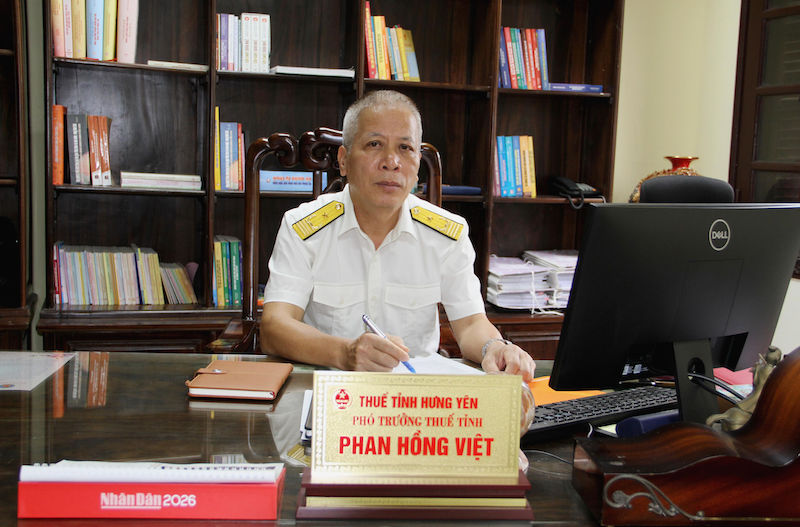
Speaking to Business Forum Magazine, Mr. Phan Hong Viet, Deputy Director of the Hung Yen Provincial Tax Department, said that the most notable feature of the current tax policy is the “buffer period” provided for SMEs during their start-up phase.
Under current tax regulations, newly established SMEs are exempt from corporate income tax (CIT) for three consecutive years from the year they are first granted their Enterprise Registration Certificate. This policy enables businesses to retain financial resources for premises, equipment, labor, raw materials, and market development.
After the tax exemption period, CIT rates are determined according to business size. Enterprises with annual revenue not exceeding VND 3 billion are subject to a 15% tax rate, while those with annual revenue exceeding VND 3 billion but not more than VND 50 billion are taxed at 17%, both lower than the standard 20% CIT rate. This tiered structure directly reduces the tax burden on micro, small, and certain medium-sized enterprises.
For the innovation-driven start-up ecosystem, eligible income earned by innovative start-ups, start-up investment fund management companies, and innovation support organizations is exempt from CIT for two years, followed by a 50% reduction in tax payable for the subsequent four years.

Hung Yen’s incentive landscape has also expanded to include the Thai Binh Economic Zone, covering more than 30,500 hectares. New investment projects within the economic zone may enjoy different incentive packages depending on their location, business sector, and investment conditions.
According to the Hung Yen Provincial Tax Department, projects located in eligible preferential areas and meeting all statutory requirements may qualify for a preferential 10% CIT rate for 15 years, a four-year tax exemption, and a 50% reduction in tax payable for the following nine years. Other qualifying projects in the economic zone may enjoy a 17% CIT rate for 10 years, together with corresponding tax exemption and reduction periods.
The Thai Binh Economic Zone is being developed as a hub for industry, urban development, services, logistics, energy, and the marine economy. Investors may also benefit from exemptions or reductions in land and water surface rental fees, depending on project location and sector. However, these incentives are not granted automatically; investors must accurately determine their project’s location, eligible business sector, and applicable legal basis.
Mr. Phan Hong Viet emphasized that the tax authority’s role goes beyond simply disseminating regulations.
“Businesses need clear guidance on which incentives they qualify for, the duration of those incentives, and which income must be separately accounted for. Issues falling within our authority must be addressed promptly, while matters beyond our jurisdiction should be consolidated and reported to the competent authorities for consideration,” he said.
Most tax incentives are implemented under the self-assessment mechanism, whereby businesses determine their own eligibility, declare the incentives, and take responsibility for their declarations. Three factors are particularly critical: accurately assessing eligibility conditions; separately accounting for eligible income; and fully declaring preferential treatment in annual tax finalization dossiers. Where the same income qualifies for multiple incentives, businesses may choose the most beneficial incentive in accordance with the law.
In addition to CIT incentives, the Government’s 2% reduction in value-added tax (VAT)—from 10% to 8%, for eligible goods and services through the end of 2026 continues to help reduce production costs and stimulate consumer demand.
For exporters, the 0% VAT rate and input VAT refund mechanism improve cash flow, provided businesses fully comply with regulations on invoices, supporting documents, payment methods, and export documentation.
Exporters and new investment projects with accumulated uncredited input VAT of at least VND 300 million may qualify for VAT refunds in accordance with prevailing regulations. These refunds help reduce reliance on bank loans while providing additional capital for reinvestment in machinery, factories, warehouses, and technology.
Businesses Have High Expectations
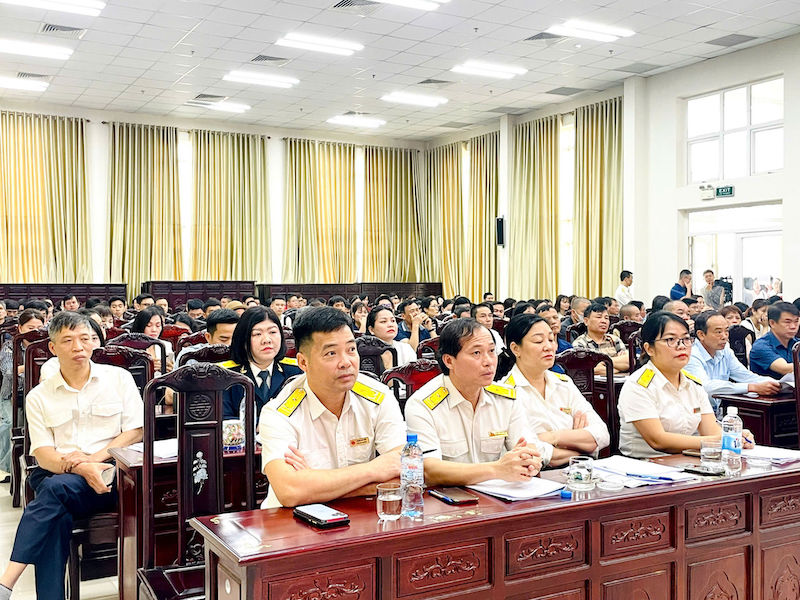
In 2025, while fulfilling its budget revenue collection responsibilities, the tax sector has also been undergoing organizational restructuring. During this transitional period, businesses place the greatest importance on ensuring uninterrupted operation of tax filing, tax payment, e-invoicing, tax refund, and taxpayer support systems.
Mr. Ngo Minh Hoan, Chief Executive Officer of Hung Long Garment and Services Joint Stock Company, noted that although the tax authority requires time to reorganize its operations, services for businesses have continued without interruption.
“The tax sector has maintained uninterrupted operations while consistently receiving and resolving difficulties faced by businesses. In particular, guidance on personal income tax regulations has been provided in a timely manner,” he said.
Businesses have especially appreciated the support provided for personal income tax regulations and taxpayer identification standardization. Previously, some individuals were assigned multiple tax identification numbers, creating difficulties in dependent registration, tax withholding, tax declaration, and annual tax finalization.
Since July 1, 2025, personal identification numbers have officially replaced tax identification numbers. Existing tax codes have been reviewed and integrated where the information matches the National Population Database.
“The tax authority provided guidance quite promptly. Previously, one person could have multiple tax codes, creating significant complications for businesses. Following the data standardization and integration process, these issues have been completely resolved. One could say that the tax sector has accomplished an extremely difficult, even extraordinary, task, considering the enormous volume of data that had to be reviewed,” Mr. Hoan said.
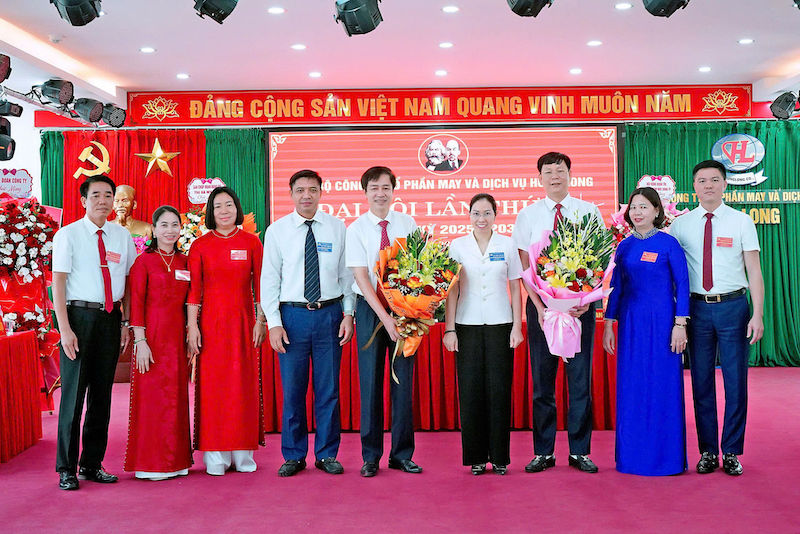
Drawing from practical experience, Mr. Hoan proposed extending the VAT reduction policy for eligible goods and services while paying greater attention to the cash flow needs of import-export enterprises through a transparent and efficient VAT refund process with shorter processing times for compliant businesses.
According to Mr. Phan Hong Viet, the Hung Yen Provincial Tax Department will continue classifying taxpayer support according to business needs. Newly established enterprises will receive guidance on tax exemption eligibility; exporters will be supported with VAT refund procedures; and labor-intensive businesses will receive assistance with personal income tax matters.
Alongside direct dialogue with businesses, the tax authority will continue promoting electronic tax filing and payment, e-invoicing, the eTax Mobile application, and digital information exchange. The objective is to simplify administrative procedures, help businesses comply correctly from the outset, reduce the need for supplementary documentation, and minimize compliance risks.
As Hung Yen develops a new growth landscape spanning industry, services, and the marine economy, tax policy can only become a genuine investment attraction if investors clearly understand both its benefits and its transparent implementation. When incentives are properly communicated, administrative procedures operate efficiently, and business feedback is addressed promptly, tax support will become an important driver for enterprises in Hung Yen to expand production and enhance their competitiveness.
Author: Kim Dung - Vu Phuong (Cam Anh translates)
RECOMMENDED TOPICS