VN
VN
 EN
EN
07/07/2026, 02:38
Investment
Investment structure opening up opportunities for capital flows
Nguyen The Minh - Head of Investment Banking Division, Board of Management of ABS, said that an important key for the massive capital mobilization activities of enterprises from now until 2030 to be successful remains the stimulus for capital flows.
In the short term, although the prospects for foreign capital flows may not immediately return strongly (until the official upgrade occurs), the market still possesses important compensating factors to solve the problem of absorbing large share offerings and issuances in the coming time. Looking at the big picture, there are three main drivers for capital based on investor structure and two drivers coming from macroeconomic and corporate factors.
3 Drivers of Capital Absorption
The first driver comes from domestic individual investors. In fact, domestic retail investors still account for a large proportion. Although a significant number of them are short-term swing traders, a bright spot is that thanks to this group, businesses can mobilize intermediate capital instead of just raising direct capital from equities.
When a company's stock attracts attention and high trading volume from individual investors, its credit score and liquidity increase. From there, businesses can raise capital through two channels: bank loans secured by shares, or issuing bonds also secured by shares. This is an indirect channel of capital mobilization through liquidity. Additionally, many individual investors have shifted their mindset toward long-term investing. Therefore, this is a relatively stable source of capital mobilization for businesses in the coming period.
The second driver comes from domestic institutional investors. Observations since June 2025 show that the ownership percentage of domestic institutional investors has increased significantly compared to historical data. This momentum stems from businesses currently striving to optimize their idle cash flows. Normally, unused idle capital would be deposited in banks. However, in the context of recent interest rates—which, despite nudging upwards, remain less attractive than other channels—businesses are forced to find better-yielding destinations, especially the stock market. The demand to improve return on equity (ROE) by investing in the stock market has inadvertently provided a massive cash flow for IPO activities.
The third driver is the room for foreign investors to return. The foreign ownership rate by market capitalization is currently declining, pulling back to around 12%. This means the room for them to increase their ownership rate again is highly abundant. Looking back before 2018, the market used to worry about running out of foreign "room" when the ownership rate surged to 22% of the total market size; at that time, people questioned whether foreign investors lacked "goods" to buy. But now, with the ownership rate dropping below 12%, the remaining room can be said to be vast.
Apart from the three drivers from the investor structure mentioned above, there are two other macroeconomic drivers.
First, the driver from the orientation to promote capital market development. Resolutions recently issued by the Government have emphasized the role of capital market instruments. If this channel received insufficient attention in the past, the Resolutions of the Politburo as well as the Government's decisions have now placed the capital market in a specific position and role—as one of the vital tools contributing to the goal of driving economic growth above 10% from now until 2030.
Finally, the most practical driver comes from the businesses themselves. Previously, accessing bank loans was relatively easy, but currently, access is no longer what it used to be, and businesses do not have many assets left to use as collateral. Their most optimal way out right now is to mobilize on the capital market, and this is an incredibly powerful natural push for IPO activities.
Macroeconomic conditions include the market context ahead of the official upgrade prospects according to FTSE Russell standards taking effect this coming September, alongside efforts to meet MSCI standards before 2030 (which we forecast could see Vietnam on the watchlist of this index by 2027 at the earliest). Along with that, positive economic growth, monetary policies that have skilfully handled pressures and narrow margins of the system to continue supporting growth, and the simultaneous cycle of infrastructure investment promoting a foundation for growth... These factors act as leverage to unleash capital flows and raise expectations for investors' absorption capacity.
Conditions to Realize Opportunities
Opportunities to raise capital in the market are very clear, but to transform them into reality, a convergence of both necessary and sufficient conditions is required.
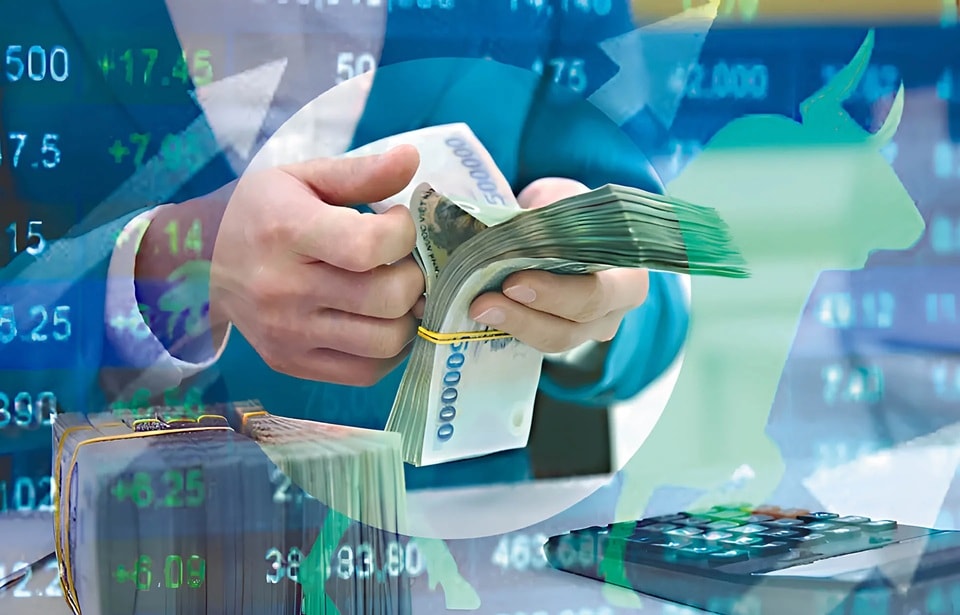
For businesses to distribute high cash dividends regularly with a 3-5 year history, their shares are sought after by strategic investors. To raise capital in the market, businesses must operate decently, properly, and transparently to build solid trust with investors. (Illustration photo)
Regarding the necessary conditions, the economy has basically met them. Currently, the Government is actively promoting the capital market through technical mechanisms to help businesses improve their mobilization capacity. The support from the Government at this time is substantial and aggressive, reflected in market restructuring and the incredibly rapid removal of legal barriers.
However, the sufficient condition depends largely on the businesses themselves. It must be viewed strictly: to raise capital in the market, businesses must operate decently, properly, and transparently to build solid trust with investors. If a business calls for capital but still operates under an unprofessional, family-governed model like before, or has non-transparent cash flows, no investor will dare to put down money.
Therefore, Mr Minh believes that the core factor for investors to be willing to pour capital is transparency; and this is also the most important sufficient condition for businesses to survive and develop in the long term.
Author: TRUONG DANG
RELATED TOPICS
RECOMMENDED TOPICS