VN
VN
 EN
EN
26/07/2026, 02:00
Investment
Capital mobilization 2026 - 2027: Will the IPO “wave” remain?
Initial Public Offering (IPO) and listing activities of enterprises in the first half of 2026 were somewhat cautious and did not achieve the expected efficiency. Will the IPO
Vietnam's annual investment demand is projected to increase from about $160 billion currently to $270 billion by 2030 and approximately $500 billion by 2045. This requires the capital market to develop more deeply and broadly, as the bank credit channel is no longer sufficient to meet the capital needs of the economy.

Mr. Nguyen The Minh - Head of Investment Banking at ABS
Mr. Nguyen The Minh - Head of Investment Banking and Deputy Head of the Sales Division under the Board of General Directors at An Binh Securities Joint Stock Company (ABS) – shared his insights with the Business Forum (Diendan Doanhnghiep).
- Compared to 2025, the IPO picture of businesses in the first half of 2026 seems to have slowed down. What is your general assessment of this situation?
It is true that IPO activities in the first half of 2026 were not as bustling as in 2025. This is because 2025, especially during the last 6 months of the year, witnessed a series of IPO deals from securities companies such as VCK, TCX, or VPX. All three of these units achieved a fairly large IPO scale upon listing. Following that and extending into early 2026, a few new deals took place, such as HPA, or most recently, DMX. However, in terms of volume or expectations, it is clear that IPO activity has not been truly vibrant.
In my opinion, there are 3 reasons that led to this somewhat "lackluster" picture. First is the cyclical factor. Typically, IPO activities fall into the end of the year. This is when businesses have finished preparing their profiles, legal procedures have been fully resolved, and investment banking (IB) organizations have had enough time to prepare documentation, procedures, and notifications from the State Securities Commission.
Second is the market factor. After completing the procedures, businesses must evaluate whether the market is favorable; if not, they will temporarily suspend their plans. Looking at the market in the past 6 months, especially stepping into the second quarter, market liquidity was relatively low. Therefore, businesses may postpone until the last 6 months, particularly the period from the end of Q3 to the beginning of Q4, when market liquidity becomes more positive.
Third is the factor related to the capital withdrawal pressure from foreign investors. There is currently a lot of expectation that around September, various factors will converge for foreign capital to return to the market. Prior to this, the net withdrawal of foreign capital was also a barrier that made businesses hesitant about launching an IPO.
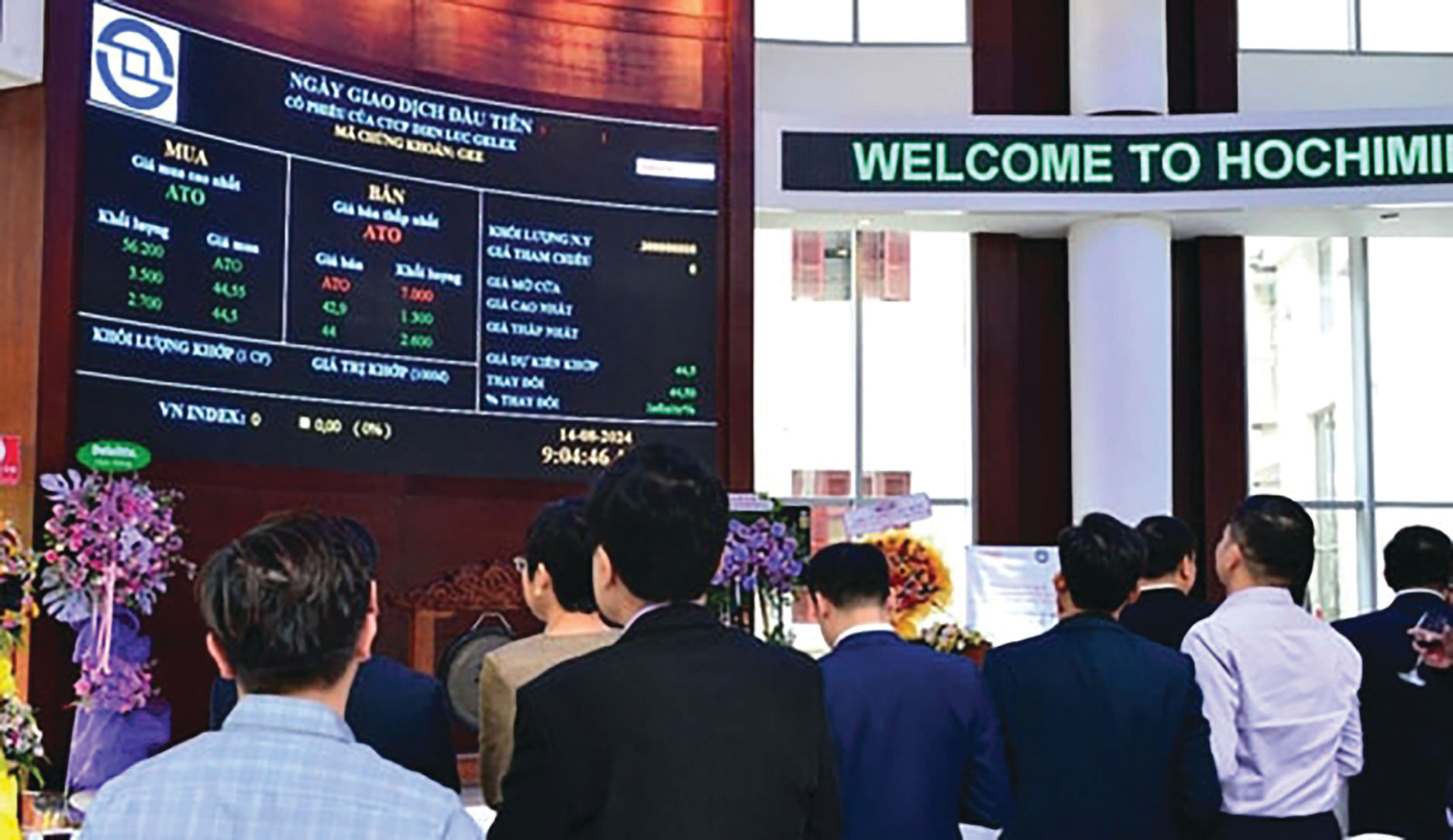
In the context where bank credit rooms will become increasingly tightened, unlisted enterprises will have the motivation to conduct IPOs and list in the near future.
- So in the remaining 6 months, which groups of enterprises can we place our IPO expectations on?
From now until the end of the year, there will be two major groups of deals worth waiting for.
First is the state-owned enterprise (SOE) group. In this group, we are seeing the Government's objective to promote IPOs and the equitization of SOEs to increase resources, and even head towards divestment to reduce state ownership. Capital divestment activities of listed companies are running parallel with the divestment of enterprises preparing to list in order to supplement the state budget and reinvest in infrastructure. Therefore, from now until the end of the year, activities to divest capital and reduce state ownership to increase the free-float rate will be quite vibrant. This meets both the public status requirement for SOEs to list and the objectives of Resolution 79-NQ/TW.
Resolution 79 very clearly classifies the groups of state-owned enterprises. Groups of a critical nature—meaning those that affect national security, such as energy security—will maintain a large controlling stake. Meanwhile, for enterprises outside of these critical sectors, the State only needs to own less than 50%. Thus, a trend of divesting capital, reducing state ownership, and conducting IPOs and listings of state-owned enterprises will be quite active in the coming time.
Second is the private sector group. This private group has actually seen many deals emerge; for instance, the recent Dien May Xanh deal carried a very large IPO scale. Coming up next in the media and entertainment sector, we might see Dat Viet or Galaxy. Alongside that, MoMo in the financial sector is also a major deal that we are currently waiting for. Similarly, VNPay is another one in the financial field...
In addition, there may be many other businesses that have planned their route but have not officially announced a specific and clear roadmap yet. Examples include the Thaco group—a group with many strong member companies that are not yet listed—or the Geleximco group, with its large corporate members.
In the context where bank credit rooms will become increasingly tightened—here we must emphasize that the credit room itself is still flexible, but it is not "covering" enough for the current demand for capital. This is because current capital needs are distributed across many industries, with a particularly huge proportion lying in infrastructure investment. Therefore, it is compulsory to balance it out from the capital market. Accordingly, unlisted enterprises will definitely have the motivation to IPO and list in the near future.
- So, can we expect to witness mega IPO deals from now until the end of the year, or do we have to wait until next year, sir?
It is highly possible that we will see an IPO cycle, an IPO wave worth around $50 billion, spanning over a 3-year period from 2026 to 2028. But will it be this year or next year? In my opinion, next year will be the peak point in terms of IPO value; IPO liquidity will be high, and the capital raised per IPO will be greater compared to 2026. The reason why the 2027 peak converges many elements is as follows:
We can see that 2026 only has 6 months left, which does not leave much time for businesses to fast-track their plans, though the motivation is still there. From what I gathered in recent interactions, many businesses complained about not being able to access bank loans; even the lending room is mostly reserved for large corporations, leaving small and medium enterprises with almost no advantage. Therefore, businesses must also start planning to list early in the near future to mobilize capital. 2027 will thus be the period when the IPO wave explodes, and we will witness "blockbuster" IPOs and stock market listings of enterprises.
- Thank you very much, sir!
Author: LE MY - TRUONG DANG
RELATED TOPICS
RECOMMENDED TOPICS