VN
VN
 EN
EN
22/07/2026, 02:00
Business economics
Ly Thai To College (LIC): Pioneering dual education and embracing the semiconductor and digitalization era
Ly Thai To College (LIC) has pioneered innovation and emerged as a leading institution in Bac Ninh province thanks to its “dual education” model, which is closely aligned with the practical needs of businesses and industries.
With its continuously expanding scale and an impressive rate of graduates securing jobs in their trained fields, LIC has not only affirmed its position as one of the leading and most reputable vocational education institutions but has also emerged as a key talent hub supplying high-quality technical manpower to meet the demands of the semiconductor and digital transformation wave in Bac Ninh, thereby creating a solid foundation for the province’s strong economic breakthrough.
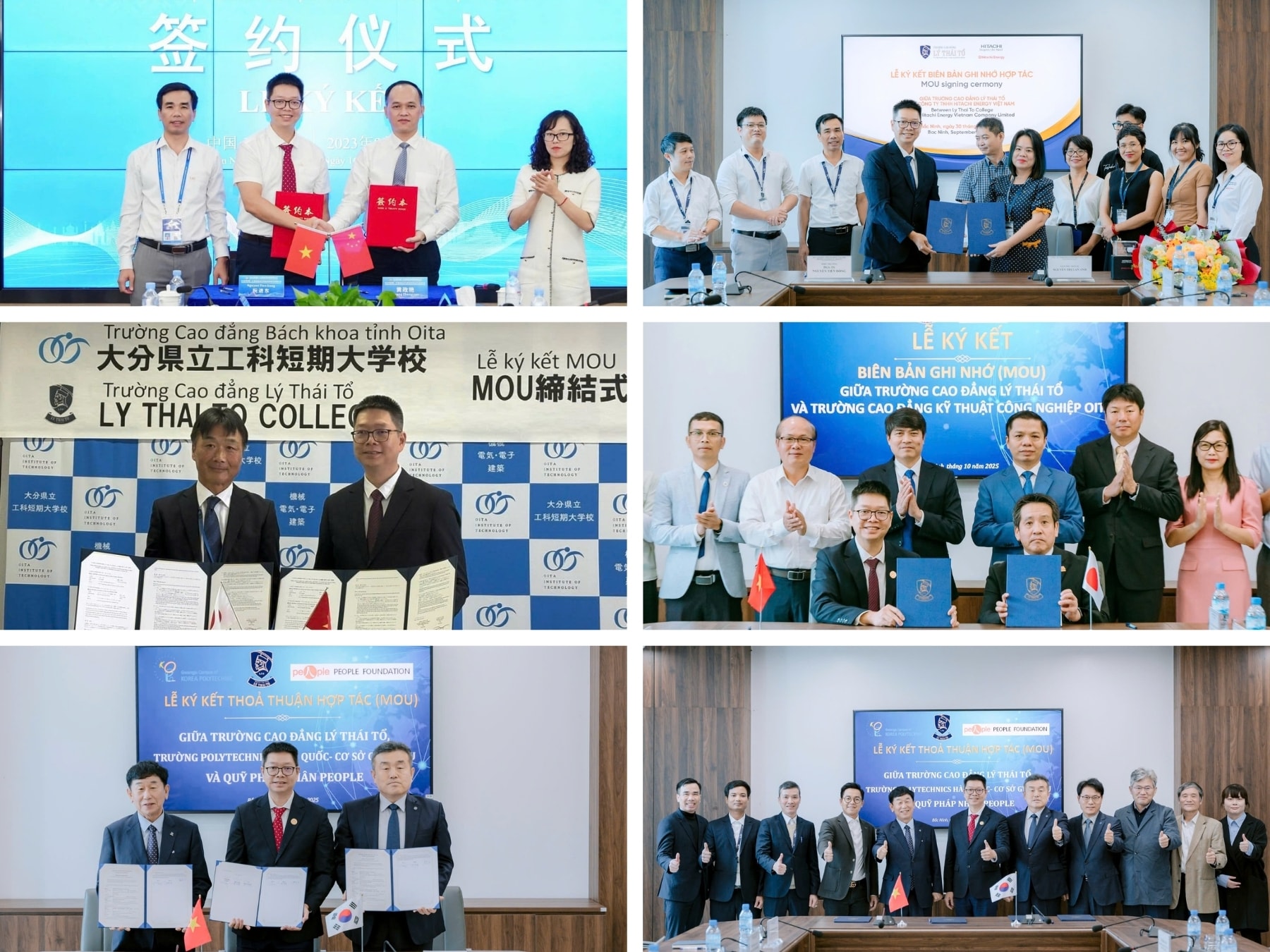
The college regularly signs cooperation agreements with partners to enhance the quality of education and training.
A reporter from Business Forum Magazine conducted an in-depth interview with Assoc. Prof. Dr. Nguyen Tien Dong, Principal of Ly Thai To College, regarding the institution’s sustainable development strategy and strategic recommendations aimed at optimizing the vocational education ecosystem in alignment with local economic growth drivers.
- Could you share the core training model that has enabled LIC to achieve such impressive results and establish itself as a “hub” for supplying high-quality human resources as it is today?
The statistics showing a current enrollment of more than 1,000 students, along with the high proportion of graduates working at FDI enterprises and major corporations in Bac Ninh, are not merely the result of successful admissions efforts. Rather, they serve as clear evidence of the effectiveness of the philosophy that LIC has consistently pursued: “Real learning, real practice, guaranteed employment."
The core of our success lies in a strong transformation from a traditional academic training model to a competency-integrated education model, in which hands-on practical training accounts for more than 70% of the total three-year formal college curriculum. We do not train students based on what we already have; instead, we train them precisely according to the skills and competencies most in demand by the high-tech industrial market. LIC is proud to be one of the pioneering institutions in standardizing its practice workshops and modern laboratories to closely match the standards of industry 4.0 manufacturing facilities.
In particular, LIC’s strategic direction for the 2026–2027 academic year is to devote its full resources to key industries and align itself with global value chains. The college is placing a strong focus on the semiconductor and semiconductor-related industries, as well as the digital industry sector. Specifically, this includes core disciplines such as Industrial Electronics (with a focus on semiconductor chip design and testing), Engineering Technology and Automation Control (with an emphasis on industrial robotics), Mechanical Engineering Technology (CNC), High-Precision Mold and Die Manufacturing, Automotive Technology, Applied Information Technology, E-Commerce, and Logistics (Digital Supply Chain Management).
By continuously updating its training programs in parallel with breakthrough technological trends, LIC is not only addressing immediate employment demands but also preparing a strong talent pipeline to help propel Bac Ninh toward remarkable growth in the 2025-2030 period.
- Could you further elaborate on the depth of the college’s organic “dual education” model and its flexible international integration strategy?
Certainly, at LIC, cooperation with enterprises is not merely a symbolic activity but an organic and mutually beneficial partnership. We have successfully upgraded the “dual education” model by involving industry experts and chief engineers directly in every stage of the training process, from reviewing and validating curriculum drafts, delivering lectures on emerging technologies, and supervising internships, to participating in graduation assessment councils. Businesses establish offices and mini production workshops right within the LIC campus, while LIC, in turn, brings classrooms directly into the production environments of enterprises.
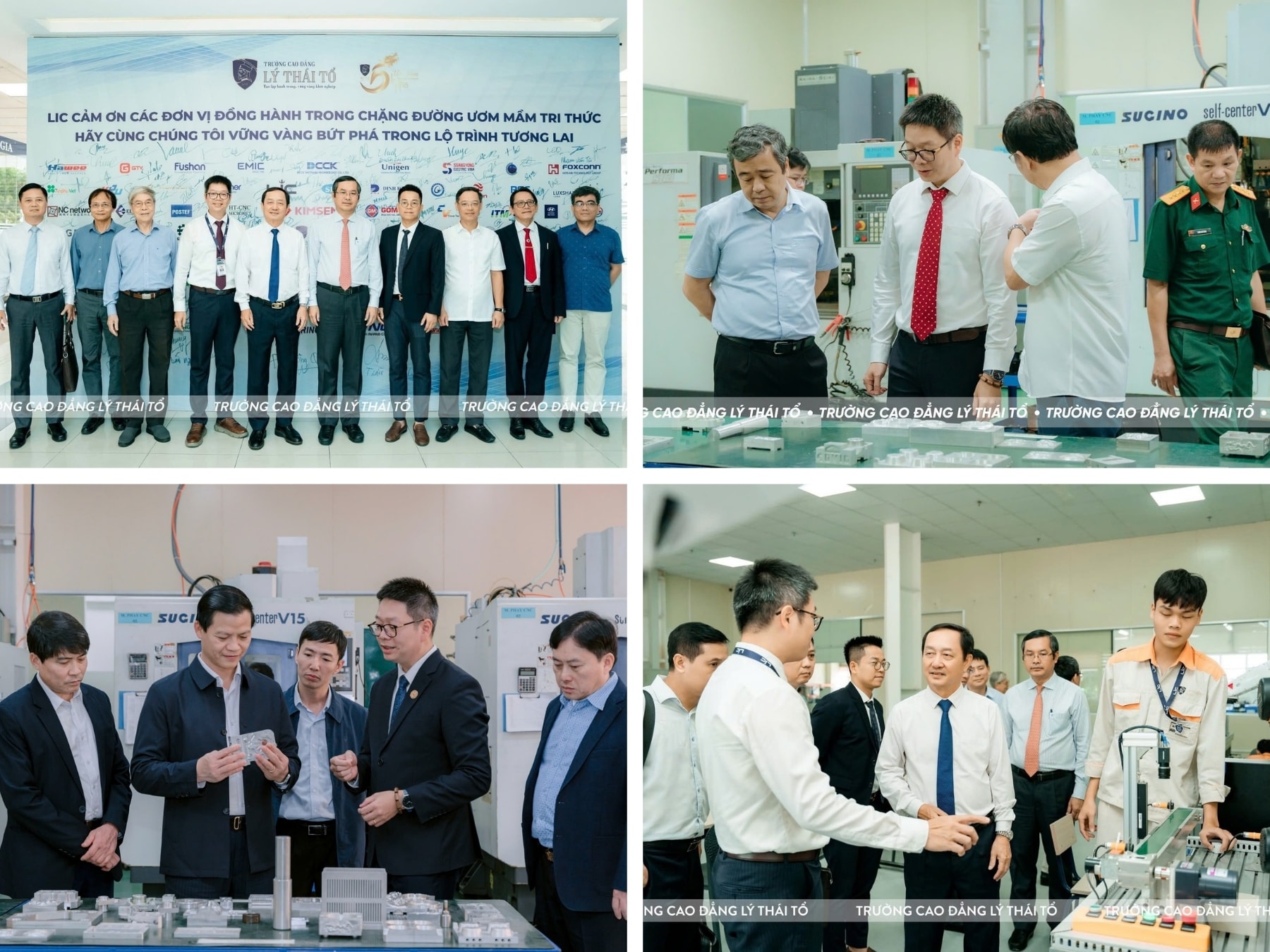
Leaders at various levels visited and observed the college’s training model.
Thanks to this mechanism, students are trained in industrial professionalism, workplace discipline, and real-world problem-solving skills. As a result, 95% of LIC graduates secure employment immediately after graduation in positions directly aligned with their fields of study, meeting the stringent competency standards of major corporate partners without requiring retraining. Many students are even offered employment contracts by large corporations while they are still studying at the college. In addition to professional expertise, we place special emphasis on foreign language training, considering it a golden key that enables students to confidently integrate into the global workforce.
.jpg)
Students are studying and participating in practical training activities at the college.
At the same time, LIC has successfully built a global partnership network with leading countries in technology and vocational education such as Japan, South Korea, China, Germany, and Australia. What sets LIC apart is its pioneering implementation of flexible talent-training partnership models such as 111, 1.510.5, and 22. LIC students are given the valuable opportunity to transfer to partner institutions and enterprises abroad for study and professional training programs lasting from six months to one year. This invaluable experience allows them to access international academic environments, master industry-specific foreign languages, and become fully prepared to enter the global labor market.
- Does the college have any specific proposals or recommendations for central and local authorities?
High-quality vocational education, especially in high-tech fields such as semiconductor microchips and automation, requires enormous investment resources and a highly flexible operational mechanism. Based on the practical experience of LIC, I would like to propose three key groups of recommendations and strategic initiatives aimed at developing a high-tech training ecosystem:
First, we propose that the Ministry of Education and Training, together with the Bac Ninh provincial authorities, establish special mechanisms that prioritize land allocation and provide public investment capital or preferential credit packages for pioneering vocational institutions developing high-quality practical training centers (human resource hubs). The investment costs for semiconductor laboratories, industrial robotics labs, and CNC mold manufacturing workshops are extremely high. If financial support mechanisms or preferential tax policies for imported educational equipment were available, vocational institutions would be better positioned to comprehensively upgrade their facilities, enabling students to access the latest technologies.
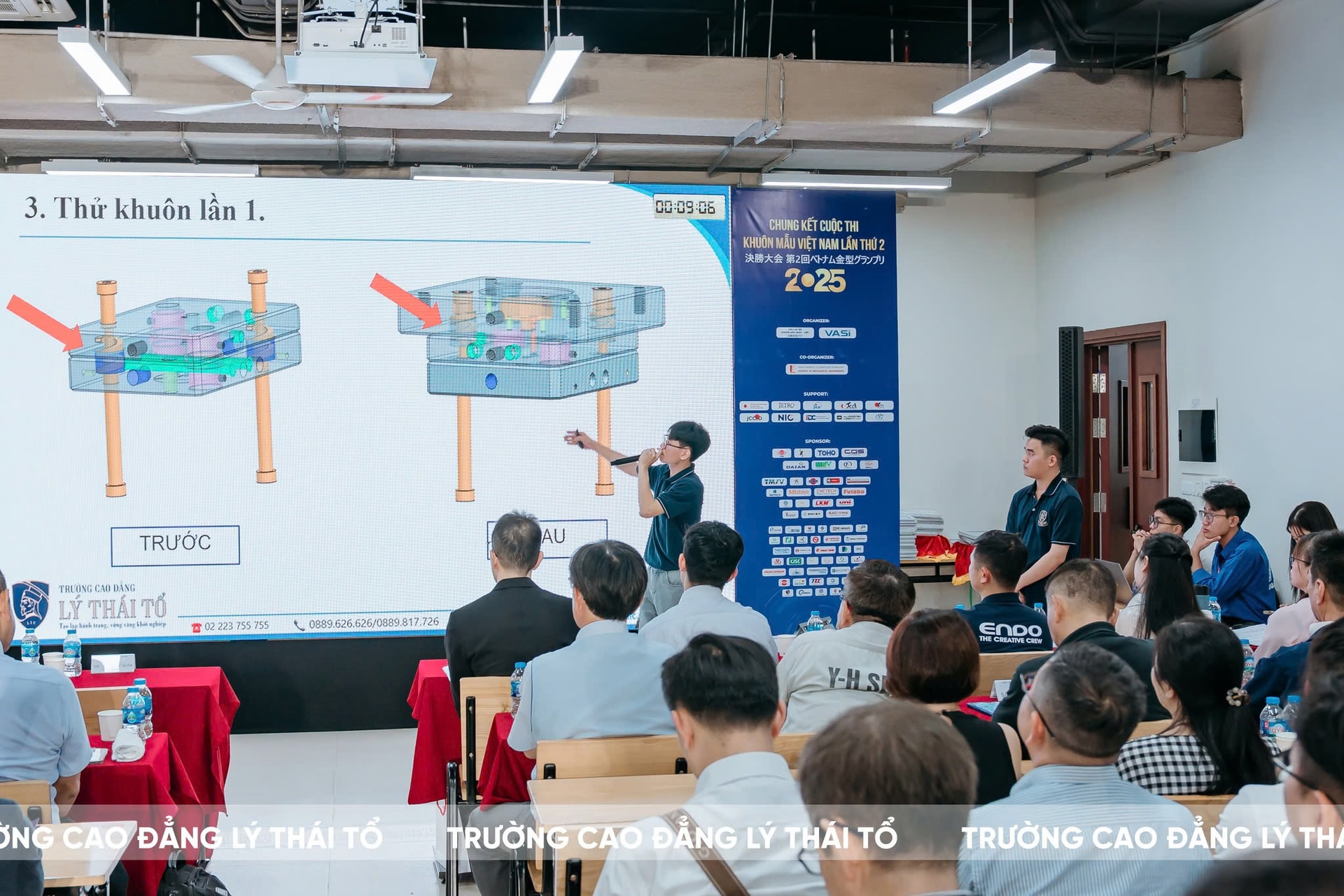
Final Round of the 2nd Vietnam Mold Competition.
Second, we propose the introduction of incentive policies and practical tax benefits for enterprises that actively participate in vocational education and training. Currently, most collaboration between businesses and educational institutions is driven either by self-interest or corporate social responsibility. If a clear legal framework were set up, such as allowing co-training expenses with educational institutions to be directly deducted from corporate income tax or granting enterprises preferential treatment in provincial bidding projects when they make significant contributions to vocational education, then the flow of capital and experts from enterprises into institutions like LIC would become much stronger and more sustainable.
Third, we propose that Bac Ninh Province establish a “Semiconductor and Digital Technology Human Resource Development Fund” to provide full scholarships or zero-interest loans for students pursuing key high-tech industries. At the same time, there should be a mechanism for local budget-funded commissioned training in occupations facing severe labor shortages but playing a foundational role in the digital economy. This would create a strong incentive for academically strong students to pursue high-level technical vocational education, thereby building a solid internal workforce foundation to successfully achieve the province’s and the country’s socio-economic development goals in the digital era.
LIC remains firmly committed to its mission of training high-quality human resources in technology and engineering. We are determined to further strengthen our contribution to education, as well as to the socio-economic development of Bac Ninh Province in particular and the country as a whole, with the aspiration of becoming a leading and highly reputable vocational training institution.
- Thank you very much!
Author: KIM DUNG (THANH TRA translates)
RECOMMENDED TOPICS