VN
VN
 EN
EN
09/07/2026, 11:15
Investment
Nenh Ward (Bac Ninh): Fostering Growth in a New Space
Nenh Ward is experiencing significant transformation by leveraging the advantages of administrative merger. Its two main growth drivers are administrative reform and private-sector development.
Nenh Ward in Bac Ninh Province has entered a new era of growth with increased area, stature, and responsibility when the whole land and population of four important wards—Quang Chau, Van Trung, Tang Tien, and the previous Nenh Ward—were merged.
The ward authorities are actively updating its governance strategy, concentrating on private-sector growth, expediting administrative processes, and collaborating closely with enterprises and citizens in order to build on an enlarged urban-industrial landscape.

Promoting private sector development
Discussing both the opportunities and challenges facing the ward, Mr. Le Hoang Bach, Chairman of the Nenh Ward People's Committee, noted that with a natural area of 36.21 square kilometers and a population of more than 55,000, the ward is under considerable pressure in terms of state management, public service delivery, social infrastructure, social welfare, and urban order.
However, pressure also serves as a driving force. With substantial land reserves, increasingly well-developed transport infrastructure, and a strategic location within Bac Ninh’s dynamic industrial zone, Nenh Ward enjoys favorable conditions for long-term expansion and development.
The ward is currently home to four operational industrial parks: Dinh Tram Industrial Park (127 hectares), Quang Chau Industrial Park (516 hectares), Van Trung Industrial Park (351 hectares), and Phase 1 of Viet Han Industrial Park (50 hectares). In addition, two industrial parks covering a combined area of 267 hectares are under development, including Quang Chau 2 Industrial Park (119 hectares) and the Viet Han Industrial Park Expansion Project (148 hectares). The locality also has two operating industrial clusters and two more under development.
The four major industrial parks alone have attracted 372 enterprises, including 297 foreign-invested companies and 75 domestic enterprises, generating employment for approximately 224,200 workers.
These figures clearly demonstrate Nenh’s investment appeal while highlighting the significant responsibility of local authorities in supporting businesses and maintaining a favorable development environment.
As Bac Ninh positions itself as a hub connecting global value chains, Nenh Ward must proactively become an important link within the province’s industrial ecosystem. Guided by this vision, the ward administration is making a significant shift, from merely “receiving investment” to actively “creating an ecosystem that supports businesses.”
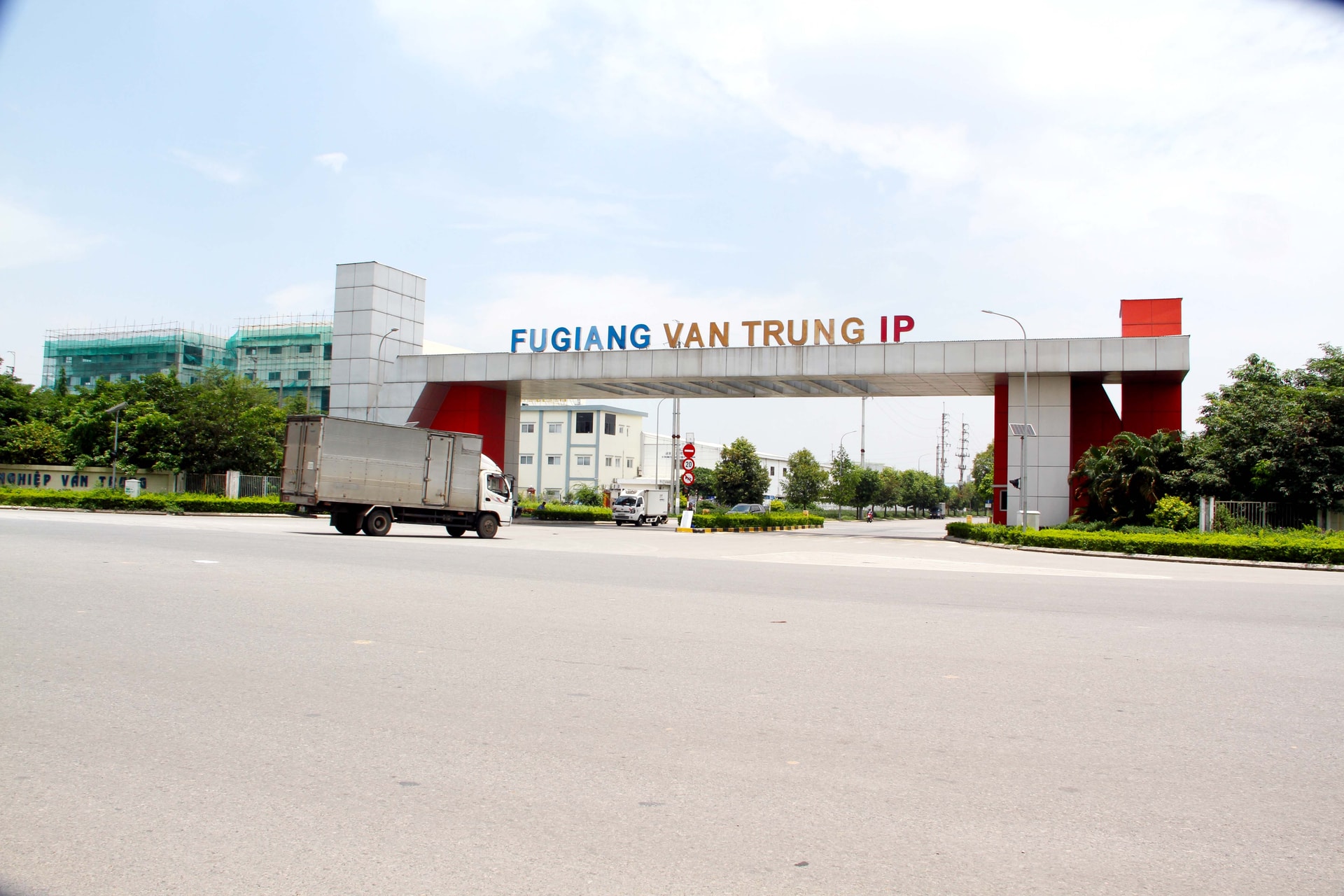
Accordingly, Nenh’s private-sector development strategy focuses on continuously encouraging and supporting enterprises to enhance their competitiveness; creating favorable conditions for domestic businesses to access information, improve governance, adopt new technologies, upgrade workforce quality, and strengthen linkages with the foreign-invested sector.
“When private enterprises grow stronger, the local economy becomes more resilient. When domestic businesses gain the capacity to participate in supply chains, Nenh will not only be a place where factories are located but also a place where new value is created,” Mr. Le Hoang Bach emphasized.
Administrative reform: Accompanying residents and businesses
Alongside private-sector development, administrative reform has been identified by Nenh Ward as a breakthrough area and a foundation for improving the effectiveness of state management while strengthening public trust among residents and businesses.

According to Mr. Vu Manh Son, Vice Chairman of the Nenh Ward People's Committee, the implementation of the two-tier local government model has created significant breakthroughs.
The first breakthrough lies in the operation of the local government apparatus. By streamlining intermediate administrative layers, policies and laws can reach residents and businesses more quickly and directly. As a result, the ward government is becoming closer to the people, more responsive to their needs, and better able to promptly address issues arising at the grassroots level.
The second breakthrough concerns administrative procedure processing. Guided by the principle that citizen and business satisfaction is the ultimate measure of performance, Nenh Ward’s officials and civil servants place service quality at the forefront, working under the motto: “The work ends, not the working hours.” Although the ward’s Public Administration Service Center handles a large volume of applications every day, it continues to ensure proper procedures, timely processing, and service quality, thereby earning public support and satisfaction.
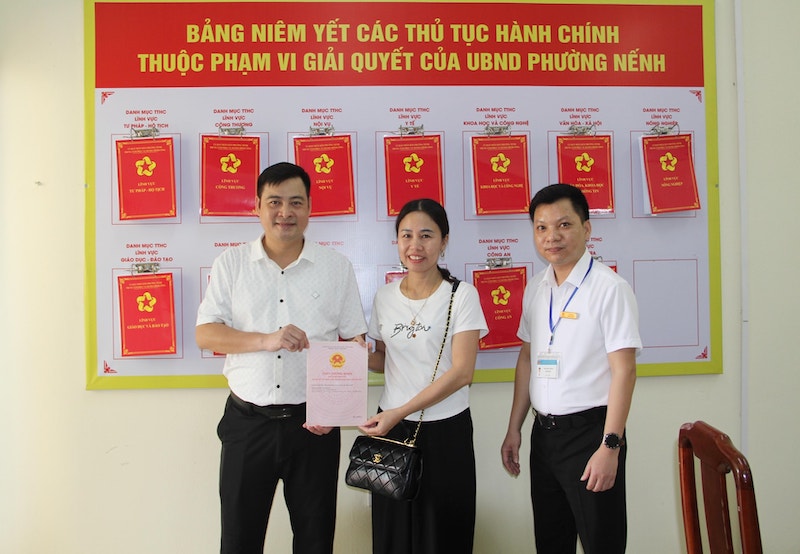
Given the ward’s large population, significant business community, and concentrated workforce, the pressure on administrative service units is considerable. However, when reform is implemented decisively, it becomes an advantage, enabling local authorities to stay closer to reality, better understand the needs of residents and businesses, and provide more effective services.
Ms. Duong Thi Yen, a resident of Van Coc 1 Residential Group who recently completed procedures for obtaining a land-use rights certificate under the ward’s authority, shared her experience:
“I am very satisfied with the services at the Nenh Ward Public Administration Service Center. The staff provided detailed guidance, clearly explained all required documents, and demonstrated a courteous and responsible attitude. The procedures were completed quickly and on schedule, without requiring multiple visits. We can clearly see the positive changes in the ward government’s working style, it is more people-oriented, more convenient, and inspires greater trust.”
According to Mr. Le Hoang Bach, Chairman of the Nenh Ward People's Committee, the ward’s future mission extends beyond simply handling administrative procedures efficiently. Nenh must build a grassroots government that is truly enabling, digitalized, flexible, and supportive.
The Public Administration Service Center should continue to embody the spirit of public service, while officials and civil servants should act not merely as application receivers but as guides, facilitators, and problem-solvers. Every improved procedure, every obstacle removed, and every public concern heard and addressed will help strengthen trust and create new momentum for development.
Author: Kim Dung - Vu Phuong (Cam Anh translates)
RECOMMENDED TOPICS