VN
VN
 EN
EN
26/07/2026, 02:38
Business economics
People strategy in the AI era
Vietnam now ranks 38th globally for AI usage. And Vietnamese businesses are adopting AI at speed, with growth in 2025 reaching 39% year-on-year. These numbers point to a clear reality: AI is playing a bigger and bigger role in boosting performance, sparking innovation, and building competitive edge.
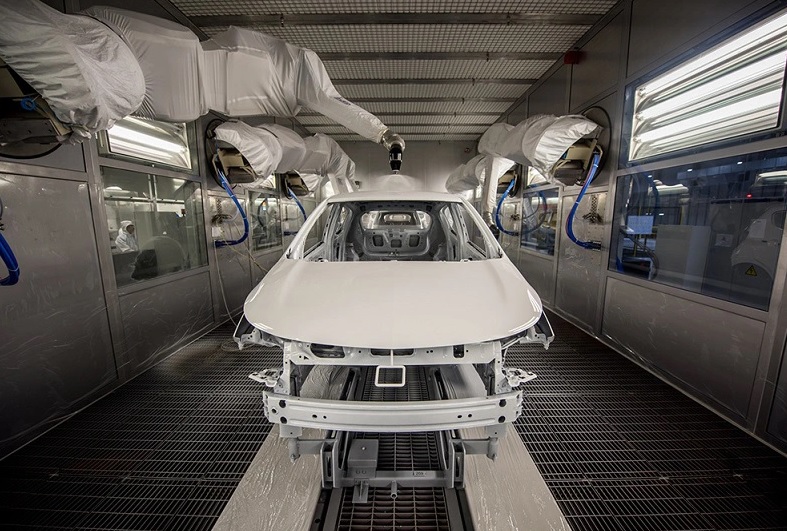
VinFast utilizes AI in its factory, which boasts up to 90% automation with state-of-the-art robotic systems.
From an HR perspective, I can see how AI is already changing the nature of work, the skills organisations need, and the way teams collaborate. And the shift isn’t slowing down – AI evolves at pace, every day. Generative AI is projected to lift global GDP by 7% over the next decade, and every industry is increasing its use of AI, including sectors far from “tech” such as agriculture and mining. The question for leaders is straightforward: can their people strategy keep up with AI’s rapid, sweeping progress?
New era, new work
Worldwide, 88% of organisations are already using AI in at least one business function. AI is taking on more tasks – drafting, summarising, searching, translating, analysing. Used well, it frees people up to focus on higher-value work: strategy, decision-making, and risk oversight. As a result, job scopes are expanding and traditional functional boundaries are starting to blur. Operations teams need to be comfortable with data and automation; technology teams need a sharper understanding of business operations and how the organisation serves customers.
Hiring expectations are shifting too. PwC’s 2025 Global AI Jobs Barometer finds that skills in AI-related roles are changing 65% faster than in jobs less exposed to AI. In practice, almost every role now benefits from AI literacy, systems thinking, problem framing, and sound judgement. And as AI takes on more routine tasks, the distinctly human strengths become even more valuable: ethics, empathy, and the ability to weigh context and make responsible decisions. In financial services, trust is non-negotiable. Customers don’t just want speed; they want fairness, safety, and confidence that their interests come first – things you can’t outsource to an algorithm.
Taken together, these shifts are reshaping organisations. The classic pyramid is giving way to flatter structures – more “pods” than layers. Demand is easing for roles centred on coordination, connectivity, and project management. That means organisations need to help employees transition, so people can continue to create the greatest value.
New era, new strategy
In the age of AI, advantage won’t come from buying the flashiest tools. It will come from getting your people ready – and that starts at the top. Leaders need to understand early what AI means for their workforce, and they need to help employees use AI appropriately: when to use it, how to use it well, and why it matters. AI adoption can’t sit with a small group of specialists; it has to be understood and embraced across the organisation.
Companies also need to redesign work – tasks, roles, and structures. Where must a human remain the final gatekeeper? Which processes can be fully automated? This is process redesign, not simply layering new technology onto old ways of working.
Leaders also need to face another reality: the talent race is heating up. Demand for AI skills is soaring – and so is pay. Without a plan, organisations risk being left behind – unable to attract top talent, or forced to pay a premium. Investing in upskilling and building clear internal career pathways is just as critical.
Closing thoughts
At HSBC, around 85% of employees globally already have access to a generative-AI productivity tool called HSBC Productivity Suite. It’s reduced the time we spend drafting emails (in English), summarising long documents, and translating into multiple languages. The tool now handles more than 35,000 questions a day, saving over 3,000 hours daily. Our goal is to make it available to all employees by the end of this year – one of several AI applications we’re using to boost productivity and effectiveness.
For HSBC, generative AI is a strategic investment priority. In March, we created the Group’s first Chief AI Officer role – clear evidence that AI is no longer a side project, but a core strategic capability. We build AI-enabled tools for one reason: to help our people thrive in a world where AI is becoming a daily companion. In the end, for AI – or any future technology – to last, it must meet a simple test: built by people, for people.
Author: Oanh tran, Head of People, HSBC Vietnam
RECOMMENDED TOPICS