VN
VN
 EN
EN
26/07/2026, 02:00
Investment
Pivotal role of infrastructure: from public investment to long-term growth
Within the post-pandemic economic landscape of ASEAN, Viet Nam continues to stand out as a bright spot in terms of growth and medium- to long-term prospects. Following a period of robust recovery, the Vietnamese economy has sustained positive momentum in subsequent years, despite ongoing volatility in the global economy.
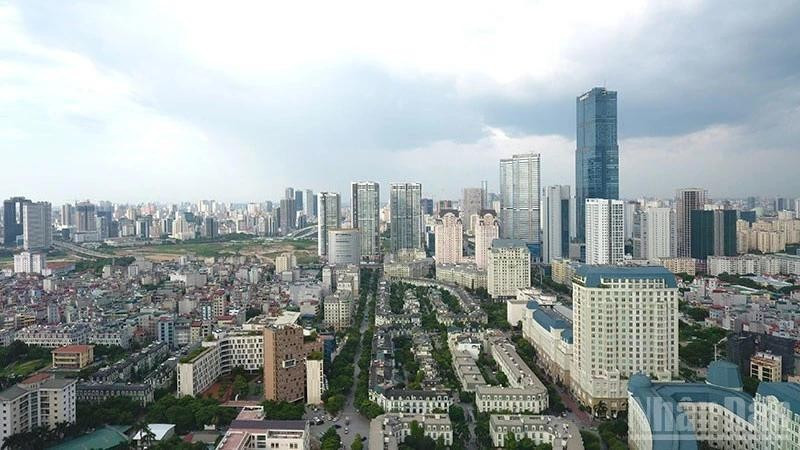
This trend indicates that the economic foundations are gradually becoming more stable, while also placing increasingly stringent demands on structural conditions to sustain growth momentum.
In parallel with growth, Viet Nam is entering an unprecedented phase of large-scale infrastructure investment. More than 3,000 kilometres of expressways have been built or are under construction, alongside a series of key projects in aviation, seaports and urban infrastructure, including Terminal T3 at Tan Son Nhat International Airport, Terminal T2 at Noi Bai International Airport, Long Thanh International Airport, Hon Khoai Port, and the Can Gio sea-crossing bridge project. These developments are designed not only to relieve immediate traffic pressures but also to play a strategic role in restructuring the nation’s economic development landscape.
Infrastructure – the foundation for sustainable growth
Assessing the current context, experts believe Viet Nam stands at a decisive “window of opportunity”. The period from 2016 to 2030 is regarded as pivotal, as infrastructure is no longer merely a supportive factor but has become an essential foundation for long-term growth. If this moment is not seized to pursue robust and methodical infrastructure investment, the economy risks losing momentum in the years ahead, as its expanding scale may outpace connectivity capacity.
Data compiled by Statista from the General Statistics Office (GSO), the Ministry of Finance and international research organisations show that Viet Nam’s GDP growth from 2022 to 2025 clearly reflects a trend of recovery and sustained stability. After recording growth of around 8% in 2022, GDP rose by approximately 5.1% in 2023 amid global economic headwinds, before rebounding to about 7.1% in 2024 and reaching 8.02% in 2025. This series of figures confirms that Viet Nam remains among the fastest-growing economies in the region.
Alongside GDP expansion, the quality of growth has also improved markedly. According to the Asian Development Bank (ADB) and the General Statistics Office (GSO), Viet Nam’s GDP per capita has risen steadily over recent years, from roughly 3,700 USD in 2022 to nearly 5,026 USD in 2025. This reflects rising incomes and an expanding domestic market, accompanied by growing demand for transport infrastructure, logistics, urban development and public services.
In this context, the most critical requirement at present is not simply to invest in infrastructure, but to do so in a synchronised and comprehensive manner along entire routes, ensuring efficient resource utilisation and optimising long-term benefits. Expressways, ring roads, airports and seaports must be planned within an integrated framework to maximise their value, avoiding fragmented investment efficiency caused by a lack of connectivity between components.
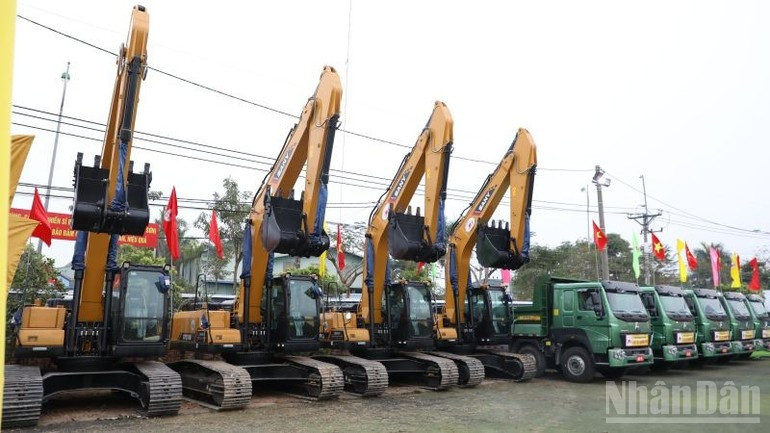
Integrated connectivity to optimise capital flows and development space
The impact of infrastructure extends beyond transport and logistics, generating strong spillover effects in trade, investment and real estate. In recent years, alongside public investment, new-generation free trade agreements—most notably the EU–Viet Nam Free Trade Agreement (EVFTA)—have been reshaping Viet Nam’s position within global supply chains. By 2025, total FDI inflows into Viet Nam are expected to reach approximately 300 billion USD. Notably, European capital is increasingly shifting towards higher-quality projects, focusing on high value-added sectors such as technology manufacturing, electronics, deep processing and logistics, rather than traditional labour-intensive industries. The phased elimination of import tariffs on more than 99 per cent of export tariff lines to the EU by 2027 under the EVFTA is expected to further reinforce Viet Nam’s appeal to long-term investors.
However, experts caution that the benefits of trade agreements can only be fully realised when transport and logistics infrastructure is sufficiently capable of supporting them. Seaports, airports, warehousing systems and interregional connectivity play a decisive role in reducing logistics costs, enhancing competitiveness and enabling high-quality capital flows to operate efficiently.
From the perspective of urban and real estate development, transport infrastructure serves as the gateway to new development zones. As infrastructure improves, geographical distance ceases to be a significant barrier. Residents can live further from major urban centres while maintaining convenient connectivity, facilitating the emergence of satellite cities, industrial parks and new residential areas. This trend not only alleviates pressure on large cities but also enables a more rational redistribution of population and resources.
While acknowledging the strong commitment and scale of current infrastructure investment, experts argue that for this “mega construction site” to function effectively, tailored mechanisms and breakthrough implementation measures are required. National infrastructure projects must be prioritised in terms of capital, supplies and materials, alongside strengthened decentralisation to local authorities accompanied by clearly defined accountability for leaders. With multiple key projects being rolled out simultaneously, institutional flexibility and effective coordination among different levels and sectors will determine the overall progress and quality of the investment programme.
Looking ahead to 2026–2027, experts believe this period will serve as a crucial test of both implementation capacity and the effectiveness of the current infrastructure investment strategy. In this context, infrastructure is not merely a set of physical works, but the foundation of a new growth cycle in which Viet Nam can enhance its competitiveness, attract long-term capital and improve living standards. When invested in strategically and at the right time, infrastructure will become a powerful lever, enabling the Vietnamese economy to develop more sustainably and with greater depth in the years to come.
Author: NDO
RECOMMENDED TOPICS