VN
VN
 EN
EN
10/07/2026, 02:38
Business economics
Power sector 2026: Cost pressures and the energy security challenge
Vietnam’s power sector in 2026 is entering a period of heightened volatility, requiring a shift from cost optimization to prioritizing supply security, while investment opportunities become increasingly differentiated.
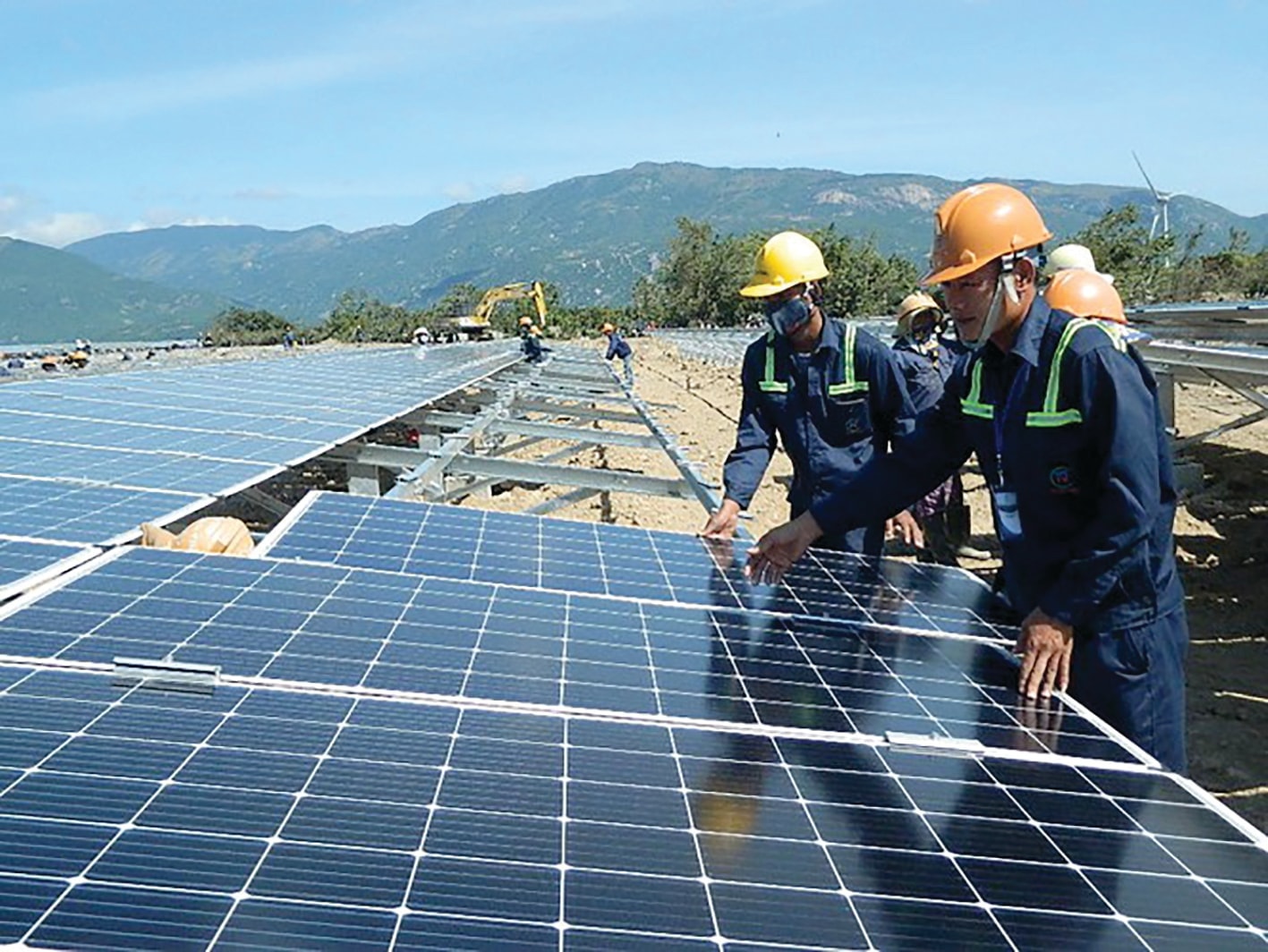
The most significant challenge lies in the transition toward clean and renewable energy.
Mounting cost pressures
According to Vietnam Electricity (EVN), total installed capacity reached approximately 87,600 MW by the end of 2025, an increase of 6,400 MW compared to 2024, ranking second in ASEAN.
The most significant challenge lies in the transition toward clean and renewable energy. While renewables hold long-term potential, they remain constrained by transmission infrastructure and weather variability, limiting their short-term ability to replace traditional sources.
With electricity demand projected to grow rapidly, the power system is operating under high pressure to support GDP growth targets above 10%. However, the challenge is not only about scale but also about the changing nature of demand. The electricity-to-GDP elasticity coefficient, once a measure of energy efficiency, declined to 0.87 during 2021–2025, but this trend is clearly slowing—indicating that the economy is becoming more electricity-dependent again.
Mirae Asset Securities attributes this to the emergence of “inelastic loads” such as AI data centers and semiconductor manufacturing. These sectors require uninterrupted power supply and cannot reduce consumption when prices rise, forcing the system to maintain higher reserve margins. This, in turn, increases operating costs and places system risk management at the center of development strategy.
In this context, 2026 also marks a significant shift in operational philosophy—from cost optimization to ensuring supply security. A key driver of this shift is climate change, particularly the 70% probability of El Niño in the second half of the year.
After a favorable 2025, with hydropower output reaching around 105 billion kWh, the system enters 2026 facing a sharp decline in this low-cost energy source. As hydropower loses its central role, the system must increase reliance on coal and gas-fired power, significantly raising average generation costs. In this new structure, hydropower shifts to a balancing and storage role, coal-fired power becomes the backbone for baseload capacity, while gas-fired power provides flexibility but faces substantial fuel cost pressure.
Renewable energy, despite its long-term potential, remains constrained by transmission bottlenecks and weather uncertainty, limiting its short-term contribution.
However, according to representatives from T-Tech Vietnam Technology Group, wind power is becoming increasingly competitive in terms of levelized cost of electricity (LCOE). Specifically, solar power costs range from approximately $30–50/MWh, onshore wind from $40–70/MWh, offshore wind from $80–120/MWh, and hydropower from $30–60/MWh.
Solar power benefits from low investment costs and rapid deployment but is limited to daytime generation and weather conditions. Hydropower is low-cost and stable but depends on water availability, with limited new development potential in Vietnam. Meanwhile, wind power—especially offshore wind—is considered to have substantial potential, with more stable output than solar and fewer constraints than hydropower. Its main drawback remains high upfront investment costs, although these are declining rapidly due to technological advancements.
“Over the past decade, wind power costs have dropped by 40–60% globally. Larger, more efficient turbines are increasing output per project. As market scale expands and domestic supply chains develop, wind power costs will continue to decline and may soon compete directly with solar. In the context of emissions reduction commitments and energy transition, wind power is not only an environmental choice but also a long-term economic solution,” a T-Tech representative noted.
Rising geopolitical risks
Beyond climate impacts, the power sector in 2026 also faces increasingly evident geopolitical risks. Tensions in the Middle East, particularly around the Strait of Hormuz—through which about 20% of global LNG supply transits—have triggered price shocks in energy markets.
Mirae Asset data shows Newcastle thermal coal prices rising from around $107/ton in 2025 to $135/ton in early 2026, a 26% increase. This places coal-fired power companies in a “double squeeze”: they must increase output to offset hydropower shortages while facing rising fuel costs, compressing profit margins.
For gas-fired power, risks are more structural. Domestic gas supply is declining rapidly, while dependence on imported LNG exposes prices to global market volatility. Gas prices indexed to oil further reduce competitiveness in the power generation market.
From an investment perspective, 2026 presents a clearly segmented landscape in the power sector, requiring a selective approach.
The sector continues to be influenced by multiple factors, making defensive strategies a priority.
Mirae Asset experts recommend that investors clearly distinguish core operating profits from one-off gains. In 2025, many thermal power companies benefited from exchange rate differences, but this is not a sustainable profit source amid volatile interest rates and currency movements. Therefore, profit quality assessment becomes critical.
In terms of portfolio allocation, stocks with stable cash flows and high cash dividend yields—such as SJD, SHP, and NT2—remain “safe havens” in uncertain conditions, though investors should note the risk of declining hydropower output during El Niño years.
Coal-fired power companies may see increased output due to higher dispatch levels, but profit margins face pressure from rising fuel costs, limiting upside potential. Meanwhile, companies with diversified generation portfolios—such as REE, POW, and PGV—emerge as more balanced options, thanks to their ability to adjust across power sources and mitigate risks from individual segments.
At the infrastructure level, 2026 continues to see accelerated investment in key projects to address supply-demand bottlenecks. The Quang Trach II LNG project, with total investment exceeding VND 52 trillion, along with a series of 500kV and 110kV transmission projects nationwide, plays a crucial role in enhancing system capacity. The signing of large-scale EPC contracts signals strong commitment to modernizing and increasing flexibility in the power mix.
At the same time, policy breakthroughs—such as the Direct Power Purchase Agreement (DPPA) mechanism and the renewed orientation toward nuclear power development in Ninh Thuan—are opening new space for private capital participation in the energy sector.
However, it should be recognized that these long-term supportive factors cannot fully offset short-term risks. The power sector in 2026 remains exposed to the combined impact of climate change, fuel price volatility, and system financial pressures. As such, defensive strategies should take precedence.
In summary, Vietnam’s power sector in 2026 is no longer a domain of predictable margins but has evolved into an ecosystem heavily influenced by global macro factors. In an environment of rising energy costs and increasing system risks, the advantage will lie with companies that possess flexible generation portfolios and strong governance—and with investors who prioritize sustainability over short-term growth.
Author: DIEM NGOC - TRUONG DANG
RELATED TOPICS
RECOMMENDED TOPICS