VN
VN
 EN
EN
26/07/2026, 11:20
Investment
Rooftop solar push to boost Hanoi's green ambition
Rooftop solar in industrial zones has the foundations to become a new driver of Hanoi’s energy transition.
Rooftop solar in industrial zones is emerging as a vital solution to meet rising power demand, curb electricity costs and comply with stricter carbon regulations, enhancing business competitiveness while advancing Hanoi’s green growth objectives.
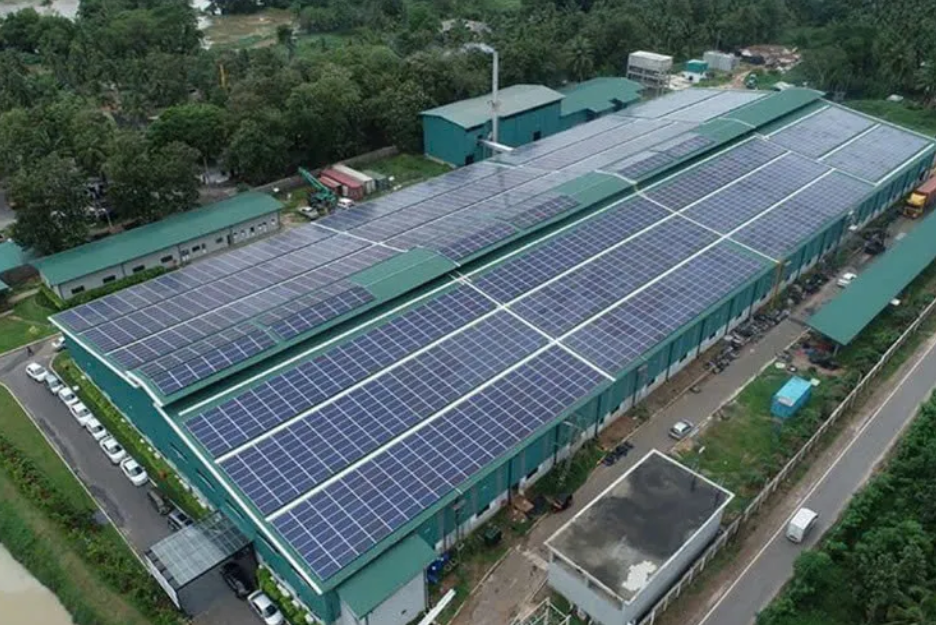
Rooftop solar power system installed in an industrial zone. Photo: Khac Kien/The Hanoi Times
Industrial sector emerging as key priority
For many years, Vietnam has viewed green and clean energy transition as a strategic priority. In Hanoi, electricity demand has grown rapidly and the industrial sector remains one of the city’s most power-intensive areas.
Dr. Le Xuan Rao, President of the Hanoi Union of Science and Technology Associations, said rooftop solar is “the right power at the right time and in the right place.”
“Producing electricity on site helps businesses cut costs, reduce purchases from the grid during peak hours and ease pressure on the city’s power system,” Rao said.
Beyond cost savings, rooftop solar can improve working conditions in factories.
Solar panels act as a second layer of roofing that helps lower indoor temperatures by three to five degrees Celsius, which supports higher productivity and reduces cooling needs.
Despite these advantages, Hanoi’s rooftop solar capacity remains modest. According to Associate Professor Dang Dinh Thong, Director of the Center for New Energy, the city had installed only 102.9 MWp by 2024.
This accounts for 3.2% of national capacity and 7.3% of total capacity in northern Vietnam.
“One reason is that Hanoi is located in the Northeast, where solar radiation is the lowest in the country. As a result, solar output is generally weaker than in central and southern provinces. Even so demand for clean power in industrial zones continues to rise,” said Thong.
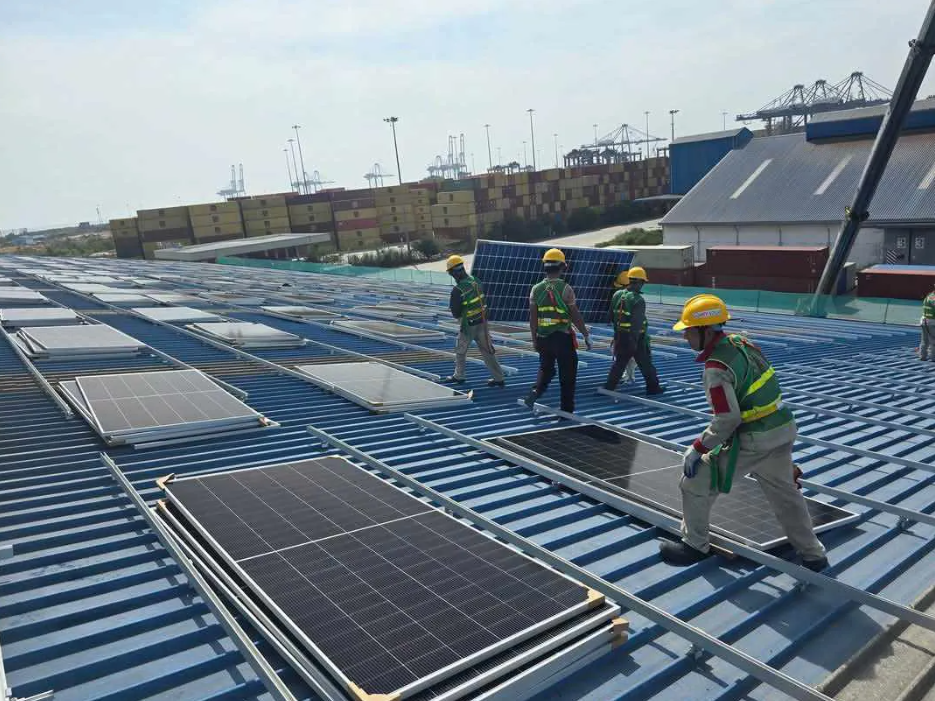
Workers install rooftop solar panels. Photo: Hoang Anh/The Hanoi Times
New driver for Hanoi’s energy transition
The biggest obstacle comes from the regulatory framework. Nguyen Khai Van, Deputy Head of the Energy Management Division at the Hanoi Department of Industry and Trade, said the city’s rooftop solar capacity remains far below the 894 MW target set in the national power development plan for 2021 to 2030 with a vision to 2050.
Under current rules, self-consumption projects can hardly sell excess electricity to the grid. Projects that want to trade power directly face another hurdle because customers must consume at least 200,000 kWh per month on average, a level many industrial-zone businesses cannot reach.
Tricky procedures add to the burden. According to Tran Anh Tuan, Deputy Head of the Hanoi Authority for Industrial and Export Processing Zones, companies still struggle with construction permits, fire safety approvals and grid-connection requirements.
Many investment or rooftop-leasing models are not recognized in existing regulations. A more open, transparent and practical legal pathway is the first requirement for boosting rooftop solar in industrial zones.
According to Tuan, to address these issues, the Ministry of Industry and Trade is considering lowering the minimum consumption threshold for large electricity customers from 200,000 kWh to 100,000 kWh per month to widen access to direct power purchase arrangements.
A draft resolution on removing bottlenecks in energy development for 2026 to 2030 also proposes giving provincial authorities more authority to adjust local power-network planning, which would shorten administrative timelines.
Experts highlight the importance of modern technology and management systems. Associate Professor To Duy Phuong, President of the Hanoi Foundry and Metallurgy Association, noted that rooftop solar could supply about 16% of industrial-zone electricity demand if properly deployed.
“With electricity prices rising every year, the economic case for investment becomes stronger. To improve operations companies should adopt smart monitoring systems, expand automation and pair solar power with energy-storage solutions,” said Phuong.
Associate Professor Tran Van Top, former Vice President of Hanoi University of Science and Technology, said Vietnam could reach 15,000 MWp of rooftop solar in industrial zones by 2030 if a dedicated decree establishes a stable long-term legal framework.
He recommended piloting “zero-emission industrial zones” that integrate energy-management systems and storage while helping companies access International Renewable Energy Certificates to increase export value.
“Rooftop solar in industrial zones has the foundations to become a new driver of Hanoi’s energy transition. Once the legal framework is improved, procedures streamlined and technologies deployed at scale, the city can unlock the full potential of rooftop solar for industry,” said Top.
Author: Hanoitimes
RECOMMENDED TOPICS