VN
VN
 EN
EN
22/07/2026, 02:38
Investment
Six strategic shifts shape Hanoi’s push to become regional innovation hub
Hanoi is redefining how it grows and governs as global economic and technological change forces major cities to rethink development models, with the Vietnamese capital aiming to emerge as a regional urban leader and an innovation center.
This analysis by Nguyen Van Khoi, former Vice Chairman of the Hanoi People’s Committee, examines how the capital is reshaping its long-term development strategy amid digital transformation, green growth, the rise of the knowledge economy and deeper global integration.
As global growth models evolve, Hanoi faces a turning point. The challenge now extends beyond faster expansion to redefining how the city develops, governs and positions itself in the region and internationally.
At the core of this shift are six strategic mindsets guiding Hanoi’s development in the new era.
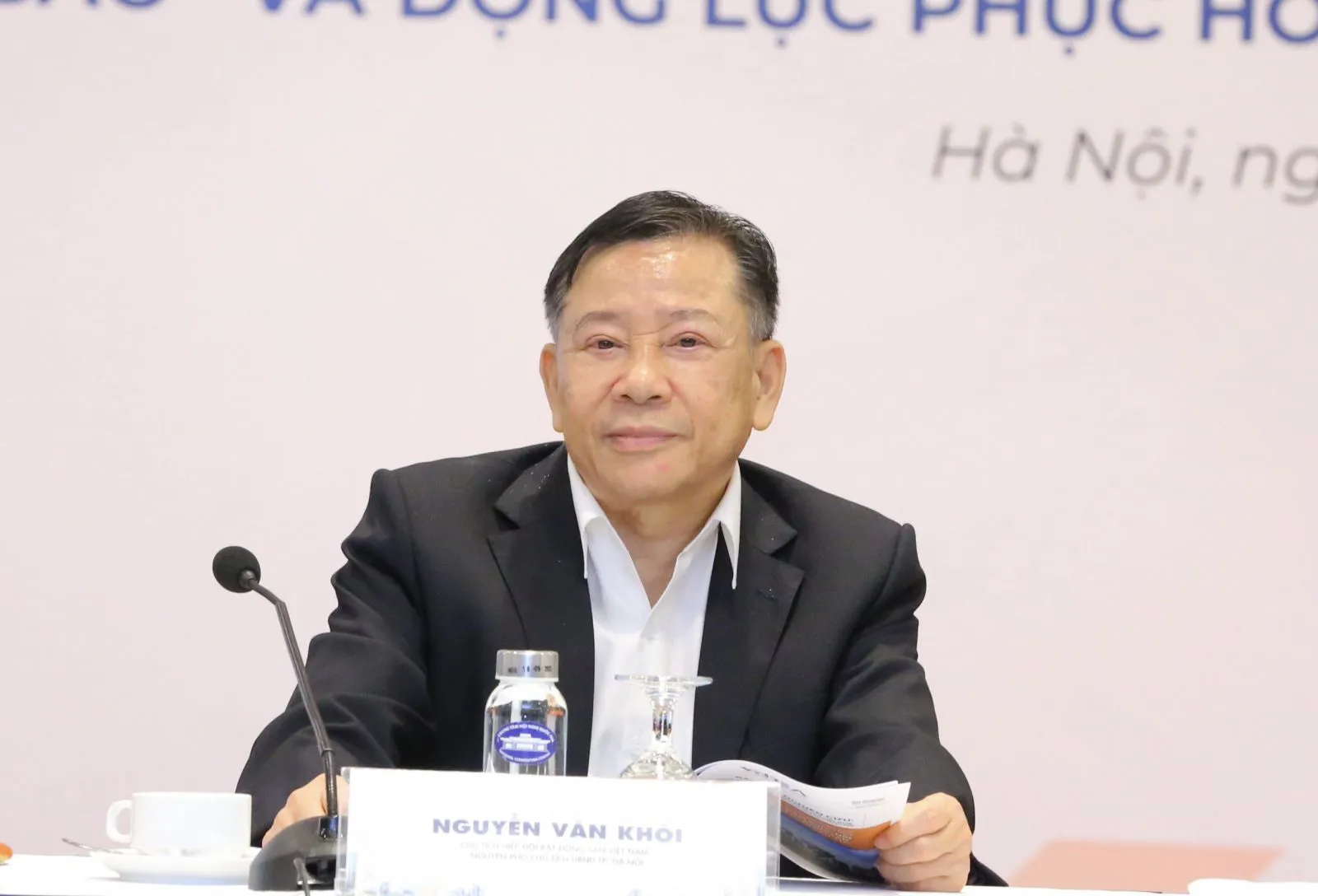
Dr. Nguyen Van Khoi, Chairman of the Vietnam Real Estate Association and former Vice Chairman of the Hanoi People’s Committee. Photo: Realtimes.vn
The first is long-term planning extending to 2125. Hanoi is moving away from short-term thinking toward a century-long vision that balances growth with sustainability.
The aim is to modernize without eroding environmental quality, cultural identity, or urban resilience, while remaining globally connected and historically grounded.
The second focuses on space- and infrastructure-led development. Urban growth increasingly follows spatial planning and integrated infrastructure.
Hanoi is building a multi-center, multi-layered city linked by a comprehensive transport network, with urban rail as the mobility backbone, supported by ring roads, radial routes, river crossings and inland waterways. Infrastructure now steers development.
The third is people-centered development. Quality of life has become a core benchmark.
Hanoi seeks international-standard public services, stronger healthcare systems and wider access to public spaces. Parks, sports facilities, cultural venues, creative hubs and civic squares now rank as essential urban assets.
The fourth centers on the knowledge economy and innovation. Hanoi is positioning itself as a regional hub for science, technology, innovation and smart finance.
Human capital, research capacity and creative industries drive productivity and long-term competitiveness in a knowledge-based economy.
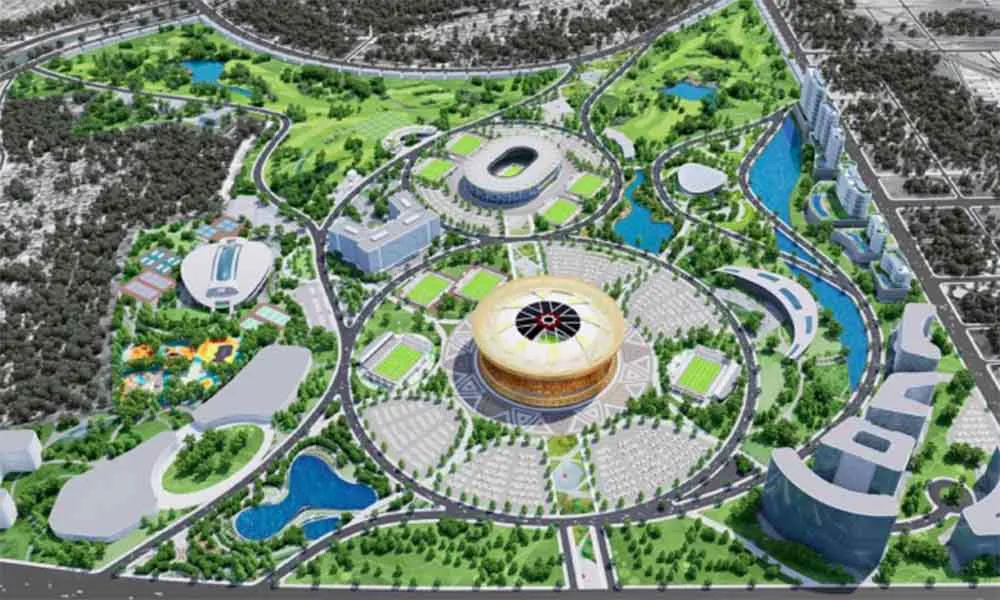
The Olympic Sports Urban Area is visualized as an integrated urban complex combining sports facilities, public spaces and housing to support Hanoi’s vision of a livable city. Photos: Hanoi.gov
The fifth emphasizes faster execution and a facilitative government. Hanoi is shortening the gap between policy decisions and implementation.
Governance is shifting from oversight to delivery, with stronger accountability and institutional responsiveness.
The sixth is data-driven urban governance. Hanoi is expanding digital government and smart city platforms to support decisions on planning, transport, environmental management and public services, relying on integrated data systems and advanced analytics.
Together, these mindsets form the strategic foundation for Hanoi’s next phase of growth.
A defining feature of the current phase is alignment between national strategy and local execution. Central reforms in science and technology, digital transformation, legal frameworks, private sector development and institutional reform have translated into city-level plans, projects and timelines.
This alignment has helped Hanoi move from vision to implementation, linking long-term strategy with measurable outcomes.
Three groups shaping Hanoi’s urban future
Hanoi’s transformation is taking shape through three main groups of initiatives.
The first involves new strategic development spaces. The Red River landscape boulevard stands out as a long-term development axis rather than a transport project.
New bridges across the Red and Duong rivers are opening corridors for industry, logistics, services, tourism and innovation.
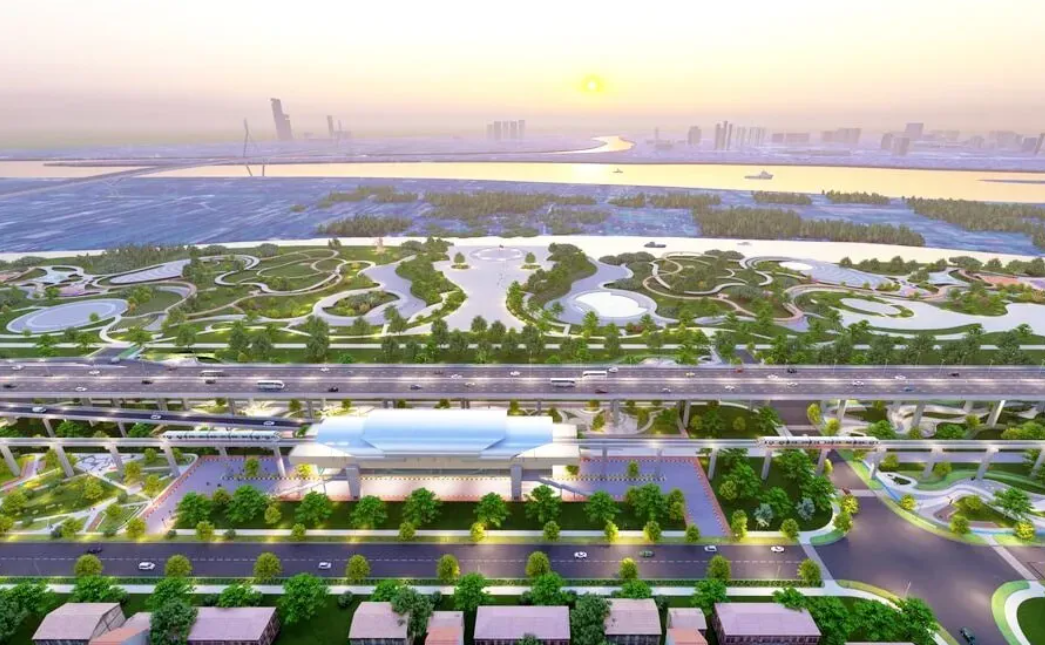
The Red River landscape boulevard is designed as a long-term development axis linking transport infrastructure with riverfront public spaces.
The second focuses on livable, high-quality urban areas.
Projects such as the Olympic Sports Urban Area reflect efforts to raise living standards and position Hanoi as a host for regional and international sports and cultural events.
These developments integrate housing, public services, culture and recreation.
The third centers on connectivity and urban restructuring. Ring roads, radial highways and urban rail systems are reshaping mobility and easing pressure on the city core.
Stronger links between central districts and satellite areas support a more balanced urban structure.
With its economic scale and population, Hanoi increasingly acts as a national testing ground for institutional reform and new governance models.
The city has used special mechanisms approved by the National Assembly while pushing for greater decentralization and accountability.
Public investment continues to prioritize strategic infrastructure, while private firms lead development in urban services, industry, technology, the digital economy and creative sectors.
This public-private dynamic is emerging as a structural driver of sustainable growth, positioning Hanoi as both a national pathfinder and an aspiring regional innovation hub.
Author: Hanoitimes
RECOMMENDED TOPICS