VN
VN
 EN
EN
26/07/2026, 02:00
Investment
Strategic breakthroughs reshaping Lai Chau's geoeconomic position
Lai Chau is focusing its efforts on removing infrastructure bottlenecks through transport projects that serve as key strategic growth drivers.
As a border province facing numerous challenges, Lai Chau's rugged terrain, characterized by high mountain ranges and steep, winding roads prone to landslides during the rainy season, has long hindered the flow of investment and constrained the development of its key economic sectors.
The implementation of major infrastructure projects is aimed at achieving double-digit economic growth and transforming a region historically disadvantaged by its geography into a dynamic cross-border logistics hub. At the same time, these projects carry significant strategic importance in terms of politics, national defense, and foreign affairs.
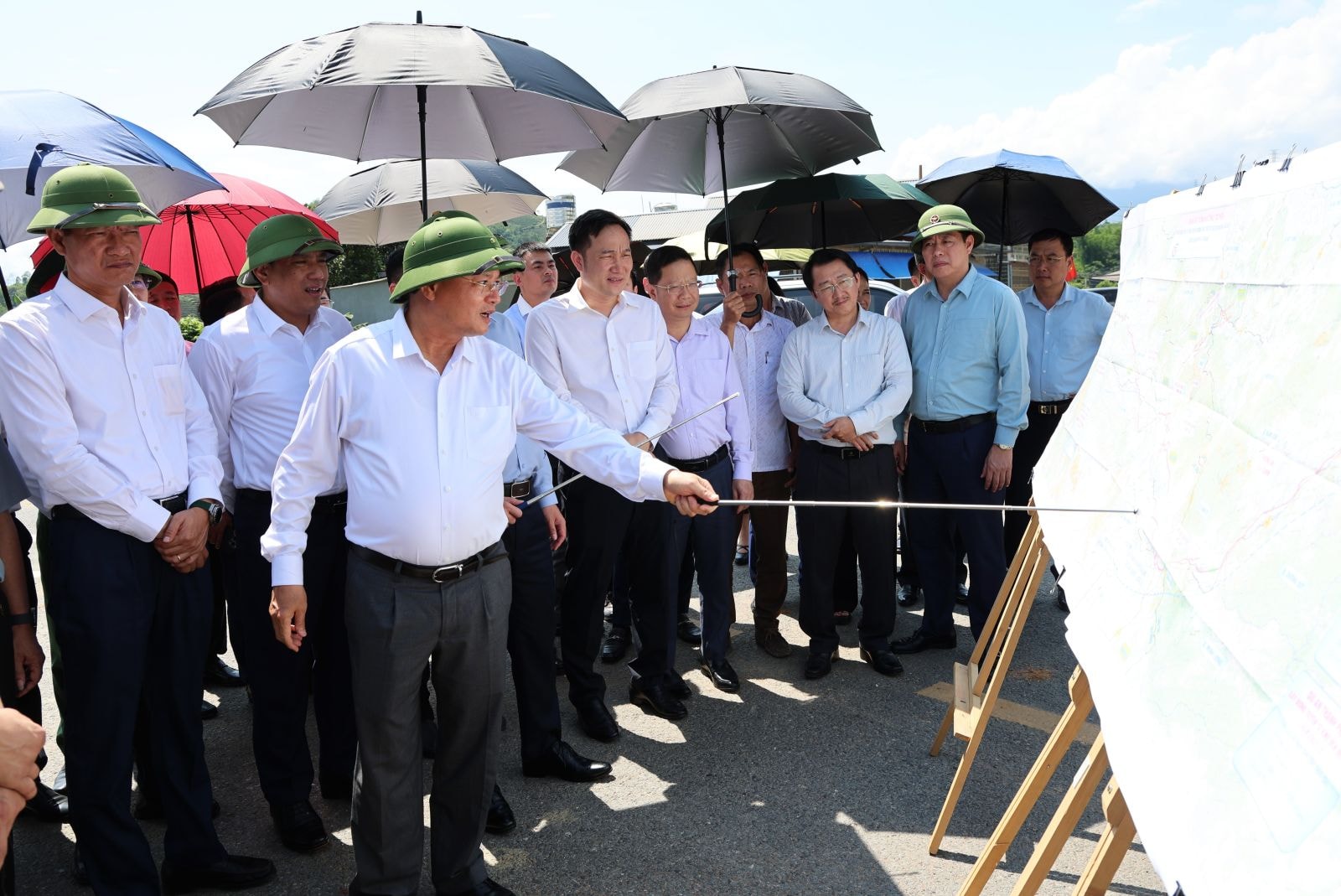
Provincial leaders inspect the proposed alignment of the Bao Ha – Lai Chau Expressway project and review the project map.
Infrastructure paving the way for development
Lai Chau Province recognizes that its aspiration for breakthrough growth is closely tied to the development of strategic infrastructure projects. In this new phase, Lai Chau envisions itself as a proactive link in interregional and international economic corridors, with direct connectivity to the vast Southwest China region.
To turn this development vision into reality, Lai Chau is mobilizing substantial resources for transformative infrastructure projects with the potential to reshape its economic landscape. These include the Bao Ha - Lai Chau Expressway (CT.13), the road tunnel through Hoang Lien Pass, and the upgrading and modernization of key national highways (National Highways 4H, 4D, and National Highway 12 connecting to Ma Lu Thang Border Gate), as well as a route linking Lai Chau with the Noi Bai - Lao Cai Expressway.
The 147.1-kilometer route connecting Lai Chau to the Noi Bai–Lao Cai Expressway begins at the IC16 interchange in Van Ban District, Lao Cai, and ends in the former Lai Chau City. Funded by the Asian Development Bank (ADB) and the Australian Government, the project serves as a vital artery integrating Lai Chau more directly into the economic network of Hanoi and the northern delta provinces.
Despite significant engineering challenges, including steep cut slopes reaching up to 200 meters in height at Package XL07 (Km127–Km128), the most difficult section of the project, overall construction progress has surpassed 90%. The project is on track to achieve technical opening to traffic before June 30, 2026.
According to Mr. Vu Ngoc Khoa, a representative of the Project Management Board (Project Management Unit 2 under the Ministry of Construction), supervision consultants and contractors have been instructed to mobilize manpower and equipment to take advantage of favorable weather conditions and complete the remaining works. Once operational, the route is expected to significantly reduce travel time and logistics costs, while also strengthening national defense and security in the region.
The Hoang Lien Pass Road Tunnel project, with a total investment of VND 3.3 trillion, is a mountain-crossing infrastructure development connecting Sa Pa in Lao Cai Province with Tam Duong District in Lai Chau Province. The project is designed as a modern, permanent structure that complies with both Vietnamese and Japanese engineering standards. The project includes two parallel tunnel tubes with a center-to-center distance of 30 meters and a total route length of approximately 8.8 kilometers. Once completed, the tunnel will completely replace the hazardous mountain pass section, shorten the travel distance by up to 22 kilometers, and reduce travel time from nearly two hours to just around 11 minutes. The project is also expected to fundamentally reshape regional supply chain networks, bringing major tourism destinations such as Sa Pa closer to the ecotourism potential of Tam Duong and Binh Lu.
At present, relevant authorities are accelerating land clearance efforts to facilitate project implementation. On the Lai Chau side of the construction site, contractors have mobilized a large workforce along with heavy excavators, drilling equipment, and specialized bulldozers to take advantage of favorable weather conditions and expedite construction progress.
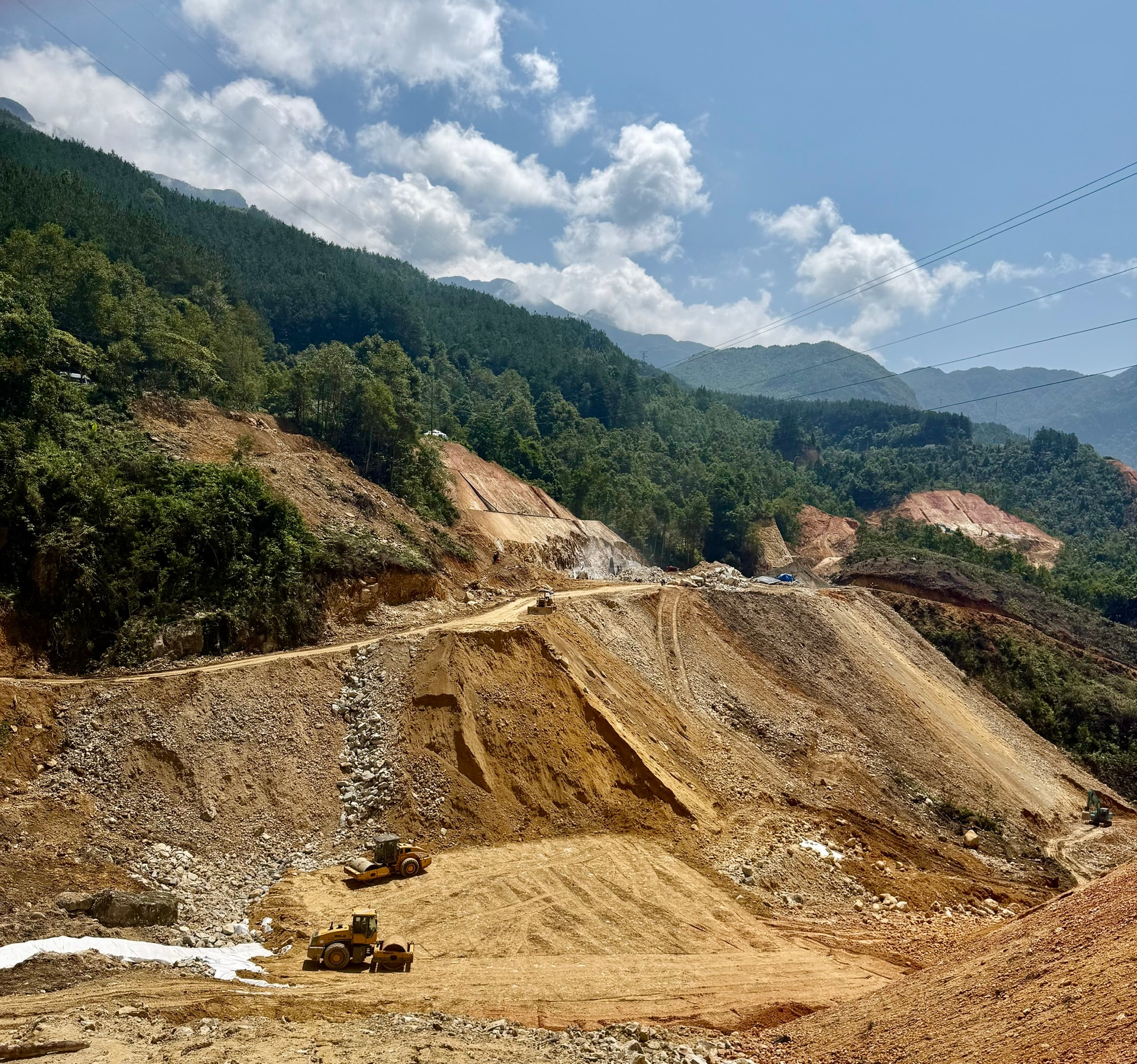
In Lai Chau, contractors are mobilizing maximum manpower and equipment to construct access roads and reinforce the roadbed for the Hoang Lien Pass Road Tunnel project. (Photo: Le Nam)
Mr. Tran Viet Diep, Deputy Director of the Lai Chau Provincial Construction Investment Project Management Board, described the Hoang Lien Pass Road Tunnel as a key transport project of strategic and breakthrough significance, not only for Lai Chau but for the entire Northwest region. According to him, once the tunnel and its supporting transport infrastructure are completed, they will transform the region’s transport landscape and enhance Lai Chau’s economic position in the development of a cross-border logistics corridor. The project is expected to remove long-standing bottlenecks and significantly improve transport efficiency by reducing travel and freight transit times.
Mr. Diep noted that Hoang Lien Pass is currently one of the most challenging mountain roads in Vietnam, frequently affected by fog, frost, and landslides during the rainy season, posing significant risks to heavy-duty vehicles. He emphasized that once the project is completed, the improvement in transport infrastructure will serve as a catalyst for Lai Chau to realize its ambition of becoming an important link in the Vietnam–China cross-border logistics network.
“The Hoang Lien Pass Road Tunnel is the key to transforming the region’s infrastructure landscape. Once completed, it will provide Lai Chau with a safe, seamless, and highly competitive cross-border logistics corridor, creating a strong foundation for sustainable socio-economic development for decades to come," Mr. Diep said.
Alongside these projects, the future Bao Ha–Lai Chau Expressway (CT.13) is regarded as a critical backbone corridor that will help complete the transport network of Vietnam’s Northwest region. The expressway is expected to strengthen connectivity with the Noi Bai - Lao Cai Expressway, thereby shortening travel distances to Hanoi, Hai Phong, Quang Ninh, and other major economic centers across the country.
The Lai Chau Provincial People's Committee has recently submitted to the Prime Minister a proposal to approve the investment policy for the Bao Ha - Lai Chau Expressway project. The proposed project will feature a full four-lane configuration, extend approximately 163 kilometers, and require a preliminary investment of around VND 63.486 trillion. Implementation is planned for the 2026-2030 period.
.jpg)
Lai Chau provincial authorities report on the progress of the Hoang Lien Pass Road Tunnel project.
According to the pre-feasibility study report, the expressway will extend approximately 49.5 kilometers through Lao Cai Province and 113.5 kilometers through Lai Chau Province. The route will begin at the interchange with the Noi Bai – Lao Cai Expressway in Bao Ha Commune, Lao Cai Province, and terminate at the Ma Lu Thang International Border Gate area in Phong Tho Commune, Lai Chau Province.
Within Lai Chau Province, the expressway will pass through 12 communes and wards, running largely parallel to National Highway 32 before connecting with National Highways 4D and 12 en route to the border gate. This alignment was selected to enhance connectivity among key economic centers, urban areas, tourism destinations, and mining zones, particularly the Dong Pao rare-earth deposit. The project is also expected to stimulate border-gate economic development and strengthen links between the Northwest region, the Hanoi Capital Region, northern seaport systems, and Yunnan Province in China.
Given the exceptionally challenging terrain and complex engineering requirements of the Northwest region, the expressway is expected to include 122 bridges and seven mountain tunnels. The Lai Chau Provincial People's Committee has proposed that the project be implemented as a public investment project, funded entirely by the central government budget. Upon completion, a toll collection mechanism may be considered to recover part of the state's investment.
Under the proposed timeline, the National Assembly is expected to review and approve the project's investment policy in the fourth quarter of 2026. The feasibility study is scheduled for approval in the second or third quarter of 2027. Land acquisition, compensation and resettlement activities, technical design, contractor selection, and construction commencement are expected to begin in the fourth quarter of 2027, with the project targeted for completion and operation by 2030.
Where transport infrastructure expands, new development opportunities follow. Once these strategic projects are completed and integrated into a cohesive network, Lai Chau's economic development trajectory is expected to enter a new phase. This infrastructure integration will create a continuous logistics corridor linking Ma Lu Thang Border Gate, Lai Chau's provincial center, the Bao Ha interchange, the Noi Bai - Lao Cai Expressway, and northern seaports. Such connectivity is a prerequisite for transforming Lai Chau from a province that primarily relies on infrastructure investment into a proactive participant in regional development, establishing a safe, seamless, and highly competitive cross-border logistics corridor within the Vietnam-China value chain.
Supporting and resolving challenges for key infrastructure projects
Mr. Ta Duc Hung, Deputy Director of the Lai Chau Department of Construction, said that to ensure project progress and address difficulties faced by businesses, the department has proactively monitored market developments and closely tracked project implementation. In recent years, the department has issued official requests to project owners, project management boards, commune- and ward-level authorities, and other relevant agencies to provide information on construction material demand and actual purchase prices and projected supply sources, as well as challenges and obstacles encountered during the implementation of construction works and investment projects across the province.
In particular, to ensure that price information used for construction investment cost management is updated more promptly, the Department of Construction has proactively shifted the publication of construction material prices from a quarterly basis to a monthly schedule. The monthly updates are based on surveys, data collection, verification, and cross-checking of information obtained from construction material manufacturers, suppliers, and distributors, as well as data provided by communes, wards, project owners, project management boards, and other relevant entities. As a result, the published price information more closely reflects actual market conditions, helping project owners, consultants, and contractors prepare, adjust, and manage construction investment costs in accordance with regulatory requirements.
“Our approach is to proactively monitor the market, conduct surveys, and publish construction price information in a timely manner; compile supply and demand data for construction materials; and coordinate with relevant departments and agencies to advise the provincial government on solutions to secure material supplies. These efforts help create favorable conditions for project owners and contractors during the implementation of construction works and investment projects across the province," Mr. Hung said.
As for land clearance—the most challenging hurdle facing virtually every infrastructure project—Lai Chau has adopted an approach centered on transparency, public engagement, and consensus-building.
According to the Lai Chau Provincial Construction Investment Project Management Board, land acquisition and site clearance efforts continue to face a number of challenges. These include overlapping legal procedures related to land recovery and compensation, lengthy administrative processes, and difficulties in verifying land ownership and land-use rights. In addition, compensation and support policies are often perceived as being lower than prevailing market values, making it difficult to secure the consent of affected landowners. Some residents also have a limited understanding of government policies on compensation and site clearance, requiring extensive outreach and public engagement efforts. As a result, the time needed for consultation and consensus-building can affect the overall implementation schedule of infrastructure projects.
To address these challenges, the Lai Chau Provincial Construction Investment Project Management Board has worked closely with the Provincial Land Development Center and local authorities to organize community meetings aimed at informing residents about project investment decisions, project objectives, land acquisition boundaries, and compensation rates for assets, crops, and agricultural produce, as well as support and resettlement policies. Draft compensation, support, and resettlement plans have also been publicly disclosed at commune-level People's Committee offices and village community centers to ensure transparency. During these consultations, authorities have listened to residents' feedback, clarified their rights and obligations, explained compensation frameworks under current regulations, and provided information on vocational transition and livelihood support policies. At the same time, officials have actively engaged with households that disagreed with compensation rates, seeking to understand their concerns and conduct direct dialogue. This coordinated and transparent approach has helped accelerate compensation and site clearance activities, contributing to the timely implementation of key infrastructure projects across the province.
It is evident that the paved roads now stretching across the vast mountains and forests of Lai Chau stand as a testament to the province’s forward-looking vision and determination to achieve breakthrough development. Through its sustained commitment to transport infrastructure investment, Lai Chau is creating the foundations for a greener, faster, and more sustainable path to growth.
At present, Lai Chau Province has more than 7,400 kilometres of roads, of which the rural road network accounts for the largest share at over 5,300 kilometres. More than 73% of rural roads have been upgraded with permanent surfaces, while the paving rate for commune-level roads exceeds 79%.
Author: LE NAM - NGUYET HA (THANH TRA translates)
RECOMMENDED TOPICS